
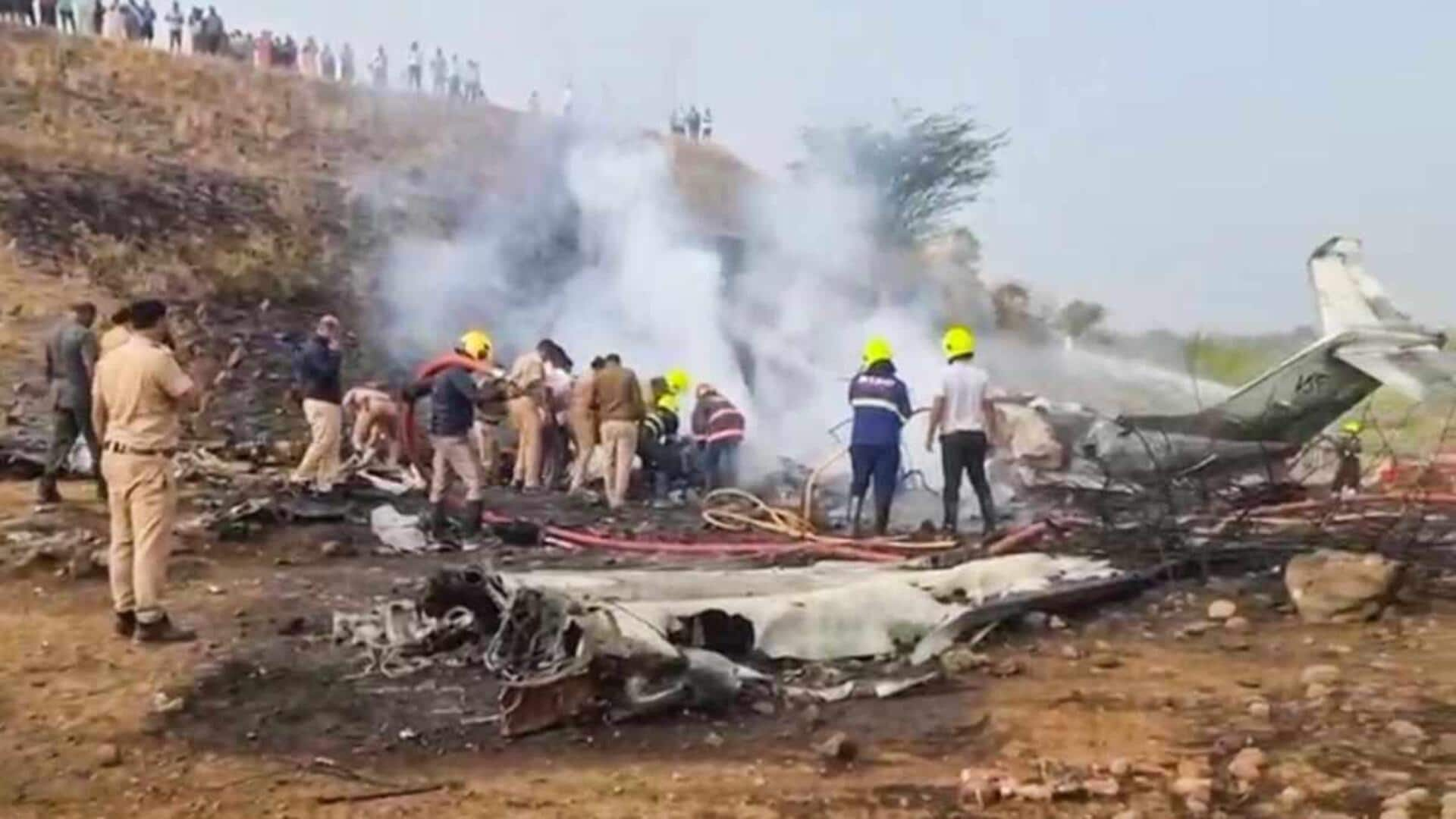
 A preliminary investigation into the Learjet crash that killed Maharashtra Deputy Chief Minister Ajit Pawar and four others has put the spotlight on gaps in weather reporting, runway infrastructure and regulatory oversight at smaller airfields.
The Aircraft Accident Investigation Bureau released its preliminary report on Saturday, February 28, a month after the VSR Ventures aircraft went down while attempting to land at Baramati Airport in Pune district on January 28. The aircraft, a Learjet 45XR registered VT-SSK, was operating a non-scheduled flight from Mumbai to Baramati when it crashed near Runway 11, leaving no survivors.
The report does not assign final blame, but it identifies operational and infrastructure deficiencies that investigators say require immediate safety action. It recommends tighter oversight of Visual Flight Rules operations into uncontrolled airfields, urgent upgrades to landing and meteorological facilities, and a wider review of licensing standards for small airstrips, including Baramati.
Visibility at the time of landing was reported at about 3,000 metres, below the 5,000-metre minimum required for VFR operations. Baramati is an uncontrolled airfield, meaning it does not have a full air traffic control tower of the kind available at larger airports. Traffic information is provided locally, including by personnel associated with flying training operations at the airfield.
The aircraft first contacted Baramati at about 8.19am and was advised of calm winds and reduced visibility. During the first approach, the crew reported that the runway was not in sight and initiated a go-around. A second approach followed within minutes. Shortly before impact, the crew reported the field in sight, after which the aircraft was cleared to land. Investigators recorded that the aircraft came down roughly 50 metres to the left of Runway 11, near the threshold, after striking trees and terrain lower than the runway surface.
The cockpit and cabin were destroyed by fire. Both pilots had undergone pre-flight breath analyser checks, which were satisfactory. The aircraft had a valid Certificate of Airworthiness and Airworthiness Review Certificate, and no restrictions under the Minimum Equipment List were recorded at the time of departure.
The preliminary report highlights several deficiencies at Baramati Airport. The airfield had no certified meteorological facility, no navigational aids apart from windsocks, faded runway markings, loose gravel on the runway surface and no dedicated in-house aircraft rescue and firefighting unit. It also noted that one end of the runway had tabletop characteristics, increasing the importance of precise visual alignment during approach.
Investigators found that runway re-carpeting had not been carried out since 2016, contributing to degraded markings and surface issues. The report also flagged inadequate perimeter protection, with fencing that did not fully secure the aerodrome. Such conditions raise broader concerns about whether airfields designed mainly for limited operations and training activity are adequately equipped for VIP charter flights and business jet movements.
The aircraft was operated by VSR Ventures Pvt Ltd, a non-scheduled operator with a fleet that included Learjet 45 aircraft, Embraer 135BJ business jets, King Air B200 aircraft and a Pilatus PC-12. The company’s air operator permit had been renewed in April 2023 and was valid until April 2028. A regulatory audit in February 2025 had not produced any level-one findings, though another Learjet 45 operated by the company was involved in a landing accident at Mumbai in September 2023, a matter separately under investigation.
The Baramati crash has prompted scrutiny of the regulatory framework governing smaller airports and airstrips used by business jets, charter operators and flying schools. India’s aviation network has expanded beyond major hubs, but many secondary airfields remain dependent on limited infrastructure, manual weather assessment and local coordination rather than full-service air traffic management.
The AAIB has asked the Directorate General of Civil Aviation to issue directions requiring operators conducting VFR flights into uncontrolled airfields to strictly follow standard operating procedures. It has also recommended that aerodrome operators permit flying activity only when weather conditions meet regulatory limits, especially where certified weather systems are absent.