
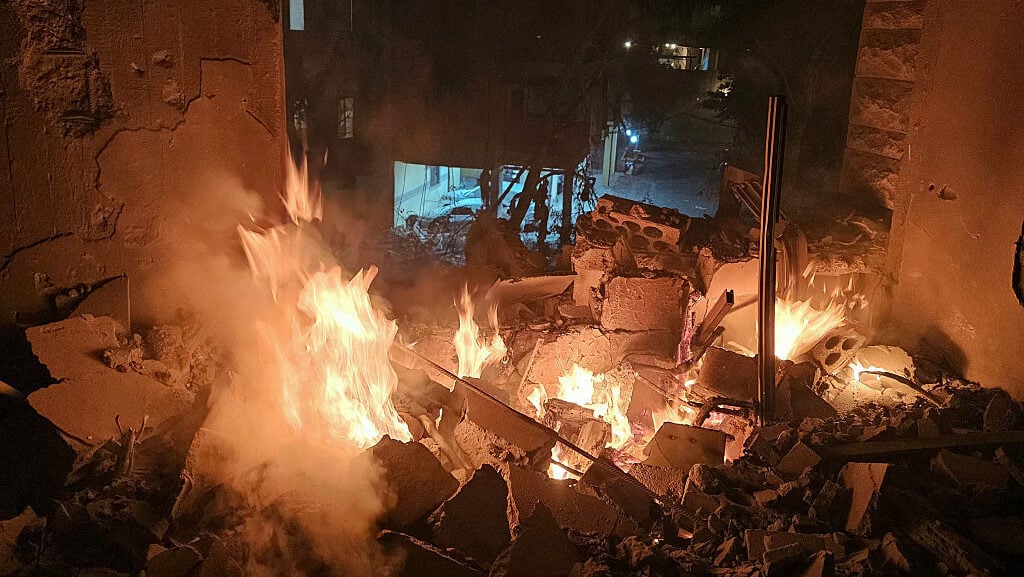
 Iran and allied groups said they had launched “Wave 93” of what Tehran describes as an ongoing retaliatory campaign, targeting Israeli military support and staging areas deep inside Israeli-held territory, according to state media and statements attributed to the Revolutionary Guards. The claim marks another step up in a conflict that has already widened beyond the usual shadow-war boundaries, with missile and drone exchanges, proxy involvement and mounting concern over the risk of a broader regional war.
 Iranian accounts said the latest salvo struck military gathering points and combat-support facilities in areas including western Galilee, Haifa, Kafr Kanna and Krayot. State outlets framed the action as part of “Operation True Promise 4”, presenting it as a direct reply to intensifying hostilities involving Israel and the United States. While Tehran’s media gave the operation a high-profile label and portrayed it as precise and coordinated, independent confirmation of the full scale, damage and all claimed targets remained limited in early reporting.
What is clear from broader coverage is that Iranian missile fire has been reaching Israeli urban and military-linked areas with increasing frequency, even as Israeli air defences continue to intercept many incoming projectiles. Reuters imagery from Petah Tikva dated April 2 showed emergency crews at a strike site following an Iranian barrage, underscoring that the confrontation is no longer confined to symbolic exchanges or proxy battlefields. The latest Iranian claims therefore fit a pattern of sustained pressure rather than a stand-alone incident.
The military significance of “Wave 93” lies less in the slogan than in what it suggests about endurance. If Tehran is accurately counting dozens of successive waves, it is signalling an ability to keep firing over time despite Israeli and U. S. pressure. That message is aimed at several audiences at once: Israel’s military planners, Washington, Gulf governments and domestic supporters inside Iran. It also reflects Tehran’s effort to show that leadership losses and repeated strikes on its assets have not broken its capacity to retaliate.
For Israel, the latest claimed attacks add to a growing burden on missile-defence systems, emergency services and civilian morale. Israeli leaders have cast the war in existential terms, arguing that the campaign against Iran and its allied network is necessary to degrade threats before they become more dangerous. Prime Minister Benjamin Netanyahu, in a Passover address this week, described the war in historic and strategic language, portraying it as part of a larger struggle against Iran and the armed groups aligned with it.
Yet the confrontation is also exposing the limits of military pressure alone. Reuters reported this week that a war intended to weaken Tehran could instead leave it more entrenched, while also heightening insecurity across the Gulf and threatening energy flows through the Strait of Hormuz. The Associated Press has separately reported that Iran-backed Houthis have entered the month-long war in a way that could further endanger Red Sea shipping and global trade routes, giving the conflict a maritime and economic dimension far beyond Israel and Iran themselves.
That broader regional spillover is one reason Gulf capitals are watching each new exchange so closely. AP reported that some Gulf allies have privately urged Washington to keep up pressure on Tehran, while others remain more wary of a conflict that could draw retaliatory fire onto energy infrastructure, bases and shipping lanes. The split underlines a central contradiction of the present phase: many states want Iran’s regional reach reduced, but few appear eager for an open-ended war whose consequences they may have to absorb.
The claims around “Wave 93” also illustrate the information war surrounding the conflict. Iranian state media use language such as “occupied territories” and emphasise military precision, while Israeli and Western reporting tends to focus more cautiously on what can be visually confirmed, such as interceptions, impact sites and casualty figures. For editors and readers alike, the immediate challenge is separating verifiable battlefield facts from messaging designed to project strength, deterrence and political resolve.