
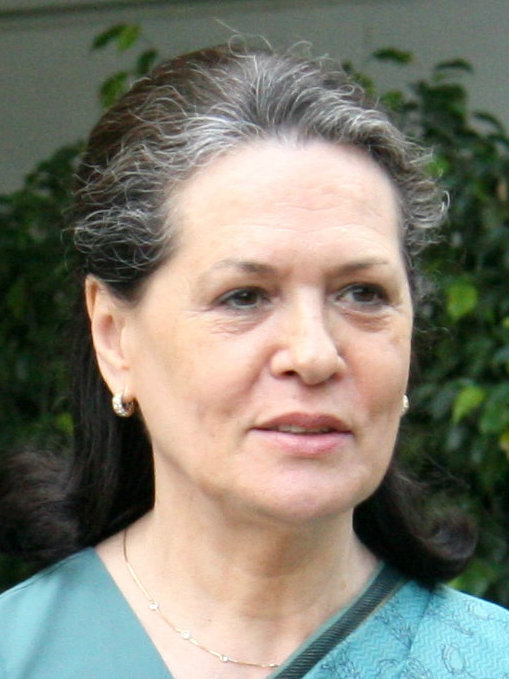
 A Delhi court has asked Sonia Gandhi to file written submissions within a week in a criminal revision petition that challenges her alleged inclusion in the electoral roll before she acquired citizenship, pushing the politically charged dispute into its next phase and listing the matter for 16 May. The hearing was held on Saturday, 18 April 2026, at Rouse Avenue Court, where counsel for the petitioner completed oral arguments and also sought to place documents received from the Election Commission of India on record. The court allowed that request.
 The matter arises from a revision petition filed by advocate Vikas Tripathi against a September 2025 order of a magistrate’s court that declined to direct registration of an FIR. The petition alleges that Sonia Gandhi’s name appeared in the New Delhi electoral roll in 1980, before she formally obtained citizenship on 30 April 1983. The legal question before the revision court is not a trial on guilt or innocence, but whether the lower court was right in refusing to order a criminal investigation.
Saturday’s hearing was procedurally important because it marked the close of arguments from the petitioner’s side. With Gandhi’s counsel now directed to submit a response within one week, the case moves into a written stage that could shape whether the court sees sufficient grounds to interfere with the magistrate’s earlier decision. The next hearing date of 16 May gives both sides time to sharpen a dispute that mixes electoral law, citizenship history and criminal procedure.
The petitioner’s case has centred on the claim that electoral records showed Gandhi’s name on the rolls linked to the then prime ministerial residence in 1980, that the entry was later removed, and that questions remain over the documents used for that enrolment. Earlier court reporting showed the complainant pressing for police action or, at minimum, a status report into how the entry was made. By seeking to introduce material obtained from the Election Commission, the petitioner appears to be reinforcing the documentary basis of that challenge after months of argument over whether the complaint rested on enough evidence.
Gandhi’s side has consistently rejected the allegations as politically motivated, frivolous and unsupported by proof. In filings reported during hearings in February, her counsel argued that no credible material showed manipulation or forgery attributable to her, and that the complaint attempted to convert an old electoral dispute into a criminal proceeding more than four decades later. Her side also argued that questions relating to citizenship fall within the domain of the Central government, while disputes over electoral rolls are governed by the Election Commission and election law machinery rather than by a criminal court.
That jurisdictional point has been at the centre of the case from the start. When the complaint was dismissed in September 2025, the magistrate’s court held that issues of citizenship and voter roll entries were not matters to be adjudicated through a criminal complaint in the manner sought by the petitioner. Reports on that order said the court found the allegations lacked the particulars required to sustain accusations such as cheating or forgery and warned against judicial overreach into areas entrusted by law to other authorities.
Even so, the revision proceedings show that the matter has not disappeared from the legal arena. Since December, the court has issued notice, granted time on the ground that the records are decades old, heard Gandhi’s objections, and now moved to the stage of written submissions after the complainant closed oral arguments. That chronology matters because it undercuts any suggestion that Saturday’s order was a final finding on the merits. It was instead a continuation of a pending revision challenge to the 2025 dismissal.