
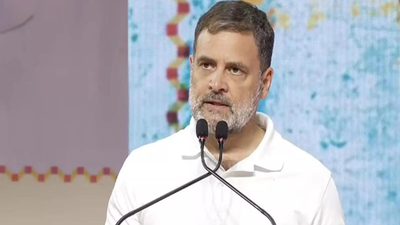
 Congress leader Rahul Gandhi has urged Prime Minister Narendra Modi to confer the Bharat Ratna on Kanshi Ram, the Dalit political pioneer who founded the Bahujan Samaj Party, arguing that the country’s highest civilian honour should recognise his role in reshaping social justice politics and empowering marginalised communities.
Gandhi made the appeal in a letter addressed to the Prime Minister on Sunday, calling Kanshi Ram a transformative figure whose work mobilised Dalits, backward communities and other historically disadvantaged groups into a powerful political movement. The Congress leader said honouring Kanshi Ram with the Bharat Ratna would acknowledge a legacy that fundamentally altered the landscape of democratic participation and representation in the country.
Kanshi Ram, who was born in 1934 in Punjab, emerged as one of the most influential architects of Dalit political mobilisation during the late twentieth century. His career as a government employee exposed him to entrenched caste discrimination within institutions, an experience that later shaped his political activism. After leaving his job in the 1970s, Kanshi Ram devoted himself to organising marginalised communities through social and political platforms designed to challenge the entrenched dominance of upper castes in politics and administration.
The letter from Gandhi emphasised that Kanshi Ram’s political philosophy centred on empowering the “Bahujan”, a term used to describe the majority comprising Dalits, Adivasis, Other Backward Classes and minority communities. Gandhi said Kanshi Ram built institutions that gave these communities a collective voice, transforming their aspirations into a structured political force capable of influencing governance and policy.
Political analysts note that Kanshi Ram’s strategy represented a decisive shift from earlier forms of social activism. Rather than relying solely on social reform campaigns, he sought direct political representation as a means of addressing systemic inequality. This approach culminated in the formation of the Bahujan Samaj Party in 1984, a party that would go on to become one of the most significant regional forces in northern politics.
Under Kanshi Ram’s leadership, the BSP gradually expanded its base, particularly in Uttar Pradesh, where it mobilised Dalits and other disadvantaged communities through a narrative centred on dignity, representation and social transformation. The party’s rise marked a turning point in the region’s electoral politics, challenging long-established power structures.
A key figure shaped by Kanshi Ram’s political mentorship was Mayawati, who rose through the BSP ranks to become one of the most prominent Dalit leaders in the country. She served multiple terms as Chief Minister of Uttar Pradesh and remains a central figure in the party’s leadership. Kanshi Ram’s strategic emphasis on political empowerment through electoral participation played a major role in enabling leaders from marginalised backgrounds to occupy positions of authority in governance.
Gandhi’s call for the Bharat Ratna also comes amid broader debates about the recognition of social justice leaders in national honours. Over the years, several political parties and Dalit organisations have demanded that Kanshi Ram receive the award, arguing that his contributions to democratic representation and caste equality merit national acknowledgement.
Supporters of the proposal say Kanshi Ram’s political legacy extends beyond electoral victories. His campaigns emphasised social awareness and community organisation, encouraging historically excluded groups to assert their rights within the democratic framework. Many credit him with building one of the most disciplined grassroots political networks in the country, capable of mobilising millions of voters across caste and regional boundaries.
Gandhi’s appeal highlighted this enduring influence, describing Kanshi Ram as a leader who redefined the meaning of political participation for marginalised communities. According to the Congress leader, Kanshi Ram’s work laid the groundwork for a broader movement seeking equality, representation and dignity.
The Bharat Ratna, established in 1954, is awarded in recognition of exceptional service or performance of the highest order in any field of human endeavour. Over the decades, recipients have included political leaders, social reformers, scientists, artists and public figures whose contributions have had a lasting national impact. Posthumous awards have also been granted to several prominent personalities.
Kanshi Ram died in 2006 after a prolonged illness, leaving behind a political organisation that continues to influence electoral politics, particularly in northern regions. His ideas about social justice, political empowerment and the assertion of marginalised identities remain central themes in contemporary debates about caste and representation.