
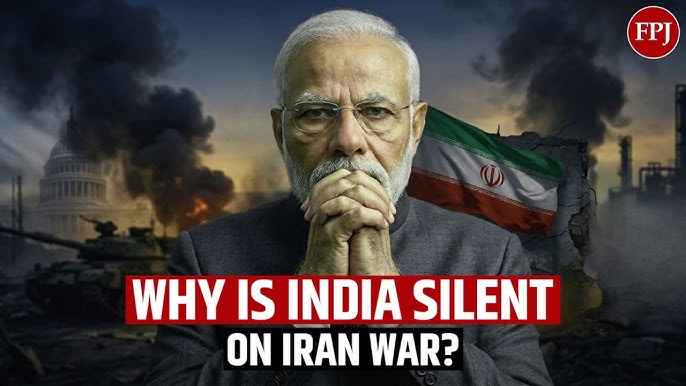
 Civil liberties organisation People’s Union for Civil Liberties has written an open letter to Prime Minister Narendra Modi urging the government to end what it describes as an “unconstitutional silence” over military action against Iran and to clarify its position on the escalating conflict in West Asia.
The appeal by PUCL, one of the country’s longest-standing human rights groups, calls on the Government of India to publicly articulate its stance on the legality and humanitarian consequences of the war involving Iran. The organisation argues that the absence of a clear official statement risks undermining the country’s constitutional commitments to international law, peaceful diplomacy and protection of human rights.
In the letter addressed to the prime minister, PUCL leaders say the government’s muted response to the conflict stands in contrast with the scale of its potential impact on regional stability and global security. The group describes the military campaign against Iran as “illegal” under international law and urges New Delhi to use its diplomatic influence to advocate an immediate halt to hostilities and a return to negotiations.
PUCL, founded during the civil liberties movement of the 1970s and associated with prominent jurists and activists over the decades, has often intervened in public debates concerning constitutional values, democratic accountability and the country’s foreign policy choices. Its latest communication frames the Iran conflict as a test of those principles, arguing that silence from the government could be interpreted as tacit approval of military escalation.
The letter emphasises that the Constitution encourages the promotion of international peace and respect for treaty obligations. According to PUCL, these provisions require the government to take a principled position when armed conflict threatens international stability. The organisation argues that the present crisis, involving one of the Middle East’s major powers, carries serious humanitarian implications and could trigger wider geopolitical repercussions.
Iran has been at the centre of mounting tensions in West Asia for years, involving disputes over nuclear activity, regional proxy conflicts and economic sanctions imposed by Western powers. Periodic confrontations involving military strikes, covert operations and maritime security incidents have intensified uncertainty across the region. Analysts warn that any prolonged conflict could disrupt shipping routes, energy markets and diplomatic alignments.
For New Delhi, developments in the region hold considerable strategic significance. Iran has historically played an important role in the country’s energy security and regional connectivity ambitions, including plans linked to the Chabahar port project and trade corridors connecting Central Asia. Millions of citizens also work across the Gulf region, making stability in West Asia a critical concern for policymakers.
Despite these strategic stakes, official statements from New Delhi on the current conflict have remained measured and limited in scope. Diplomats have traditionally sought to balance relations with multiple partners across the Middle East, including Iran, Israel, Saudi Arabia and the United Arab Emirates. Maintaining this diplomatic equilibrium has been a consistent feature of the country’s foreign policy.
PUCL’s letter suggests that such caution should not prevent the government from articulating a principled position on the legality of military action and the need to uphold international law. The organisation urges the prime minister to make a public statement affirming commitment to peaceful resolution of disputes and respect for sovereignty. It also calls for the government to support multilateral diplomatic efforts aimed at de-escalation.
Human rights advocates have voiced concern about the humanitarian consequences of prolonged conflict in the region. Civilian casualties, infrastructure damage and displacement have accompanied earlier confrontations involving Iran and its regional rivals. International organisations have warned that further escalation could deepen humanitarian crises and destabilise neighbouring countries already coping with economic and political strains.
Legal scholars and foreign policy observers say the debate highlighted by PUCL reflects a broader question about the role of constitutional values in shaping external relations. Article 51 of the Constitution refers to promotion of international peace and security and respect for international law. Activists argue that these principles should guide the country’s response to conflicts beyond its borders.
Government officials have traditionally approached such appeals with caution, noting that diplomatic positions are often shaped by complex strategic calculations. Maintaining open channels with multiple actors in West Asia has been viewed as essential to safeguarding energy supplies, trade routes and the welfare of expatriate communities.
Energy markets have already reacted to heightened tensions around Iran. Any disruption to the Strait of Hormuz, a key shipping route for global oil exports, could have consequences for economies dependent on imported energy. Policy analysts note that volatility in oil prices has historically influenced economic planning and inflation across developing economies.