
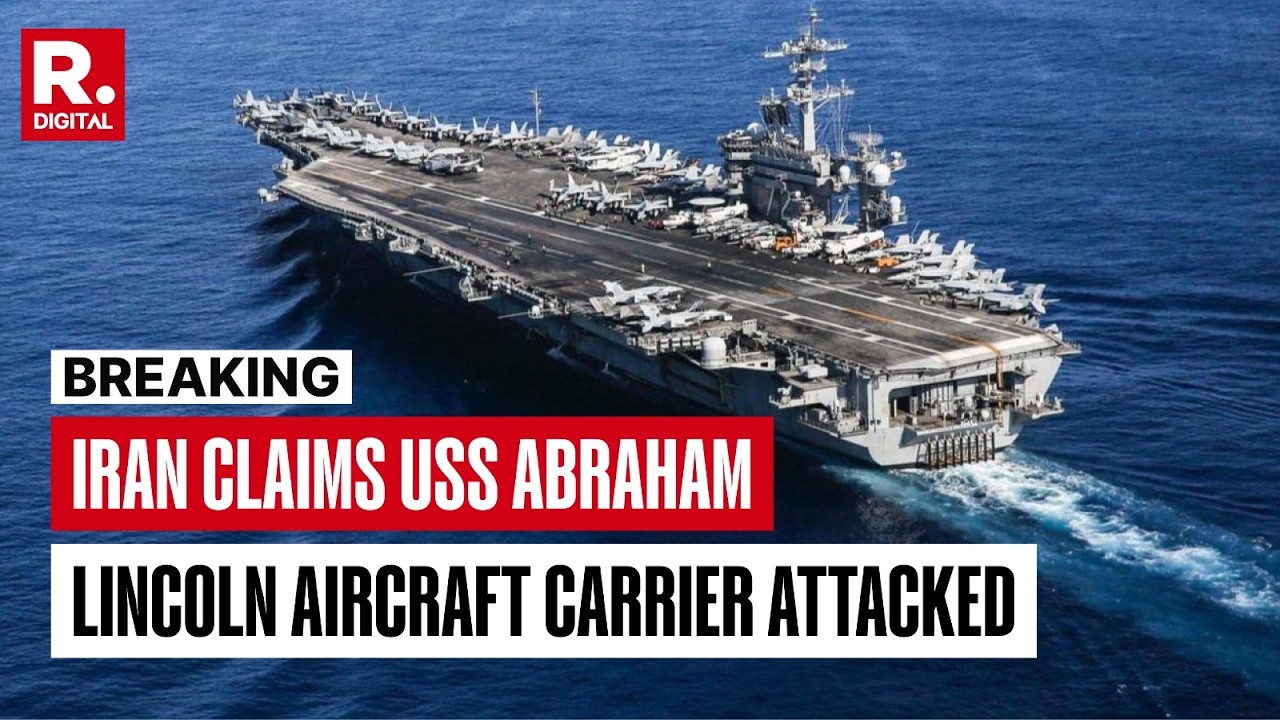
 Iran’s Islamic Revolutionary Guard Corps asserted that it launched four ballistic missiles towards the USS Abraham Lincoln in the Gulf of Oman after a massive US-Israeli military offensive that killed Iran’s supreme leader, Ayatollah Ali Khamenei, on 28 February. Tehran’s state-linked media and Revolutionary Guard spokesmen said missiles were fired in retaliation for strikes on Iranian targets, including leadership compounds and military infrastructure, but did not clearly state whether the vessel was hit. The carrier, a Nimitz-class nuclear-powered warship, has continued operations in support of the Allied campaign described by Washington and Jerusalem.
 The United States Central Command dismissed the Iranian claims as false, posting on social media that ballistic missiles “didn’t even come close” to the Abraham Lincoln and that the carrier remained unscathed and fully operational. The denial followed a broader pattern of conflicting narratives between the two militaries, as tensions surged across the Middle East following the unprecedented strikes on Iran’s leadership.
The dispute over the carrier strike claim underscores the fog of war that has enveloped the region since the US and Israeli campaign began. The coordinated offensive, labelled “Operation Epic Fury” by Washington, involved strikes on numerous Iranian command centres, missile sites and alleged threats, culminating in the deaths of top Iranian figures. Iran’s retaliation has included missile and drone attacks on bases hosting US forces in the Gulf, though assessments of their effectiveness vary widely.
US President Donald Trump has publicly acknowledged that American troops could be killed or wounded as the campaign unfolds, a warning that has already manifested. The Pentagon confirmed that three US service members died and five others were seriously wounded in the clashes, the first significant American casualties in the widening conflict. Those service members were part of operations linked to the strikes on Iranian soil and subsequent engagements with Iranian forces.
Regional capitals have wrestled with the outbreak of hostilities. Gulf Cooperation Council states hosting US bases, such as Bahrain and the United Arab Emirates, have reported strikes and counter-strikes. Some of these exchanges reportedly involved Iranian missiles and drones against allied installations, though casualty figures and damage are often contested. At the same time, European officials including senior ministers have condemned the escalation and urged de-escalation, with some expressing concern that Tehran’s hardline posture has worsened instability.
While Iran’s official media have broadcast footage and statements claiming successful retaliatory actions, independent verification remains limited. Analysts note that anti-ship ballistic missiles, while increasingly prominent in the arsenals of some Middle Eastern forces, are difficult to employ with precision against agile naval targets protected by layered defence systems. Such systems are integral to US carrier battle groups, making credible hits on large warships less probable without significant evidence of impact.
Beyond naval confrontations, Iran’s missile salvos have targeted a scattering of allied bases and cities. Authorities in several Gulf states and in neighbouring states have reported interception of projectiles and occasional damage, though the scale of these engagements frequently diverges between official statements and independent accounts. This diffuse pattern of attacks reflects Iran’s broader strategy of dispersing retaliatory efforts across multiple theatres to stretch adversary defences.
The death of Ayatollah Khamenei has compounded the volatility. As supreme leader, Khamenei held ultimate authority over Iran’s political and military direction for decades. His killing reshaped Tehran’s command structure and fuelled a potent drive among hardliners to exact vengeance for what state officials described as an assault on Iranian sovereignty. Iranian commanders have repeatedly vowed expanded operations against both US and Israeli assets, heightening concerns in capitals from Washington to Beirut.
Across the broader Middle East, allied and proxy actors have been drawn into the conflict. Hezbollah in Lebanon reportedly engaged Israeli positions, while protests and violent clashes have erupted in countries such as Pakistan and Iraq, including an attack on the United States consulate in Karachi that resulted in multiple fatalities. These dynamics suggest that while the focus remains on direct interactions between Iran, the United States, and Israel, the repercussions are rippling far beyond that core front.
Global markets have reacted to the heightened risks, with oil prices surging amid fears of disrupted shipping through strategic waterways like the Strait of Hormuz. Energy analysts warn that sustained instability could constrain supply lines and contribute to price volatility. Policymakers in Europe, Asia and beyond are navigating an intricate landscape of diplomatic pressure and economic consequences as the conflict shows little sign of abating.