
 New Delhi has condemned the targeting of commercial vessels in the Strait of Hormuz after a Thai-flagged cargo ship bound for Kandla port was struck by projectiles, raising fresh alarm over the safety of civilian seafarers and the stability of global trade routes amid escalating hostilities in West Asia.
Officials confirmed that the bulk carrier Mayuree Naree, sailing toward the western coast of India, was attacked while transiting the strategic waterway between Iran and Oman. The incident triggered a fire on board and forced a rescue operation after several crew members abandoned the vessel. Twenty sailors were evacuated safely by Omani authorities, while three crew members were reported missing following the strike.
Government officials described the attack as part of a pattern of escalating assaults on commercial shipping linked to the widening regional conflict. A statement from the Ministry of External Affairs said targeting merchant vessels and endangering civilian crew was unacceptable and called for restraint to safeguard maritime commerce and human life.
The ministry emphasised that commercial shipping had increasingly been caught in the crossfire of the confrontation unfolding across West Asia. Authorities also noted that seafarers from several countries, including Indian nationals, had already been killed in earlier incidents tied to the conflict, underlining the growing risks for crews operating in the region.
Maritime authorities indicated that the vessel had departed Khalifa Port in the United Arab Emirates before entering the Strait of Hormuz when it came under attack. The ship sustained damage near its stern and the engine room caught fire, prompting distress signals and a coordinated rescue effort by regional naval forces.
Reports from maritime security agencies and shipping companies suggested that the vessel was struck by two projectiles of unknown origin while sailing north of the Omani coast. Images released by Thai naval authorities showed thick smoke rising from the rear section of the bulk carrier as emergency teams attempted to contain the blaze.
The attack on the Mayuree Naree was not an isolated incident. Maritime monitoring groups confirmed that at least two other merchant ships were also damaged in separate strikes in and around the same waterway, reflecting a broader deterioration in security across one of the world’s busiest maritime corridors.
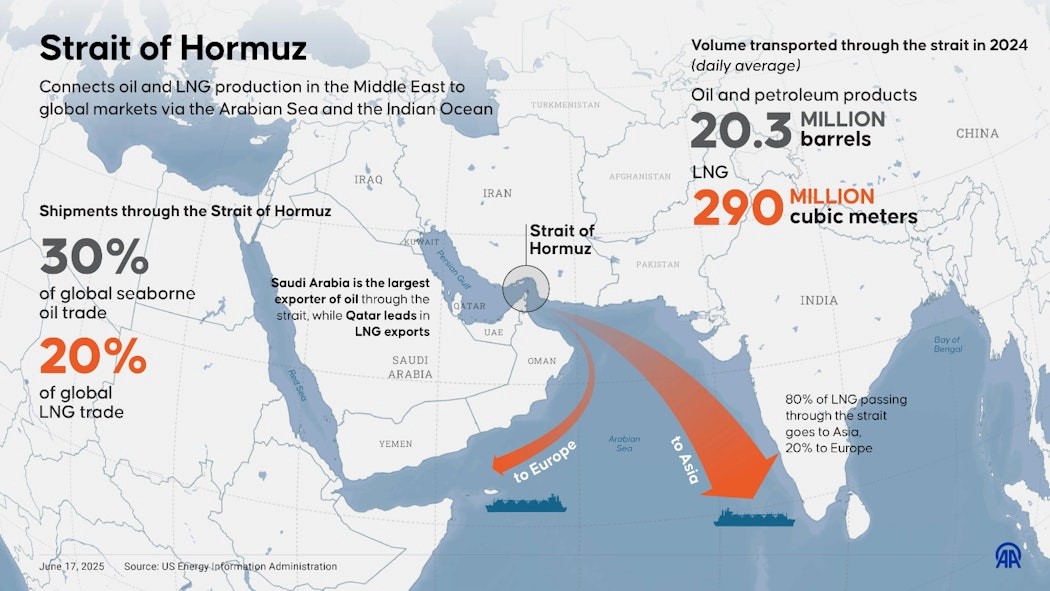
The Strait of Hormuz, a narrow channel linking the Persian Gulf with the Arabian Sea, handles roughly a fifth of global oil and gas shipments. The route is critical for energy supplies moving from Gulf producers to markets in Asia, Europe and North America. Any disruption in the waterway carries immediate implications for energy prices and international shipping networks.
Security analysts say the vulnerability of civilian vessels has intensified as regional hostilities expand beyond land and air campaigns. Iran’s Islamic Revolutionary Guard Corps has previously warned that shipping linked to countries involved in the conflict could face retaliation, while Western military operations have targeted Iranian assets and maritime capabilities in response to attacks.
Energy markets have reacted nervously to the developments. Oil prices surged earlier in the week as traders weighed the possibility of prolonged disruption to tanker traffic through the strait. Shipping insurers have also raised war-risk premiums for vessels entering the region, significantly increasing operational costs for global freight companies.
India’s response reflects the country’s heavy reliance on maritime trade and energy imports passing through the Gulf. A substantial share of the country’s crude oil and liquefied natural gas supplies travels through the Strait of Hormuz, making stability in the waterway a strategic concern for policymakers and industry leaders.
Shipping experts say attacks on merchant vessels pose broader challenges beyond immediate safety risks. Disruptions to commercial traffic can delay cargo deliveries, strain global supply chains and increase freight rates, with ripple effects across manufacturing, food supply and energy markets.
Maritime security organisations have urged shipping companies to review navigation routes and implement heightened protective measures for vessels operating in the Gulf region. Some operators have begun rerouting ships or delaying departures while awaiting clearer security assessments.
Diplomatic observers note that the incident highlights the delicate balancing act faced by countries seeking to maintain neutrality while protecting their economic interests and citizens working in the maritime sector. Calls for de-escalation have intensified as governments warn that further attacks on civilian shipping could widen the conflict and threaten one of the world’s most vital commercial lifelines.