
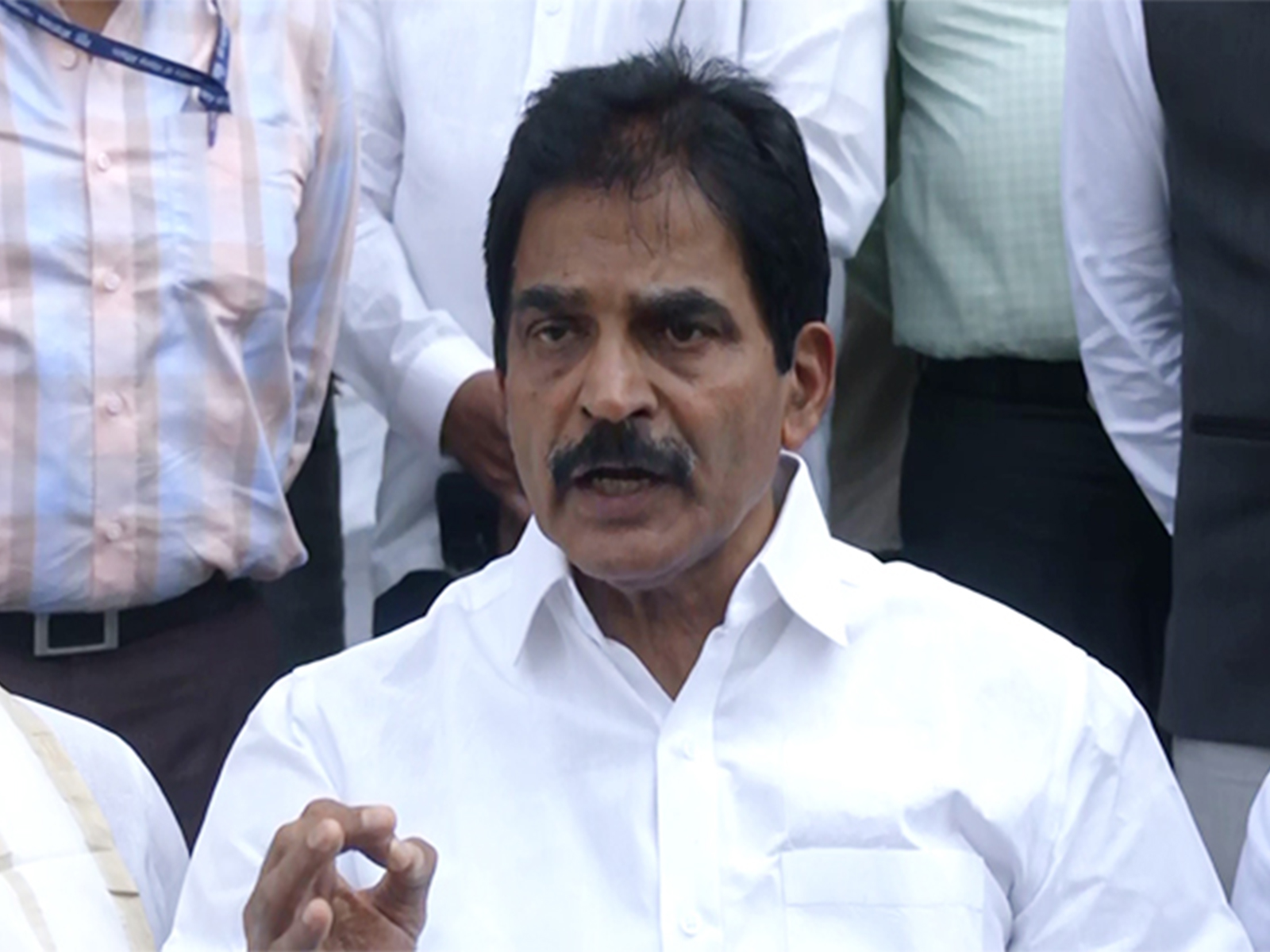
 Congress parliamentarian K. C. Venugopal has thrown down a political gauntlet to the Bharatiya Janata Party, asking its leaders to directly rebut Rahul Gandhi’s speech in the Lok Sabha rather than threaten disciplinary action. The exchange has sharpened tensions between the treasury benches and the opposition, with privilege motions and allegations of misrepresentation deepening an already fractious parliamentary session.
Venugopal, a Member of Parliament and a senior functionary in the Congress party, said the ruling party should respond point by point to the issues raised by Rahul Gandhi instead of seeking to silence him through procedural measures. His remarks followed comments by Parliamentary Affairs Minister Kiren Rijiju that members of the BJP would move a privilege notice against Gandhi for what he described as misleading statements and unfounded allegations made on the floor of the House.
The confrontation stems from Gandhi’s intervention during a debate in the Lok Sabha, where he targeted Finance Minister Nirmala Sitharaman over economic management, inflationary pressures and fiscal policy decisions. Gandhi accused the minister of failing to provide clear answers to his questions, contending that critical concerns about employment, small businesses and household finances had gone unaddressed. He framed his criticism around what he described as gaps between official claims and conditions faced by citizens, urging greater transparency and accountability from the government.
Venugopal amplified those criticisms, arguing that parliamentary debate demands substantive replies rather than procedural retaliation. He also accused Kiren Rijiju of misusing footage from parliamentary proceedings, calling the move un-parliamentary and contrary to established norms governing how House debates are represented outside. According to Venugopal, selectively circulating clips of speeches to portray opposition members in a negative light undermines the spirit of parliamentary discourse.
Rijiju, for his part, maintained that Gandhi’s remarks crossed the line of parliamentary propriety. By signalling a privilege motion, he indicated that BJP members believe Gandhi misled the House, an allegation that carries serious implications under parliamentary rules. A breach of privilege can be invoked when a member is deemed to have obstructed or impeded the functioning of the House or provided false information. Such motions are typically examined by the Speaker and, if admitted, may be referred to a committee for inquiry.
The latest exchange highlights the increasingly adversarial climate in Parliament, where economic policy, governance and political accountability have become central battlegrounds. Sitharaman has repeatedly defended the government’s economic record, citing growth figures, infrastructure spending and welfare schemes as evidence of policy success. Government data has pointed to robust headline growth rates and expanding capital expenditure, even as critics argue that uneven job creation and price pressures continue to weigh on sections of the population.
Opposition parties, led by Congress, have sought to focus debate on inflation, unemployment and alleged institutional weakening. Gandhi’s speeches in Parliament have frequently combined economic critique with broader political arguments, often provoking sharp rebuttals from ministers. BJP leaders have countered that opposition claims distort data and overlook structural reforms undertaken over the past decade.
The dispute over parliamentary footage adds another layer to the controversy. Proceedings of the Lok Sabha are recorded and broadcast as part of efforts to ensure transparency. However, members are expected to adhere to conventions when using or sharing clips, particularly to avoid misleading edits. Venugopal’s accusation suggests that he believes those conventions were breached, though no formal ruling on the matter has been issued.
Political analysts note that privilege motions are not uncommon in heated sessions, but they are relatively rare in being upheld with punitive consequences. Much depends on the Speaker’s discretion in admitting such notices. In past instances, privilege notices have served as political signals rather than leading to substantive action.
The broader context is a Parliament marked by frequent disruptions, walkouts and exchanges of accusation. Economic debates have taken on added intensity amid global uncertainty, fluctuating commodity prices and domestic electoral considerations. As general elections approach, both sides appear determined to frame the narrative in their favour, using the floor of the House as a stage for contrasting visions.
Venugopal’s challenge reflects a strategy of confronting the ruling party directly on economic stewardship, while also positioning Congress as defending parliamentary norms. By urging the BJP to counter Gandhi’s speech through argument rather than censure, he has sought to recast the confrontation as one about democratic debate itself.