
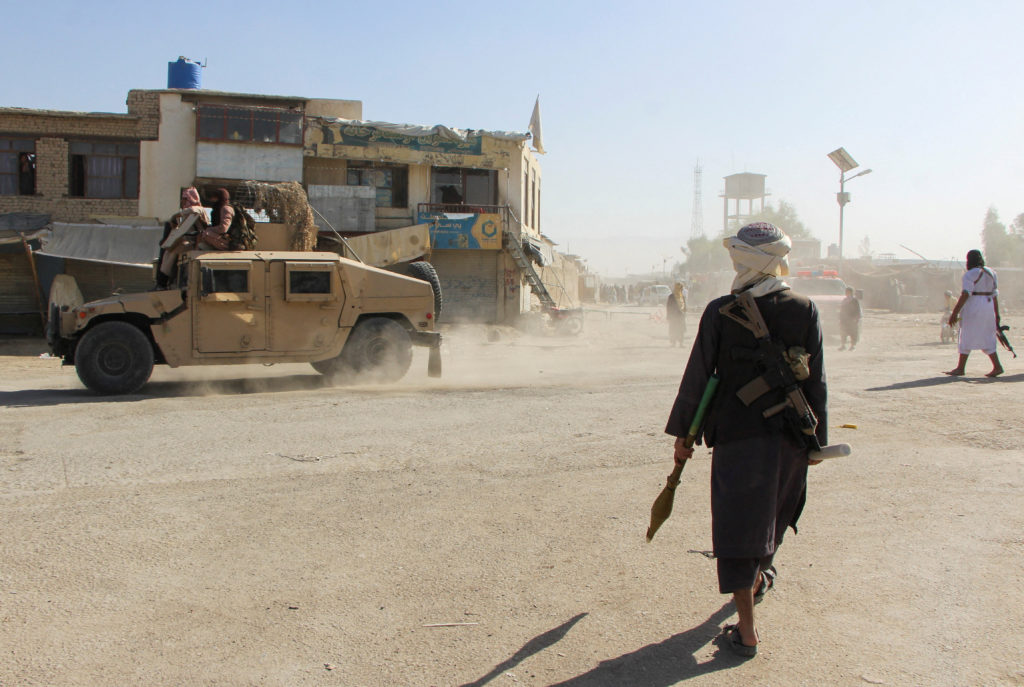
 Pakistan’s armed forces have launched airstrikes on major Afghan cities including Kabul, Kandahar and Paktia, after Kabul’s Taliban-led administration said it had struck Pakistani positions along the disputed Durand Line, marking a significant escalation in hostilities that threatens to unravel months of fragile stability along the frontier. Pakistan’s Ministry of Information and Broadcasting said its response targeted Afghan Taliban military installations as part of “Operation Ghazab lil Haq”, dismissing what it described as unprovoked firing by Taliban forces across the border. The strikes came amid fierce exchanges of fire along multiple sectors of the frontier, with both sides reporting substantial casualties and capturing territory.
 Explosions echoed across Kabul in the early hours of Friday as Pakistani aircraft conducted bombing runs that Islamabad said hit brigade headquarters and logistic depots used by the Afghan Taliban, while jets also flew over Kandahar and into Paktia province. Taliban spokesperson Zabihullah Mujahid condemned the operations as an assault on sovereign territory and accused Pakistan of deliberately targeting urban centres, though he asserted there were no confirmed casualties from the Afghan side. Officials in Islamabad said Pakistan struck key Taliban defence targets and inflicted significant losses on opposing combatants.
The latest aerial bombardment follows a heavy exchange of ground fire and what Afghan authorities described as large-scale offensive operations against Pakistani border troops employed around the Khyber Pakhtunkhwa frontier, where both governments have long accused the other of harbouring hostile elements. Pakistan’s information ministry said Taliban fighters initiated the first salvo by firing across several border points, triggering an “immediate and effective” retaliation that targeted multiple posts, equipment and insurgent personnel. Pakistan maintained its actions were defensive and proportional to the threat posed by cross-border attacks.
Taliban forces countered that their actions were a response to earlier Pakistani strikes on Afghan soil that they said had inflicted civilian casualties and hampered stability efforts in the region. Kabul’s defence ministry claimed it had killed dozens of Pakistani soldiers and captured several positions, a version of events disputed by Pakistani authorities, who reported only a small number of their troops killed and denied any captures. Pakistan’s prime minister’s office released figures alleging substantial Taliban losses with dozens reported killed and many more wounded, though these figures could not be independently verified at the time.
The intensification of conflict has exacerbated humanitarian concerns, particularly for civilians residing close to the contested frontier. Reports emerged of damage to a refugee camp near the Torkham crossing, injuring women and children and prompting evacuations of families caught in the widening violence. The United Nations has called for both parties to protect civilians and uphold international humanitarian norms as the confrontation deepens beyond isolated border skirmishes.
Historical animosity along the Durand Line, a colonial-era boundary that Kabul has never formally recognised, underpins much of the discord, with both capitals repeatedly trading accusations of failing to contain militant groups operating across the porous border. Tensions have simmered for years, punctuated by intermittent clashes, diplomatic breakdowns, and competing security interests. The current flare-up marks one of the most intense exchanges since a ceasefire mediated by Qatar in 2025 faltered under the weight of renewed hostilities.
Just days earlier, Pakistani air operations in eastern Afghan provinces had drawn international condemnation over allegations that strikes hit civilian structures, killing non-combatants including women and children, an assertion Islamabad denied, characterising those operations as precise and intelligence-based against insurgent camps. That backdrop of mutual recrimination contributed to the latest spiral of retaliation after Afghan forces carried out what they termed offensive operations against Pakistani troops.
Political leadership in Islamabad has rallied behind the military’s actions, with senior figures declaring that Pakistan would not tolerate threats to its territorial integrity and security, pledging to maintain pressure on the Taliban administration. Kabul has vowed to defend its sovereignty and reject what it labelled violations of international law, condemning Pakistan’s aerial bombardment as an unlawful act of aggression.