
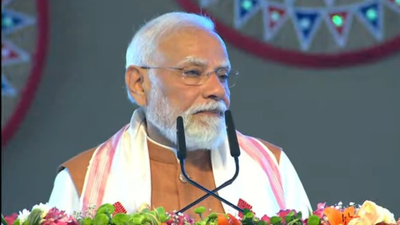
 Prime Minister Narendra Modi made a landmark landing at the North East’s first Emergency Landing Facility in Assam’s Dibrugarh district on Saturday, touching down aboard an Indian Air Force C-130J aircraft on a reinforced section of the National Highway-37 Moran Bypass as part of a high-profile visit that also features infrastructure launches ahead of the state’s assembly polls. Officials described the move as a strategic enhancement of defence capabilities and emergency response in the region.
 The 4.2-kilometre Emergency Landing Facility, constructed at an estimated cost of ₹100 crore, represents the first highway runway of its kind in the North East and is designed for use by fighter jets and heavy transport aircraft during crises or when conventional airfields are unavailable. Mr Modi’s aircraft took off from Chabua airbase before landing on the newly completed strip, which was inaugurated amid substantial security and logistical preparations.
Senior government figures and Air Force leaders were present for the event, underscoring the dual-use nature of the facility. It is intended to support rapid military deployment, refuelling and rearming operations, and to act as an alternative landing site in the event of natural disasters or other urgent scenarios. Defence analysts say the ELF strengthens operational flexibility for the Indian Air Force, enabling frontline fighters and transport aircraft to operate from dispersed locations across the region.
During the ceremony, the Prime Minister also witnessed an aerial demonstration by the IAF, featuring precision take-offs and landings by Sukhoi Su-30MKIs, Rafale jets, and transport helicopters. The showcase highlighted the capability of the highway runway to accommodate a range of aircraft types and illustrated its potential role in augmenting national security infrastructure.
Officials have stressed that the facility’s strategic value extends beyond defence. Assam’s top political leadership noted its significance for disaster management and connectivity, given the region’s vulnerability to floods, earthquakes and landslides. By allowing aircraft to land close to affected areas, the ELF is expected to accelerate relief efforts and provide a platform for coordinating humanitarian missions.
The installation of this emergency runway aligns with broader infrastructure development plans in the North East. The Prime Minister’s itinerary for the visit includes the inauguration of other major projects designed to boost regional connectivity and modernise transport and digital infrastructure. These initiatives form part of a long-term strategy to strengthen economic growth and integrate the North East more fully with national networks.
Local authorities worked over weeks to prepare the Moran Bypass stretch for its new role, reinforcing the road surface and establishing protocols for sealing off the highway prior to aircraft operations. Coordination between the Ministry of Defence, the Air Force and state agencies ensured that the runway meets stringent specifications for safety and performance, reflecting collaboration across civil and military domains.
Political observers note that the demonstration of military and logistical prowess during the Prime Minister’s visit carries symbolic weight ahead of the assembly elections. The emphasis on strategic infrastructure underscores the government’s commitment to national security and development in frontier regions, and has drawn attention from both domestic stakeholders and external observers.
The Emergency Landing Facility joins a network of similar installations across the country that are intended to safeguard air operations during contingencies. Road-based runways provide alternative options should conventional airfields be compromised, and their development reflects evolving doctrines in defence planning that prioritise mobility and resilience.
Political leaders in Assam welcomed the facility as an enhancement of the state’s profile and capabilities. They highlighted expected benefits for local communities, including improved infrastructure and heightened emergency response capacity. Some analysts also point to the geopolitical context, citing the North East’s proximity to international borders as a factor in prioritising such assets.