
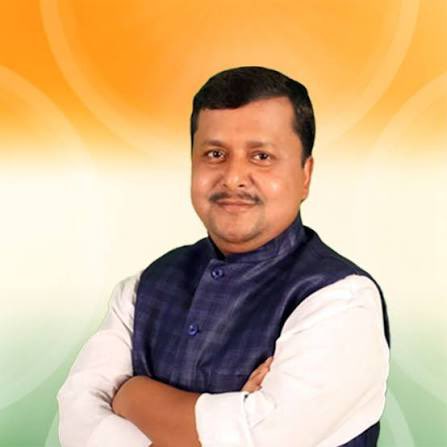
 Nitin Nabin was formally declared national president of the Bharatiya Janata Party on Sunday, marking a generational shift at the helm of the country’s largest political organisation and closing the chapter of J P Nadda’s tenure. The elevation places a 45-year-old leader at the centre of the party’s strategic and organisational decisions at a time when it is seeking to consolidate power across states while preparing for a demanding national political calendar.
The announcement was made after the party’s parliamentary board completed the internal process, clearing the way for Nabin to assume office as the 12th president since the BJP’s founding in 1980. The coincidence of his birth year with the party’s formation has been noted by leaders as symbolic of a leadership transition aimed at projecting continuity alongside renewal.
Prime Minister Narendra Modi congratulated Nabin soon after the declaration, offering a remark that underscored the internal hierarchy of the organisation. Modi said the new president would be his “boss” in matters concerning the party, a phrase that has been interpreted by observers as reinforcing the BJP’s long-standing emphasis on organisational discipline and the primacy of the party structure over individual authority.
Nabin succeeds J P Nadda, who led the party through a period marked by electoral expansion in several states, intense national campaigns and internal restructuring. Under Nadda, the BJP strengthened its booth-level organisation, refined its outreach to women and first-time voters, and sharpened its narrative on governance and national identity. Party officials credit Nadda with professionalising internal processes while managing coalition dynamics and election machinery during successive electoral cycles.
The choice of Nabin reflects a calculated move towards younger leadership with grassroots experience. Known for his organisational skills and ability to mobilise cadres, he has spent much of his political career within the party’s structure rather than in executive government roles. Supporters argue that this background equips him to focus on membership drives, candidate selection and ideological training, areas considered central to sustaining electoral dominance.
Nabin’s rise has also been shaped by his association with the party’s ideological ecosystem, including its student and youth wings. Colleagues describe him as a consensus builder who maintains close contact with state units, a quality viewed as critical as the BJP balances regional aspirations with a strong central narrative. His appointment is expected to give renewed impetus to internal elections and leadership grooming at the state level.
Political analysts note that the timing of the leadership change is significant. The BJP faces the challenge of defending its position in states where regional parties are regrouping, while also addressing economic concerns, employment pressures and social cohesion issues that dominate public discourse. The party’s strategy increasingly relies on a combination of welfare delivery, organisational reach and ideological messaging, areas where the national president plays a decisive coordinating role.
Within the party, Nabin is seen as a bridge between senior leaders and a younger generation of workers. His age places him closer to the demographic profile of many grassroots volunteers, which party strategists believe could help energise the cadre base. At the same time, his elevation has been carefully framed as continuity rather than rupture, with senior leaders publicly affirming their support and signalling unity.
The BJP’s constitution grants the national president considerable authority over organisational appointments, campaign planning and coordination with allied organisations. Nabin’s immediate priorities are expected to include reviewing state-level leadership structures, strengthening training programmes for workers and fine-tuning the party’s messaging in regions where electoral margins have narrowed. Insiders say he will also focus on digital outreach and data-driven campaigning, reflecting broader shifts in political mobilisation.
Reactions from opposition parties have been measured, with leaders acknowledging the BJP’s capacity for internal renewal while questioning whether a change at the top would alter policy direction. Some have argued that the party’s ideological stance and centralised decision-making would remain unchanged, regardless of who occupies the organisational post. BJP leaders counter that the president’s role is pivotal in translating ideology into electoral success and governance outcomes.