
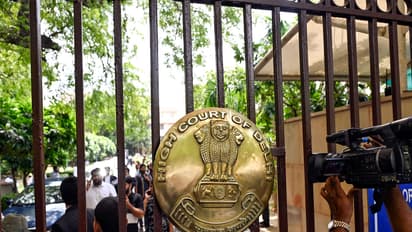
 Delhi High Court delivered a sharp rebuke on Wednesday to a non-governmental organisation, Save India Foundation, accusing it of repeatedly misusing the public interest litigation mechanism by filing petitions alleging encroachments by masjids and dargahs across the national capital. The court said such conduct undermined the purpose of PILs and warned that judicial time could not be consumed by litigations driven by motives other than genuine public interest.
The observations were made by a Division Bench headed by Devendra Kumar Upadhyaya and Justice Tejas Karia while hearing one such petition moved by Save India Foundation. The Bench made it clear that it did not appreciate the organisation’s conduct, noting a discernible pattern in the nature of cases being filed.
During the hearing, the court scrutinised the track record of the petitioner and pointed out that several earlier petitions filed by the same organisation raised similar allegations, often without adequate supporting material. The judges observed that PIL jurisdiction was created to allow access to justice for marginalised groups and to address issues of broad public concern, not to serve as a tool for selective targeting or publicity-driven litigation.
The Bench underlined that encroachment issues, particularly those involving religious structures, were sensitive and could not be agitated lightly without verified facts and proper engagement with administrative remedies. It noted that local municipal bodies and revenue authorities were vested with statutory powers to deal with unauthorised constructions, and courts were not meant to be the first port of call unless there was demonstrable inaction or illegality.
Legal experts say the remarks fit into a wider judicial trend of tightening scrutiny over PILs. Over the past decade, constitutional courts have increasingly flagged the misuse of PIL jurisdiction, cautioning against petitions that are politically motivated, communally sensitive, or aimed at advancing a narrow agenda under the garb of public interest. The Supreme Court and several High Courts have imposed costs or dismissed such petitions outright when they fail to meet established thresholds.
In this case, the Delhi High Court stressed that the petitioner must approach the court with clean hands and bona fide intent. The judges remarked that merely invoking public interest did not confer legitimacy on a petition, especially when similar pleas had been rejected or questioned earlier. The Bench signalled that repetitive filings on the same theme, without fresh evidence or changed circumstances, could amount to an abuse of process.
Counsel appearing for Save India Foundation sought to defend the organisation’s actions by arguing that the petitions were intended to highlight alleged violations of land-use norms. However, the court remained unconvinced, pointing out that allegations of encroachment required rigorous factual verification and could not be based on general assertions or selective data.
The court’s comments also touched on the broader implications of such litigations for social harmony. While refraining from making any sweeping observations, the Bench noted that courts had to be cautious when dealing with matters that could inflame communal sensitivities, especially when raised through PILs that lacked a clear public welfare dimension.
Senior advocates following the proceedings said the order reinforces judicial expectations that PIL litigants must demonstrate seriousness, consistency, and a genuine concern for public good. One lawyer noted that the Delhi High Court has, on multiple occasions, emphasised that PILs are an extraordinary remedy and not a substitute for political debate or administrative oversight.
Although the court did not immediately impose costs, its strong language served as a warning that continued misuse of PIL jurisdiction could invite stricter consequences. Observers pointed out that such admonitions often precede more robust action if litigants fail to course-correct.