Loading…
Just in:
Loading latest syndicated reports…

Top stories

Updated continuously

CJP schedules Mumbai jail bharo after police refusal

Cockroach Janta Party founder Abhijeet Dipke has announced a “Jail Bharo Andolan” at Mumbai’s Shivaji Park on October 2, pressing ahead with a Gandhi Jayanti protest after police denied permission for the planned demonstration.

Dipke announced the action on Monday in a post on X, writing: “Jail Bharo Andolan in Mumbai. October 2, Shivaji Park. #SaveDemocracy.” The move followed his earlier declaration that the organisation would resort to the mass-arrest protest if authorities prevented it from demonstrating at the venue.

The protest is centred on CJP’s demands concerning Chief Election Commissioner Gyanesh Kumar and the functioning of the Election Commission. The organisation has called for Kumar’s resignation, sought a halt to the Special Intensive Revision of electoral rolls and demanded changes to the legal framework governing appointments to the poll body.

Mumbai Police said permission was denied because it did not have the authority to approve a gathering at Shivaji Park under restrictions arising from a 2013 Bombay High Court judgment and a subsequent Maharashtra government order. Police also pointed to the organisers’ lack of permission from the Brihanmumbai Municipal Corporation for use of the ground.

The police communication cited Shivaji Park’s location in a residential and silence-zone area and raised concerns about noise, traffic congestion and disruption to movement. It said congestion could affect access to hospitals in the vicinity and advised the organisers to identify another location in Mumbai and seek the necessary permission there.

Civic officials have also said CJP does not currently have BMC permission to use Shivaji Park for the October 2 programme. No application for the proposed event had been filed with the civic body as of Monday, according to officials. If an application is submitted, the ward office is expected to forward it to Maharashtra’s Urban Development Department because of the restrictions governing use of the ground.

Dipke had criticised the police decision on Sunday, describing the refusal as an attempt to suppress citizens’ voices. He said CJP would continue with its protest plans and launch the jail bharo action if its proposed demonstration was stopped.

Police, responding publicly to his criticism, said the refusal was based on the legal restrictions governing gatherings at Shivaji Park rather than a prohibition on protest itself. Their statement referred specifically to the Bombay High Court order dated January 4, 2013, and a Maharashtra government order issued in January 2016.

CJP had announced the Mumbai mobilisation as part of a campaign against the Election Commission. At a press conference in New Delhi last week, the organisation demanded Kumar’s resignation and sought a criminal investigation into allegations it has raised over electoral administration. Those allegations remain disputed.

The Election Commission has rejected suggestions that disagreements within the institution amount to a breakdown in its functioning. It has maintained that differences of view can arise during institutional deliberations and that key decisions concerning electoral-roll revision were taken collectively.

CJP has also demanded that the Special Intensive Revision process be frozen and that the 2023 law governing the appointment of the Chief Election Commissioner and other election commissioners be repealed. Those are political demands advanced by the organisation and have not been accepted by the authorities.

The October 2 mobilisation now presents an immediate policing and civic-management issue because Dipke has named Shivaji Park as the location despite the denial of permission. A jail bharo campaign typically involves protesters deliberately courting arrest as a form of civil disobedience, but the precise arrangements for CJP’s Mumbai action, including expected attendance, have not been publicly detailed.

The dispute over the venue remains unresolved three days before the scheduled programme. The police rejection letter said Shivaji Park is reserved for sporting activity, subject to exceptions permitted under court and government directions. Organisers have not announced a shift to any of the alternative locations suggested by police.

Ujjain mosque appeal ends after civic settlement

The Madhya Pradesh High Court has disposed of appeals over the partial removal of Ujjain’s Shahi Masjid after the mosque administration and civic authorities told the court they had settled the dispute.

A division bench of Justices Subodh Abhyankar and Jai Kumar Pillai on Monday recorded the settlement between the mosque’s authorised administrative committee and Ujjain Municipal Corporation, bringing the legal challenge to the road-widening action to an end. The court said assurances given by the corporation in its reply and the disputed notice would remain binding on the civic body.

The order came as protests over the removal of part of the mosque turned violent in Ujjain. Police said stones were thrown at personnel deployed near the site and tear gas was used to disperse the crowd. Six policemen were injured, while authorities maintained a large security presence around the mosque and adjoining areas.

The appeals arose from a September 9 order by a single judge dismissing two petitions that challenged municipal notices requiring removal of a portion of the mosque. The notices were issued as part of a project to widen the adjoining road to 15 metres ahead of the Simhastha religious gathering scheduled for 2028.

During Monday’s hearing, counsel for the appellants told the division bench that the dispute had already been settled with the Municipal Corporation but asked the court to formally record the arrangement, citing concern that commitments made by the civic authority might not be honoured. The bench disposed of the matter while expressly stating that the corporation would be bound by the assurances it had made.

The corporation told the court that the authorised mosque committee had been given an opportunity to remove the affected portion itself following the single-judge ruling. It also submitted that less than 10 per cent of the mosque’s total area was proposed to be removed and that more than 80 structures had already been affected by the wider road project, most of them temples.

District authorities have said only a limited section of the mosque falls within the alignment required for widening. The disputed portion has been described by the administration as measuring roughly nine feet by four feet. The action does not involve demolition of the entire mosque.

Tension had built around the site before Monday’s court hearing, with residents gathering at the mosque and objecting to the proposed removal. The confrontation intensified when the demolition work proceeded. Police alleged that members of the crowd pelted security personnel with stones, after which officers used tear gas and a cane charge to clear the area.

Authorities registered cases against people accused of stone-pelting and disturbing public order. Police said some of those booked were social-media influencers accused of spreading misinformation. Around 2,500 police personnel, including teams drawn from neighbouring districts, were deployed as officials sought to prevent further disturbances.

The controversy centres on the road-widening programme being undertaken in preparation for Simhastha 2028, when Ujjain is expected to handle a sharp increase in pilgrim traffic. The Shahi Masjid is among structures affected by the planned widening, which the Municipal Corporation says is necessary to improve movement along the route.

The original petitioners, two groups claiming responsibility for administering the mosque, had challenged municipal notices issued in August and a final notice dated September 1. They argued before the single judge that the property was registered as waqf property and objected to removal of parts of the prayer hall and associated structures.

The single bench rejected those petitions, clearing the way for the municipal action. The subsequent appeals focused on the same notices, but the settlement between the authorised mosque committee and the corporation changed the position before the division bench.

During the appeal hearing, the civic side also showed the judges videos which it said demonstrated that portions covered by the agreement were being removed pursuant to the settlement. The court did not set out the settlement’s full terms in its order, noting that the details were not before it.

Supreme Court declines interim stay on UPI levy

The Supreme Court on Monday declined to stay the Union Government’s new merchant discount rate on specified Unified Payments Interface transactions above ₹2,000, leaving the charging framework on course to take effect on October 15.

A three-judge bench comprising Chief Justice of India Surya Kant and Justices Joymalya Bagchi and V. Mohana refused interim relief while hearing a public interest litigation filed by advocate Anjan Datta. The court issued notices to the Union Government, the Reserve Bank of India and the National Payments Corporation of India, seeking their responses to the challenge.

During the hearing, the bench observed that the central grievance over the proposed charging structure appeared “less legal and more technical”, indicating that it was not persuaded to suspend the framework before examining the issues in greater detail.

The petition challenges the government’s September 14 notification and the MDR framework announced the following day. It seeks to quash or suspend the scheme insofar as it permits charges on specified person-to-merchant, or P2M, UPI payments exceeding ₹2,000.

Under the framework, general P2M transactions above ₹2,000 will attract an MDR of 0.4 per cent, with the charge capped at ₹300 for payments of ₹75,000 and above. Payments of ₹2,000 or less will remain free, as will person-to-person transfers regardless of value.

The charge is imposed within the merchant-payment ecosystem rather than on the customer. The government and NPCI have said consumers will not be charged for making ordinary UPI payments. Eligible small merchants receiving up to ₹1 lakh a month through UPI QR payments are also exempt under the framework.

Different rates have been prescribed for certain sectors. Transactions above ₹2,000 in railways, telecommunications, insurance, fuel and agricultural inputs will attract a flat ₹5 MDR. Payments involving mutual funds, securities, stockbrokers and dealers will carry a 0.02 per cent MDR, capped at ₹300.

Datta’s petition argues that the framework was introduced without adequate statutory safeguards, transparency or public consultation. It also challenges the constitutional validity of the amended Section 10A of the Payment and Settlement Systems Act, 2007, alleging that the provision gives the executive insufficiently guided power to determine which electronic payment methods receive protection from charges.

The plea also questions the distinction between UPI and RuPay debit-card transactions, pointing to continued no-charge protection for RuPay debit cards without a comparable monetary ceiling. It contends that the ₹2,000 transaction threshold and the ₹1 lakh monthly-receipts threshold for exempt small merchants lack a disclosed empirical basis.

The petitioner has asked the court, alternatively, to direct a fresh review after consultation and publication of the data and impact assessment underlying the classifications. The plea also seeks safeguards for micro and small businesses and argues that any future classification should take account of factors including merchant turnover, margins, geography and capacity to bear payment costs.

The government has defended the MDR framework as a way of creating a sustainable funding model for the UPI ecosystem while shielding customers and smaller merchants. The proceeds are intended to support payment infrastructure, cybersecurity, innovation and customer service across banks, payment applications and other participants.

NPCI has said UPI would remain a comparatively low-cost payment channel after the change. The new structure marks a shift from the zero-MDR regime that has applied to standard bank-account UPI merchant payments for nearly six years.

The policy has nevertheless prompted concern among sections of the retail and merchant community that businesses operating on narrow margins could face higher acceptance costs. The framework bars banks and UPI providers from directly passing the MDR to customers, while the petition argues that merchants could still seek to recover costs indirectly through pricing.

UPI has become the dominant retail digital-payment channel by transaction volume. The system processed about 24 billion transactions worth roughly $311 billion in August, underlining the scale of the payment network affected by any change in its commercial model.

The Supreme Court’s refusal to grant interim protection means implementation preparations can continue while the constitutional and statutory challenge remains pending. Responses from the government, RBI and NPCI will place their legal and policy justification for the framework before the court.

NH-44 reopens after prolonged LPU student blockade

Traffic resumed on National Highway-44 at Phagwara early Monday after police cleared a blockade maintained for more than 15 hours by protesting students of Lovely Professional University.

Jalandhar Police Commissioner Satinder Singh said the highway was reopened during the intervening night of Sunday and Monday and the situation had been brought under control. Security personnel remained deployed outside the university on Monday morning as authorities sought to prevent further unrest.

Punjab Chief Minister Bhagwant Mann directed Director General of Police Gaurav Yadav to visit the university and review the situation. A heavy police presence had been established at the campus after Sunday's protest escalated into clashes, stone-pelting, vandalism and damage to vehicles.

The students had blocked the highway outside the university while protesting over allegations that a female student had been sexually assaulted by an outsider on the campus. Police have registered a rape case against an unidentified person on the basis of statements provided by students and formed a Special Investigation Team to investigate the allegation.

Police officials said the allegation had not been substantiated during their preliminary inquiries. The university has denied that such an assault occurred on its premises, describing the claims as false and fabricated. Investigators have nevertheless said the complaint will be examined through forensic evidence, CCTV footage and phone data.

DIG Jalandhar Range Naveen Singla said the investigation would be conducted scientifically and student representatives would be involved. The SIT is headed by Phagwara Superintendent of Police Major Singh and includes a deputy superintendent of police, a woman police inspector and student representatives.

The unrest began during the early hours of Sunday after claims of a sexual assault circulated among students. Groups gathered near a girls' hostel and later moved towards the university entrance before the protest spread to the highway, a key route linking Phagwara and Jalandhar and carrying traffic towards Amritsar and other destinations.

Long queues developed as the blockade continued, forcing police to divert vehicles through alternative routes. Travellers heading towards Jalandhar, Amritsar, Pathankot, Gurdaspur, Tarn Taran and Jammu and Kashmir were among those affected by the disruption.

Tensions rose on Sunday evening when police attempted to clear the highway. Officials said protesters pelted police personnel and vehicles with stones, injuring several officers. Police used a lathi charge, after which protesters moved back towards the campus but allegedly continued throwing stones.

Additional forces were subsequently deployed. A contingent led by Additional Director General of Police M F Farooqui entered the campus late on Sunday, and senior officers conducted a flag march. Singh, Singla and Kapurthala Senior Superintendent of Police Gaurav Toora were among the officers present during the operation.

Students had initially indicated that the protest could be withdrawn after registration of an FIR, but negotiations remained inconclusive. They later sought direct assurances from founder-chancellor Ashok Mittal, a Rajya Sabha member, and demanded action if negligence by university officials was established. Police said student representatives would participate in the inquiry process as it proceeds.

The university suspended regular classes for 10 days from Monday and postponed mid-term examinations until further notice. Students were permitted to return home after consulting their parents or guardians, while those remaining on campus were advised to stay inside their hostels or residences and avoid unnecessary movement.

Several rounds of talks between students and the university management had failed to end the agitation earlier on Sunday. Vice-Chancellor Jaspal Singh Sandhu said the university would cooperate fully with the police investigation and provide CCTV footage or other material sought by investigators.

Students also raised demands concerning hostel security and accountability. They sought stronger safeguards in girls' hostels, restrictions on male staff working in residential areas for women students and assurances that participants in the protest would not face retaliatory academic action.

Supreme Court weighs challenge to UPI merchant levy

The Supreme Court will on Monday hear a challenge to the Centre’s decision to permit a Merchant Discount Rate on specified Unified Payments Interface merchant transactions exceeding ₹2,000, weeks before the new charging framework takes effect.

A bench comprising Chief Justice of India Surya Kant and Justices Joymalya Bagchi and V Mohana is scheduled to take up the public interest litigation filed by advocate Anjan Datta. The petition challenges the Centre’s September 14 notification and the MDR framework announced the following day, which is due to operate from October 15.

Under the framework, a 0.4 per cent MDR will apply to general person-to-merchant, or P2M, UPI transactions above ₹2,000. The charge will be borne within the merchant-payment ecosystem and capped at ₹300 for transactions of ₹75,000 and above. Person-to-person transfers will continue without MDR, while merchant payments up to ₹2,000 will also remain outside the charge.

The petition seeks to have the notification and framework quashed or suspended, arguing that the levy was introduced without adequate statutory safeguards, transparency or public consultation. It also questions the legal basis for withdrawing the zero-MDR protection that had applied to UPI merchant payments since 2020.

Datta has made the Union finance ministry, the Reserve Bank of India and the National Payments Corporation of India parties to the proceedings. His plea contends that although the MDR is formally imposed on merchants, businesses could seek to recover the additional expense through prices or other charges, potentially shifting the economic burden to consumers.

The petition also challenges the differential treatment of UPI and RuPay debit-card transactions. The September 14 notification, issued under Section 10A of the Payment and Settlement Systems Act, 2007, retains no-charge protection for RuPay debit-card transactions irrespective of value while limiting the statutory protection for UPI merchant payments to transactions of up to ₹2,000.

According to the plea, the ₹2,000 transaction threshold and the ₹1 lakh monthly UPI-receipt ceiling used to identify exempt small merchants have not been supported by disclosed data or cost studies. It argues that the classifications require a clear and rational basis because they affect merchants operating across different sectors and scales.

The government’s framework exempts small merchants receiving up to ₹1 lakh a month through UPI QR-code payments. It also provides different rates for selected categories. Essential and thin-margin sectors including railways, telecom services, insurance, fuel and agricultural inputs will face a flat MDR of ₹5 for each eligible transaction above ₹2,000.

Payments involving mutual funds, securities, stockbrokers and dealers will attract an MDR of 0.02 per cent, capped at ₹300. The general 0.4 per cent rate applies to other specified P2M payments above the threshold.

The Centre has maintained that customers will not be charged for making UPI payments and that payment providers and banks cannot impose platform fees or hidden charges on users. Government figures accompanying the framework indicate that about 96 per cent of merchant UPI transactions by volume will remain unaffected because they fall outside the charge or within exemptions.

The policy marks a significant change to the economics of UPI, which has operated under a statutory zero-MDR regime for merchant transactions for nearly six years. The government has presented the revised structure as a means of supporting the costs of payment infrastructure, cybersecurity, customer service and continued expansion of the network.

UPI has become the country’s dominant retail digital-payment channel. The system processed about 24 billion transactions worth roughly $311 billion in August, highlighting the scale of the merchant ecosystem potentially affected by changes to its pricing structure.

The challenge does not oppose expenditure needed to maintain secure digital-payment infrastructure. Instead, the petition argues that any nationwide payment burden should rest on a transparent legal and evidentiary foundation, with safeguards against merchants passing costs to customers.

Narayanaswamy remarks on Rahul Gandhi trigger political row

A political row intensified in Karnataka after BJP leader Chalavadi Narayanaswamy made personal remarks about Lok Sabha Leader of Opposition Rahul Gandhi, linking his unmarried status to what he described as erratic behaviour and appealing to Sonia Gandhi to arrange her son's marriage.

Narayanaswamy, the Leader of Opposition in the Karnataka Legislative Council, made the comments while addressing journalists at the BJP's state headquarters, Jagannath Bhavan, in Bengaluru on Sunday. His remarks came during a broader attack on Gandhi and the Congress over their criticism of the Election Commission and the Special Intensive Revision of electoral rolls.

Invoking a Kannada village saying, Narayanaswamy said people traditionally joke that madness does not disappear until marriage, while marriage cannot take place until the madness disappears. He then applied the saying to Gandhi, saying he could not tell whether the Congress leader's supposed condition had begun or ended, before asking Sonia Gandhi to get him married.

Narayanaswamy also called Gandhi a "joker", drawing a connection between the Congress leader and the Hindi film Mera Naam Joker. The comparison formed part of a series of personal attacks as the BJP stepped up its response to Gandhi's allegations concerning the electoral process.

Congress MLA Pradeep Eshwar responded sharply to the marriage remark, turning Narayanaswamy's language back on him. Eshwar said the BJP leader was married and had children but, by Narayanaswamy's own reasoning, that had not cured the behaviour he was attributing to Gandhi. His response added to the political exchange over the comments.

Eshwar, the Congress legislator from Chikkaballapur, made his response in Davanagere, saying Narayanaswamy's family circumstances contradicted the premise of the jibe. The exchange underscored how the argument had moved beyond the original dispute over electoral rolls, with both sides using personal language while defending their respective positions on Gandhi's campaign against the Election Commission.

The controversy unfolded against a wider confrontation between the BJP and Congress over the Election Commission. Narayanaswamy accused Gandhi of attacking the poll body out of frustration and argued that the commission was not subordinate to any political party or leader.

He challenged Gandhi's criticism of the Special Intensive Revision, saying names removed from electoral rolls could include people registered in multiple places, those who had shifted residence and people whose documentation did not satisfy requirements. He maintained that eligible voters whose names were removed had avenues to seek inclusion.

Narayanaswamy further accused Congress leaders of portraying election commissioners as beholden to Prime Minister Narendra Modi and Union Home Minister Amit Shah. He said the BJP was compelled to defend the commission when the institution was attacked, while rejecting allegations that electoral authorities were acting as the ruling party's agents.

The Congress and other opposition parties have, by contrast, raised questions about the conduct of electoral-roll revisions and the Election Commission's independence. Gandhi has repeatedly accused the poll authority of failing to address opposition concerns over voter lists, allegations rejected by the BJP and the commission.

The dispute over Narayanaswamy's language shifted part of that policy confrontation into a debate over political decorum. His comments focused not only on Gandhi's arguments about elections but also on his private life, prompting criticism from Congress figures who said political disagreements should not descend into personal ridicule.

Narayanaswamy also questioned Gandhi's political standing, arguing that the Congress leader continued to be projected as a youth figure despite his age and aspirations for the prime ministership. He said national leadership depended on electoral support rather than political branding.

The BJP leader separately referred to Sonia Gandhi's voter registration before she acquired citizenship, an issue BJP leaders have raised previously, and demanded an answer from Rahul Gandhi. He used the point while disputing the Congress's broader claims of irregularities in voter registration.

Congress assails ECI measures over SIR voter deletions

The Congress intensified its confrontation with the Election Commission on Sunday evening, saying measures announced to address problems arising from the Special Intensive Revision of electoral rolls amounted to an admission that the exercise had been a “disaster”.

Congress general secretary for communications Jairam Ramesh said the measures for voters deleted from, or considered at risk of deletion from, electoral rolls were far too limited to address what the party described as “mass disenfranchisement”. His criticism followed a full Election Commission meeting on Saturday that produced several changes intended to ease difficulties faced by voters during the SIR.

Ramesh said 5.43 crore voters considered at risk of deletion would now receive visits from Booth Level Officers, but argued that house-to-house verification was already supposed to have occurred during the enumeration stage. He questioned whether another round of visits would correct shortcomings alleged by the Congress in the earlier exercise.

The Election Commission said BLOs would visit people issued notices because they were unmapped or had “logical discrepancies”, collect their documents and upload them to the ECINet system for decisions by Electoral Registration Officers. Such voters would generally not be required to attend hearings personally, except in exceptional circumstances.

Ramesh also challenged the remedy available to people whose names had already been removed. He said nearly 14 crore voters had been deleted during the three phases of SIR so far and criticised the requirement that eligible people left out of the rolls apply to their EROs for inclusion.

The Commission has said people omitted during SIR or afterwards, including young and first-time voters, can seek enrolment through the continuous updation process. It directed chief electoral officers, district election officers and EROs to undertake special enrolment drives, including assistance for marginalised groups.

Another focus of the Congress criticism was ECINet, the technology platform used in electoral-roll management. Ramesh alleged that the system had overridden ERO decisions and resulted in eligible voters being deleted, an allegation the Election Commission has not accepted.

The poll panel announced that a committee headed by a senior Deputy Election Commissioner and including an independent technology expert from an IIT or IIIT would review ECINet and examine whether it complies with applicable laws and rules. Future IT modules and portal initiatives will also be considered by a committee of officers before being placed before the full Commission.

Ramesh argued that ordering a compliance review after ECINet had already been deployed raised further questions. He cited Goa and West Bengal while asking whether statutory ERO authority had been overridden elsewhere, and called on the Commission to state unequivocally that EROs remain the final authority over electoral rolls under the Representation of the People Act, 1950.

The Commission, meanwhile, maintained that all SIR orders had been approved unanimously by Chief Election Commissioner Gyanesh Kumar and Election Commissioners Sukhbir Singh Sandhu and Vivek Joshi. It said the nationwide SIR order issued on June 24, 2025, and subsequent schedules had the approval of the full Commission, and noted that the Supreme Court upheld the SIR order in May.

It also said the declaration attached to Form 6 for SIR had been upheld by the Supreme Court. The Commission rejected suggestions that letters sent by Sandhu and Joshi to the Cabinet Secretary concerned policy or the IT division, saying they related to the functioning of an officer on deputation.

The Commission said differing views and observations were normal features of institutional deliberation. It nevertheless announced procedural steps after Saturday’s meeting, including advance circulation of agendas for Commission meetings, issuance of minutes and compliance by officials with directions from the commissioners.

Ramesh said those commitments themselves raised questions about how procedures had previously operated. The Congress has been pressing its broader campaign against the Commission and Chief Election Commissioner, while the BJP has rejected the opposition’s allegations and defended the poll body’s constitutional independence.

Yogi cautions temple supporters over infiltration attempts

Uttar Pradesh Chief Minister Yogi Adityanath on Sunday warned supporters of the Ram temple movement to remain vigilant against people he accused of trying to enter the movement and discredit it.

Speaking in Lucknow at the launch of the birth centenary year celebrations of former Vishwa Hindu Parishad leader Ashok Singhal, Adityanath invoked Kalnemi, a demon from the Ramayana who attempts to deceive Hanuman. He said those he called “Bajrangis”, or devotees of Hanuman, should guard against “Babri bhakts” and prevent what he described as efforts to insult the temple movement.

“Those who opposed the Ram temple and fired bullets on Ram bhakts are now trying to project themselves as Ram bhakts,” Adityanath said, describing that shift as an “ideological victory” for the VHP. He added that “Kalnemi” would seek to infiltrate work associated with Ram and urged supporters not to allow such attempts to succeed.

The chief minister’s remarks were directed primarily at political opponents, including the Congress and Samajwadi Party. He accused the parties of opposing the Ram Janmabhoomi campaign and said their leaders had stayed away from major ceremonies connected with the temple in Ayodhya despite invitations.

Adityanath said Congress and Samajwadi Party representatives did not attend the foundation-stone ceremony or the consecration of Ram Lalla because of electoral considerations. His comments framed their absence as evidence of political calculations over their support bases, an allegation directed at the opposition parties during a commemorative programme rather than a government announcement.

The event at CMS in Gomti Nagar Extension marked the opening of celebrations for Singhal’s birth centenary, covering 1926 to 2026. A documentary on Singhal’s life was screened, while VHP office-bearers and religious figures attended the programme.

In the Ramayana episode cited by Adityanath, Kalnemi is sent to obstruct Hanuman while he is travelling to obtain the life-saving Sanjeevani herb for Lakshmana during a critical mission. Kalnemi disguises himself as an ascetic and tries to deceive Hanuman. Adityanath used the reference as a political metaphor for people he said could appear sympathetic to the temple cause while seeking to weaken it from within.

Adityanath credited Singhal with providing leadership to the Ram Janmabhoomi agitation and mobilising supporters during its most confrontational phase. He recalled the police firing on kar sevaks in Ayodhya on November 2, 1990, when Uttar Pradesh was governed by Mulayam Singh Yadav, and portrayed Singhal as having remained at the forefront of the campaign despite the violence.

He said Singhal had brought together religious leaders, activists, legal experts, archaeologists and others around the temple campaign. Referring to the legal dispute over the Ayodhya site, Adityanath said the movement’s representatives had relied on evidence and expertise, while accusing Congress, the Samajwadi Party and the Left of advancing false claims. The Supreme Court settled the title dispute in November 2019, clearing the way for construction of the temple while directing that five acres be allotted for a mosque at an alternative site.

The chief minister also linked Singhal’s legacy to a broader campaign around cultural and religious identity. He said the movement initiated by Singhal was not confined to Ram Janmabhoomi and called for supporters to remain united in pursuing what he described as the restoration of national pride.

Adityanath also used the occasion to contrast present-day Ayodhya with the city during earlier governments, highlighting infrastructure and solar-energy projects undertaken there. He said Ayodhya had moved from what he described as neglect and darkness to becoming a major centre of development and religious tourism.

His speech included criticism of calls to declare the cow the national animal. Adityanath argued that such a designation was unnecessary because the cow already occupies a revered place in Hindu belief, describing it as a mother rather than merely an animal.

BJP deploys chief ministers to defend poll chief

The BJP deployed 12 chief ministers across state capitals on Sunday to rebut Rahul Gandhi’s allegations against Chief Election Commissioner Gyanesh Kumar, stepping up its defence of the Election Commission before Congress protests planned nationwide on Monday.

The coordinated press conferences followed Gandhi’s demand that Kumar resign or be removed after disclosures that Election Commissioners Sukhbir Singh Sandhu and Vivek Joshi had raised repeated objections over decisions linked to electoral rolls and the Special Intensive Revision process.

The Bharatiya Janata Party said its chief ministers challenged what it described as baseless attacks on the Election Commission and accused Gandhi and other INDIA bloc leaders of attempting to discredit constitutional institutions. In states not governed by the BJP or its National Democratic Alliance partners, state party presidents or opposition leaders addressed the issue.

Maharashtra Chief Minister Devendra Fadnavis accused Gandhi of seeking to create distrust in institutions, while Uttar Pradesh Chief Minister Yogi Adityanath said opposition parties had spread confusion over the revision of electoral rolls. Assam Chief Minister Himanta Biswa Sarma also attacked the INDIA bloc and demanded an apology from Gandhi.

The political mobilisation came as Congress general secretary K C Venugopal held a virtual meeting with more than 1,000 District Congress Committee presidents to prepare for demonstrations demanding Kumar’s removal. Congress units have been asked to organise district-level protests, widening an opposition campaign that has focused on the independence and internal functioning of the poll body.

Gandhi on Thursday cited the reported objections of Sandhu and Joshi while renewing his allegations of “vote chori”, or vote theft. He accused Kumar of committing “treason” and alleged that decisions affecting elections had been taken despite objections within the three-member commission. He also alleged that Prime Minister Narendra Modi and Home Minister Amit Shah were shielding the CEC. The BJP has rejected those charges.

The controversy followed disclosure of at least 14 formal objections raised over 10 months by Sandhu and Joshi concerning electoral-roll administration, voter registration and deletion, appeals involving restored voters and oversight of the commission’s technology systems. Some objections questioned whether actions had been taken without approval of the full commission.

The Election Commission has responded that differences expressed during its internal deliberations were resolved and that final decisions were unanimous. It said the Special Intensive Revision order covering states and Union Territories had been approved unanimously and rejected suggestions that the commissioners had been excluded from the decision-making process.

Under the 2023 law governing the Chief Election Commissioner and other Election Commissioners, the commission’s business should, as far as possible, be transacted unanimously. Where commissioners differ, decisions are determined by the majority. The provision has become central to the dispute because the reported objections concerned whether several administrative steps had received collective approval.

Sandhu and Joshi have not publicly joined the political dispute. Their written objections, however, have given opposition parties fresh grounds to question Kumar’s handling of the commission. The poll body has maintained that internal disagreement should not be equated with dissent from final decisions reached by all three commissioners.

Congress has broadened its demand beyond Kumar’s resignation, seeking scrutiny of decisions taken during his tenure and arguing that the disclosures warrant investigation. BJP leaders have countered that the Election Commission’s clarifications answer the questions raised and accused the opposition of targeting the institution after electoral setbacks.

The confrontation has also drawn other opposition parties. Several INDIA bloc constituents have demanded accountability from the CEC, while discussions among opposition leaders are expected to continue over a coordinated response. Their allegations remain contested by the Election Commission and the BJP, and no finding has established Gandhi’s broader claim that election outcomes were rigged.

AAP seeks Verma arrest over road inspection altercation

Aam Aadmi Party leaders on Sunday demanded the arrest of Delhi Public Works Department Minister Parvesh Sahib Singh Verma after a video appeared to show him slapping a young man during a road inspection in Tilak Nagar.

The footage, circulated on social media, shows Verma lowering the mobile phone held by the man before appearing to strike him across the face. The man then moves towards the minister as a security guard intervenes, while people gathered at the site protest against the apparent assault.

The confrontation occurred during an inspection of road construction work in west Delhi, where Tilak Nagar AAP MLA Jarnail Singh was questioning the quality of the surface. Singh alleged that portions of the road could be pulled up easily and accused the Public Works Department of poor construction.

The man involved was identified as Saheb Singh, who said he handles social media work for Jarnail Singh. He said he had accompanied the MLA after the PWD asked them to attend the inspection and was filming the exchange when the confrontation occurred.

Saheb Singh alleged that he had shown Verma how the road surface was crumbling and was struck while recording the inspection. He sought disciplinary action against the minister and said a police complaint had been made. He also alleged that people accompanying Verma threatened him after the incident. There was no immediate independent confirmation of that allegation.

Verma disputed the AAP's account of what led to the confrontation and accused the party of circulating the video without the full context. He alleged that Jarnail Singh had been pressuring PWD engineers to connect him with the contractor carrying out the road work and had sought a commission, an allegation the AAP MLA denied.

The minister also alleged that people accompanying the MLA used abusive language about his family and said the altercation followed the provocation. While defending his account of the events leading up to the clash, Verma acknowledged that the incident should not have happened.

The competing claims turned the road inspection into a political dispute between the ruling Bharatiya Janata Party and the opposition AAP. Neither the allegations about commissions nor the counterclaims surrounding the confrontation had been independently established by Sunday evening.

AAP national convenor Arvind Kejriwal accused Verma of assaulting a man for highlighting alleged corruption in road construction and said he would visit Tilak Nagar on Monday to inspect the road. The party demanded that Verma be arrested and removed from the government.

Jarnail Singh said he had challenged the quality of the work in the minister's presence and accused Verma of becoming angry when defects were pointed out. He shared footage of the road surface being lifted and said his colleague was recording events when the confrontation took place.

AAP's Delhi unit chief Saurabh Bharadwaj also attacked Verma over the episode, arguing that a minister could not use force against someone questioning public works. The party sought police action on the basis of the video and the account given by Saheb Singh.

Verma, a BJP legislator from the New Delhi constituency, is a Cabinet minister in the Delhi government. Official government records list Public Works, Legislative Affairs, Irrigation and Flood Control, Water and Gurudwara Elections among his portfolios.

The Public Works Department is responsible for construction and maintenance of a range of Delhi government infrastructure, including roads, bridges, flyovers and public buildings. The inspection at Tilak Nagar concerned ongoing road work, placing the quality of the construction at the centre of the argument before the physical confrontation captured on video.

The video does not by itself establish the full sequence of events before the apparent slap. Accounts from Verma and AAP differ over what triggered the exchange, with the minister alleging abuse and intimidation and AAP leaders saying questions about road quality prompted his reaction.

Congress revives 2006 claims against Gyanesh Kumar

Congress has intensified its attack on Chief Election Commissioner Gyanesh Kumar by circulating an account of a 2006 controversy in which his name was reported to have figured in suicide notes left by a Malaysian project official.

The party’s intervention adds a two-decade-old episode from Kumar’s tenure in Keralam to the political pressure surrounding his stewardship of the Election Commission. Cockroach Janta Party founder Abhijeet Dipke, who has separately demanded Kumar’s resignation, also amplified the controversy on social media.

The case concerns Lee Been Seen, a Malaysian national who headed operations in Keralam for PATI-BEL, a joint venture involving Malaysian company PATI and Bhageeratha Constructions. The venture was working on a road package connected with the World Bank-assisted Kerala State Transport Project. Lee died by suicide in Kuala Lumpur in November 2006 after returning from Keralam.

Contemporary accounts said Lee left two notes, including one addressed to his wife and another to a director of PATI. The notes were reported to have described difficulties encountered with government officials, including alleged harassment and delays in payments due to the company. Kumar, then secretary of Keralam’s Public Works Department, was reported among officials named in connection with those allegations.

The episode has returned to political attention after former Keralam finance minister and senior CPI leader T M Thomas Isaac raised it while criticising Kumar’s record. Isaac said allegations involving bribery and demands for money by officials had circulated at the time and that Kumar’s name was among those mentioned. He acknowledged that he had not personally read Lee’s suicide notes.

That qualification is significant because the renewed political claims do not amount to a finding of wrongdoing against Kumar. Available accounts establish that allegations were made and an inquiry followed, but do not establish that Kumar was convicted or found criminally liable over Lee’s death or the accusations surrounding the road project.

The controversy nevertheless produced administrative action in 2006. Kumar was shifted from the PWD and the state vigilance machinery was asked to examine alleged financial irregularities connected with the project. Former officials have said the inquiry did not reach a definitive outcome, citing jurisdictional and other difficulties.

Jacob Punnose, who served as Additional Director General of Police for Intelligence at the time, has said the police did not obtain the suicide note and that legal constraints prevented Keralam authorities from accessing it. He also said Malaysian police did not approach them as part of an investigation. Former Vigilance ADGP Sibi Mathews has questioned how Kumar subsequently secured clearance for central deputation while facing a vigilance inquiry.

The resurfacing of the episode comes as opposition parties have stepped up pressure on Kumar over the Election Commission’s handling of electoral rolls and the Special Intensive Revision process. Congress leaders have sought his resignation and accused him of taking decisions that they say undermine established electoral procedures. The Election Commission has rejected suggestions that institutional differences demonstrate improper decision-making and has maintained that its final decisions are collective.

Congress general secretary Jairam Ramesh has separately accused Kumar of acting unlawfully over changes connected with Form 6 used for voter enrolment, alleging that requirements concerning parental details were introduced without the statutory process necessary to amend the form. Election Commission officials have maintained that the declaration was introduced through instructions and that Form 6 itself was not amended.

Election Commission reasserts unanimity after internal dissent reports

The Election Commission on Saturday reasserted that its key decisions on the Special Intensive Revision of electoral rolls were unanimous, after its three members met in New Delhi amid questions over reported internal objections to the exercise.

Chief Election Commissioner Gyanesh Kumar and Election Commissioners Sukhbir Singh Sandhu and Vivek Joshi met at Nirvachan Sadan at 3 pm and issued a detailed clarification addressing the SIR, voter enrolment procedures, its ECINET technology platform and administrative decisions. The commission released a photograph showing all three officials at the meeting.

The poll body said its June 24, 2025 order launching the SIR across states and Union Territories had the unanimous approval of the full commission. It said later schedules covering 12 states and Union Territories on October 27, 2025, and another 19 on May 14, 2026, were also approved unanimously. The commission noted that the Supreme Court upheld the original SIR order in May.

The clarification followed disclosures that Sandhu and Joshi had recorded objections over several matters linked to electoral-roll revision and the commission's functioning. The issues included changes connected with Form 6 for new voter registration, access to electoral-roll databases, decisions involving the IT division, appeals arising from the West Bengal revision and cases involving excluded voters in Goa.

The commission did not deny that differing views or observations had arisen during internal deliberations. Its statement instead stressed the unanimous approval behind the principal SIR orders and announced procedural measures governing future meetings and technology decisions.

Among them, agendas for commission meetings will be circulated in advance and minutes will be issued. Directions given by election commissioners to officials will have to be complied with. New initiatives involving IT modules and portals will first be discussed by a committee of officers before being submitted to the commission for approval.

The EC also ordered a review of ECINET by a committee headed by a Senior Deputy Election Commissioner and including an independent expert from an IIT or IIIT. The panel will examine whether the system complies with election laws and rules. The commission said field officers already have role-based access corresponding to their statutory powers and promised further operational flexibility where required.

Addressing another disputed issue, the commission said a letter sent to the Cabinet Secretary concerned the functioning of an officer on deputation to the EC and was unrelated to policy or the IT division. It said contested work-redistribution orders were not implemented after directions from two commissioners, while oversight of the IT division by a Deputy Election Commissioner was never withdrawn.

The meeting also produced changes affecting voters who receive SIR notices because they are unmapped or have what the commission calls logical discrepancies. Booth Level Officers will visit their homes, collect documents and upload them to ECINET for decisions by Electoral Registration Officers, removing the need for routine appearances at ERO or Assistant ERO offices.

Hearings will be held only in exceptional circumstances and should preferably take place online, the commission said. An elector may authorise an adult family member to attend where a hearing is required. District Election Officers were also instructed to establish help desks or special camps for people in night shelters, labourers, poorer residents and homeless people where necessary.

On Form 6, the commission said the declaration attached during SIR had been upheld by the Supreme Court. Outside an SIR period, it said forms prescribed under the Registration of Electors Rules, 1960, would apply.

The EC extended Delhi's deadline for claims and objections to October 30 and the deadline for disposing of notices, claims and objections to November 30. Maharashtra's corresponding deadlines were extended to October 12 and November 10.

The commission said SIR had been completed in 20 states and Union Territories, including Bihar and West Bengal, and that people omitted from the rolls, including young and first-time voters, could seek enrolment through continuous updation.

Google broadens Gemini into autonomous business calling

Google has begun testing a Pixel 11 feature that allows its Gemini artificial intelligence assistant to place and conduct routine telephone calls to businesses on a user’s behalf.

The early preview, announced on September 24, enables Gemini to contact shops, restaurants and service providers, navigate automated menus, wait on hold and converse with staff. Users can ask it to check whether an item is available, obtain business information or service quotes, make or alter reservations, and book, confirm or manage appointments.

Google is gradually making the capability available in the United States to eligible users aged 18 or over. Participants need a Pixel 11 with a US SIM card, a Google AI subscription, the public beta version of the Phone by Google app and the latest Gemini mobile app. Their device language must be set to English.

The company said the preview would roll out over two weeks to paid Gemini subscribers enrolled in the Phone app beta. Google described the programme as an early experiment, saying real-world conversations can be nuanced and that it is starting on a limited scale while refining the experience.

A user begins by telling Gemini what needs to be accomplished rather than manually dialling the business. Gemini can ask follow-up questions where necessary before initiating the call. Once connected, it identifies itself as an AI assistant and explains that the call is being recorded, before proceeding with the authorised request.

The call is made using the user’s phone number, according to Google’s documentation. Gemini may provide information that the user has supplied or approved when this is necessary to complete a task. That could include details required to move an appointment, reserve a table or ask a retailer to hold an item.

Google has built several controls into the experiment. A live transcript lets the user follow the conversation as it happens, while an option to take over allows the person to intervene and continue speaking directly at any point. The system also provides information about the call after it has ended.

The test extends Google’s existing suite of telephone assistance tools on Pixel devices. Hold for Me can remain on the line while a caller is placed on hold and alert the user when a representative becomes available. Direct My Call displays automated telephone-menu options on screen, reducing the need to listen through an entire recorded menu.

Gemini’s new capability combines those functions with an AI-generated voice that can conduct the conversation itself. That makes the experiment broader than tools designed merely to transcribe a menu or wait for a human operator, while placing greater emphasis on disclosure and user supervision.

Google has already deployed automated business-calling technology in other contexts. Its shopping service can contact nearby stores to check product availability after a user submits a request, while an earlier Ask for Me function has been used to seek information such as prices and services from businesses. The Pixel 11 experiment adds the ability for users to monitor and take over a live call.

The company says calls made through the new feature represent genuine customers carrying out genuine transactions, including booking appointments, placing products on hold and changing reservations. It has also acknowledged that automated calling affects the businesses and employees receiving those calls, a factor behind the deliberately narrow initial deployment.

The feature is not intended for every type of telephone interaction. Google’s guidance limits supported use cases and bars certain categories, while the initial eligibility requirements sharply restrict who can participate. The company has not announced a timetable for extending the feature to other Pixel models, countries, languages or users without a paid AI subscription.

Trump cancels $810 million in congressionally approved funds

President Donald Trump has moved to cancel $810 million in congressionally approved spending, using a disputed budget manoeuvre that leaves lawmakers only days to respond before the federal fiscal year ends.

The White House announced the rescissions on Friday, describing the package as nearly $1 billion and saying it targeted spending the administration considers wasteful or inconsistent with its priorities. The largest reduction is $567 million from Department of Health and Human Services programmes providing services to refugees, asylum seekers and other non-citizens.

The administration is using what is known as a “pocket rescission”, submitting proposed cancellations close enough to the September 30 fiscal-year deadline that the money can expire before Congress completes its normal review. The Government Accountability Office, Congress's non-partisan watchdog, has said the Impoundment Control Act does not permit presidents to withhold rescinded funds through their expiration date without congressional approval.

Senator Susan Collins of Maine, the Republican chair of the Senate Appropriations Committee, sharply criticised the action, saying Congress had been notified without warning or consultation. She said the Office of Management and Budget appeared to have withheld the money for months in order to execute an unlawful cancellation of appropriations approved on a bipartisan basis and signed into law.

“OMB is an agency of the executive branch. It does not get to decide which programs are worth funding,” Collins said, adding that she would work with colleagues to address what she called illegal actions.

Senate Democratic leader Chuck Schumer also challenged the package, saying it stripped funding from programmes supporting children, schools, small businesses, health programmes and environmental research. House Appropriations Committee ranking Democrat Rosa DeLauro separately accused OMB of attempting to bypass Congress.

Under the Impoundment Control Act of 1974, a president may send Congress a special message proposing that specified budget authority be rescinded. Funds covered by a valid proposal can ordinarily be withheld temporarily while Congress considers it, but lawmakers must affirmatively approve the cancellation. If they do not, the money is generally required to be made available for obligation.

The timing is central to the dispute. Friday's announcement came five days before the fiscal year closes, making it effectively impossible for the usual 45-day congressional review period to run before the appropriations expire. The GAO has maintained that using the process this way improperly circumvents Congress's constitutional control over federal spending.

The White House argues that Trump is exercising presidential authority under the Impoundment Control Act. It said lower illegal border crossings had reduced the need for money allocated to migrant-related services and described the targeted programmes as providing little or no benefit to US taxpayers. Those characterisations reflect the administration's stated rationale and are disputed by opponents of the cuts.

Beyond the $567 million HHS reduction, the package includes $15 million from a Department of Homeland Security programme providing services including legal assistance and mental-health support to non-citizens, and another $10 million from DHS programmes supporting immigration legal services.

It also targets $25 million in Education Department programmes for migrant students, $70 million in international education grants and fellowships, $56 million in Housing and Urban Development housing-counselling funds and $28 million from HHS research programmes.

Other proposed cancellations include $15 million for the Justice Department's Community Relations Service, $10 million for Minority Business Development Agency programmes, $9 million from a Treasury conservation programme involving debt relief, and $5 million from the HHS Office of Minority Health.

The White House pointed to grants previously awarded through the affected accounts, including immigration organisations and research projects dealing with health equity, transgender care and carbon emissions. It cited a 2024 court ruling against a race-based presumption used by the Minority Business Development Agency. The administration presented those examples as evidence for cancellation, while the rescission itself concerns budget authority rather than repayment of grants already spent.

Trump-Xi talks yield limited accords amid rivalry

US President Donald Trump and Chinese President Xi Jinping ended their Washington summit with agreements on trade mechanisms and artificial intelligence dialogue, while leaving major disputes over Taiwan, technology and critical minerals largely unresolved.
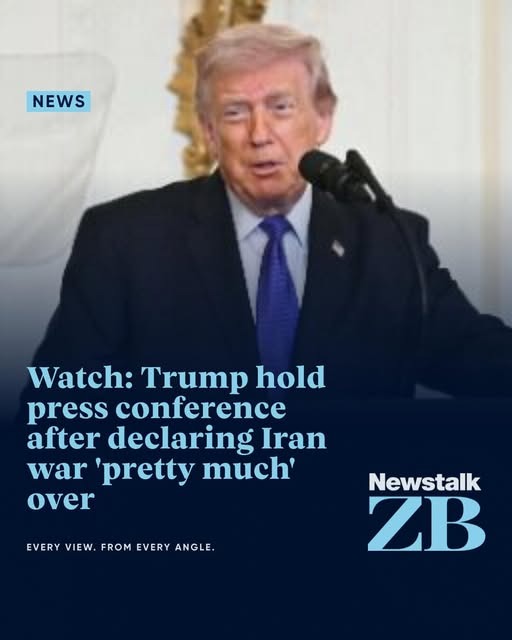
The White House said on Friday that the two sides had agreed on recommendations for more favourable tariff treatment covering $30 billion of non-sensitive goods in each direction and formally activated bilateral boards on trade and investment created at their May summit in Beijing. China also committed to import at least 10 million tonnes of US coal in both 2027 and 2028.

The agreements provided concrete deliverables after a state visit dominated by ceremony and expressions of personal goodwill. Trump called the talks “very, very productive”, while Xi stressed peaceful coexistence and argued that competition between the world’s two largest economies should remain within bounds.

Yet the summit produced no comprehensive settlement of the trade and strategic disputes separating Washington and Beijing. The two governments are still working on US concerns about Chinese supplies of rare earths and other critical minerals, an issue that has given Beijing substantial leverage because of its commanding position in processing and refining.

A two-month extension of the existing trade truce, agreed by senior economic officials before the leaders met, pushes its expiry to January 10. The pause gives negotiators more time to pursue a broader arrangement while limiting the risk of another round of tariff escalation.

Artificial intelligence emerged as another area where the leaders established a channel without resolving their competing approaches. The White House said they created a US-China “Super Intelligence” dialogue to exchange views on risks and benefits, with another exchange due by November, as well as a bilateral communication channel for major incidents.

Xi publicly said AI development should remain under human control. Trump, who has made US technological leadership a central priority, had signalled before the meeting that he did not favour new restraints that could slow development. The result left the two powers talking about safeguards while continuing an intense contest over advanced chips, computing capacity and frontier models.

Taiwan remained a central point of disagreement. China’s account of the talks said Xi urged Trump to handle the issue prudently and oppose Taiwan independence. Washington announced no change to its longstanding policy, while concern over US arms support for the self-governed island continues to shadow bilateral relations.

The summit also covered Iran, Russia and North Korea. The White House said Trump and Xi agreed that Iran must not obtain a nuclear weapon and that no country or institution should impose tolls on international waterways. Trump also urged Xi to increase production of refined petroleum products as Washington seeks to ease pressure on global energy supplies.

Those discussions came as Trump sought Chinese cooperation on international crises while preserving US leverage in trade and technology. Washington retains powerful bargaining tools through access to advanced semiconductors, chipmaking equipment, the US market and financial system. Beijing, meanwhile, has demonstrated its ability to use rare-earth supply controls and the scale of its manufacturing base as negotiating leverage.

The balance was evident before Xi arrived. Chinese shipments of rare-earth magnets to the United States fell in August, reinforcing concerns about supply security even after earlier agreements were intended to keep critical materials moving. US efforts to develop alternative sources are advancing, but replacing China’s dominant refining capacity is expected to take time.

Trade remains similarly interdependent. Earlier commitments have progressed unevenly, including Chinese purchases of US agricultural products and efforts to lower market barriers. The new Board of Trade will establish a working group focused on agricultural access, while the Board of Investment is intended to provide a structured forum for addressing investment opportunities and obstacles.

Oil retreats as US-Iran truce talks advance

Oil prices fell about 2 per cent on Friday as hopes for a negotiated US-Iran truce outweighed fears that intensifying Houthi attacks on Saudi Arabia could further disrupt crude supplies.

Brent futures settled $2.28, or 2.1 per cent, lower at $104.32 a barrel, while US West Texas Intermediate crude dropped $2.20, or 2.3 per cent, to $92.41. Brent still gained less than 1 per cent for the week, while WTI posted a weekly decline.

The retreat followed disclosures that US and Iranian negotiators in New York were exploring a phased arrangement to end the seven-month conflict. The discussions centre on reopening the Strait of Hormuz, a vital route for global energy shipments, in exchange for steps by Washington to ease its economic blockade of Iran.

Iran has proposed reopening the strait within seven days if the United States lifts its naval blockade of Iranian ports, waives sanctions affecting Iranian oil sales and observes a ceasefire. Iranian Foreign Minister Abbas Araghchi outlined the proposal during discussions on the sidelines of the UN General Assembly, according to people familiar with the talks.

The diplomatic opening has reduced some of the risk premium embedded in crude prices, but traders remain wary because no binding agreement has been announced and major differences persist. A senior Iranian official said Tehran would not make concessions over its nuclear programme even if Washington accepted the Hormuz proposal, underscoring the limits of the negotiations.

Supply concerns remain acute in Saudi Arabia, where Houthi forces have stepped up missile and drone attacks. Saudi authorities said air defences intercepted several ballistic missiles, while the Houthis claimed strikes on energy infrastructure at Yanbu and other locations. Saudi officials have not confirmed damage from the latest claimed attacks.

Yanbu is particularly important because it is linked to Saudi Arabia’s East-West Pipeline, which allows crude to reach the Red Sea without passing through Hormuz. The pipeline resumed operations this week after damage from an earlier attack, but flows have been below full capacity and repairs are expected to take weeks.

France has said it will deploy soldiers, radar and air-defence systems to help protect the Yanbu oil terminal. Saudi Arabia has also held security discussions with Pakistan and Turkiye as Riyadh seeks to reinforce protection of critical infrastructure amid the escalation in Yemen.

The competing signals have produced sharp price swings. Brent rose 3.4 per cent on Thursday to $106.60 a barrel after an attack revived concern about Saudi supply, before reversing course on Friday as traders focused on the possibility of a diplomatic framework between Washington and Tehran.

Oil markets are also assessing the effect of a possible US restriction on diesel exports. President Donald Trump has said his administration is considering measures to curb exports as domestic diesel prices remain elevated, although Energy Secretary Chris Wright has argued that a ban would be ineffective and could raise prices for gasoline and jet fuel.

Any restriction on US diesel shipments could tighten international fuel markets already strained by disruptions linked to conflicts in the Middle East and Ukraine. The United States is a major exporter of refined products, and analysts have warned that curbing overseas sales could prompt refiners to reduce output rather than materially lower domestic prices.

The Strait of Hormuz remains the central market variable. Roughly a fifth of global oil and gas shipments normally move through the waterway, and restrictions since the conflict began have forced producers, refiners and shipping companies to rely on costlier alternative routes and limited bypass capacity.

Saudi Arabia has been trying to increase exports through the Red Sea while also moving some barrels through Hormuz when conditions permit. The kingdom’s ability to sustain those flows has become more important as attacks threaten infrastructure designed to provide an alternative to the strait.

Militaries accelerate AI use as safeguards lag

Military adoption of artificial intelligence is advancing faster than international efforts to set common safeguards, a gap highlighted this week at the Beijing Xiangshan Forum as defence officials and experts warned that automated systems are compressing decision times and increasing escalation risks.
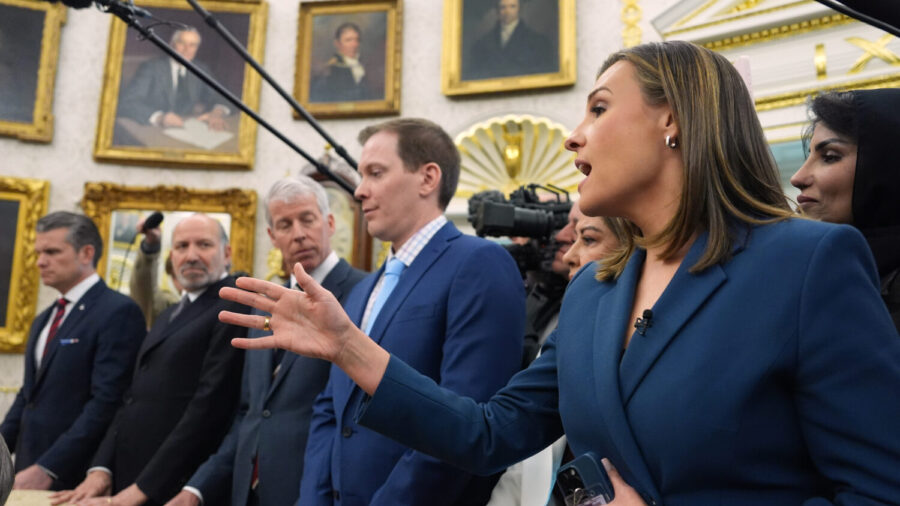
The three-day forum, which ended on Thursday, brought together about 2,000 military officers, diplomats and academics from more than 100 countries and organisations. China’s Ministry of National Defence said one discussion track focused on the risks and regulation of military applications of emerging technologies.

Several delegates argued that human judgement must remain central as armed forces deploy autonomous systems, machine-assisted targeting tools and AI-enabled command functions. Jürg Lauber, vice-president of the International Committee of the Red Cross, said growing autonomy in weapons systems made preservation of human judgement and control over the use of force increasingly important.

Pakistan’s Defence Secretary Muhammad Ali said AI was accelerating military decision-making while misinformation and disinformation could erode public trust before governments had time to respond. Thailand’s Defence Minister Adul Boonthumjaroen said the central challenge was not simply which country would become more powerful, but how an international order could be built around fast-moving technologies.

The debate comes amid weaker momentum around military AI governance. At the third Responsible AI in the Military Domain summit in A Coruña, Spain, in February, neither the United States nor China endorsed the meeting’s outcome document, known as Pathways to Action. The declaration remains open for additional endorsements and is now backed by more than 40 countries.

That marked a change from the first REAIM summit in The Hague in 2023, when both Washington and Beijing supported the Call to Action. The United States also backed the 2024 Blueprint for Action adopted at the second summit in Seoul, while China did not. The 2026 document moved further towards practical measures covering oversight, accountability, testing, risk management and responsible deployment.

The absence of both AI powers from the latest endorsement list has sharpened attention on middle powers such as the Netherlands, South Korea, Spain, Singapore, Canada and Australia, which have played roles in sustaining multilateral discussions. Analysts argue these countries may have greater space to advance operational standards even if the largest military and technology powers remain cautious about binding constraints.

Military applications are meanwhile expanding rapidly. Armed forces are using AI for intelligence analysis, target identification, logistics, cyber operations, drone navigation, battlefield awareness and command support. The spread of low-cost unmanned systems has also increased pressure for faster automated processing, particularly where communication links are disrupted or operators must respond within seconds.

Governments broadly agree on responsible use, but differences persist over what should be legally binding, how much human control is required and whether certain applications should be prohibited. Nuclear command systems remain among the most sensitive areas. Security experts from the United States and China have called for clearer red lines, human oversight of critical systems and dedicated channels to manage AI-related incidents, but the proposals have not been adopted by either government.

The United States and China have pursued separate national approaches to AI policy while continuing strategic competition over advanced semiconductors, computing power and model development. Both governments have acknowledged risks from military AI, yet their rivalry has complicated efforts to translate general principles into shared mechanisms.

REAIM’s 2026 Pathways to Action calls for responsible design, development, testing, deployment and use of military AI, along with stronger oversight and accountability across the technology’s life cycle. It also stresses capacity-building and knowledge-sharing among states, reflecting concern that many governments lack the technical expertise needed to assess increasingly complex systems.

The Beijing forum showed that anxiety over these risks is no longer confined to specialist meetings. Representatives from several Asian countries raised concerns about autonomy, compressed strategic timelines and misinformation, while discussion also covered potential benefits of AI for defence planning and operational efficiency.

Google widens Gemini push across student learning

Google is expanding Gemini deeper into education, giving eligible college students in India a year of Google AI Plus at no cost while introducing personalised study tools, interactive learning features and broader support for exam preparation.

The offer is part of a wider international push covering more than 140 countries and places Gemini more directly into students’ everyday academic routines. Eligible students in India receive Google AI Plus for 12 months, including higher Gemini usage limits, access to advanced artificial intelligence capabilities and 400 GB of cloud storage.

The programme is open to eligible university and college students aged 18 or above who are enrolled at qualifying degree or certificate-granting institutions. Students have to verify their academic status before activating the plan. The offer can be redeemed until December 31, 2026, and requires a valid payment method at registration.

Google AI Plus normally costs ₹399 a month in India. Unless cancelled, subscriptions activated through the student promotion will convert to the prevailing paid rate after the free period. Students whose earlier 2025 AI Pro student trial has expired may also qualify, subject to eligibility verification.

At the centre of the education expansion is a dedicated Student Hub within Gemini. It brings together study notebooks, flashcards, practice quizzes and other learning functions in a single interface. Students can upload syllabi, lecture notes and course materials and use them to build personalised learning programmes.

Study notebooks are designed to identify gaps rather than simply produce answers. A student can begin with a diagnostic quiz, after which Gemini creates shorter lessons based on areas requiring greater attention. Subsequent quizzes track performance and allow the programme to adjust the study plan as the learner progresses.

The notebooks, introduced on desktop earlier this year, have now expanded to mobile devices. They can incorporate course deadlines, notes and supporting material while connecting with other Google learning services, giving students a more structured way to manage subjects across a semester.

Gemini is also adding interactive visualisations aimed at subjects where static explanations may be insufficient. AI-generated tables, diagrams and three-dimensional simulations can demonstrate concepts such as molecular structures, mathematical relationships and scientific processes, allowing users to rotate, explore or modify visual material.

Gemini Live is being extended into research and study workflows as well. Students can initiate detailed research tasks and later discuss the results conversationally using voice. This gives the service a tutoring-style dimension alongside its established role as a generative AI assistant.

Exam preparation has become another significant part of Google's education strategy. Gemini already supports full-length practice material for examinations including JEE Main and NEET UG, with material developed around vetted educational content. Students completing mock examinations can receive feedback identifying stronger areas and subjects requiring further revision.

The company has also been expanding practice options for international examinations including the SAT, ACT and GRE. The approach moves generative AI closer to adaptive test preparation, an area traditionally served by tutoring businesses, specialist educational platforms and publishers.

Google Search is being tied more closely to the same learning ecosystem. Students can request personalised quizzes across subjects and use AI-generated interactive visuals to examine difficult concepts. Search can also work with uploaded PDFs, presentation files, photographs and handwritten notes to create study documents built around the material supplied by the user.

Lens is being developed as another route into AI-assisted learning. Students can photograph a problem or study material and ask the system to explain the underlying concept, identify possible mistakes and guide them towards a solution rather than merely supplying an answer.

The strategy reflects intensifying competition among technology companies to establish generative AI as a routine educational tool. Students represent an important user group because habits developed during university years can influence which productivity and AI services they later adopt in professional life.

India has become particularly important to that contest. More than two million students in the country gained access to Google's advanced AI tools through its earlier student programme, while the 18-to-24 age group has emerged as a major component of Gemini usage.

AI costs push companies towards on-premise computing

Rising expenditure on cloud-based artificial intelligence is prompting companies in India to reassess whether renting high-performance computing capacity remains economical as AI moves from experimentation into large-scale production.

The shift is particularly visible among businesses running persistent inference, model fine-tuning, computer vision and generative AI workloads. Cloud platforms continue to offer speed, flexibility and access to advanced GPUs without heavy upfront investment, but hourly charges can become substantial when expensive accelerators remain active around the clock.

GPU prices available through the IndiaAI Compute Portal illustrate the scale of the calculation facing enterprises. On-demand access to a single Nvidia H100 SXM GPU is listed at about ₹153 an hour, while a 12-month reservation brings the rate down to around ₹117. An H200 SXM GPU is available at roughly ₹140 an hour on demand in some configurations, compared with about ₹100 under longer reservations.

More powerful systems cost considerably more. A two-GPU Nvidia B200 configuration is priced at about ₹581 an hour on demand, while an eight-GPU configuration exceeds ₹2,300 an hour. Prices vary by provider, architecture, reservation period and configuration, making headline GPU rates only one part of the overall expense.

For companies operating workloads continuously, those charges accumulate quickly. An H100 running uninterrupted at ₹153 an hour would generate compute charges of more than ₹1.3 million over a year before storage, networking, data movement and other services are considered. Larger clusters can multiply that figure rapidly.

That arithmetic is strengthening the argument for owning AI infrastructure where utilisation is predictable. Purchasing servers places GPUs directly under enterprise control and removes recurring rental charges, although companies must fund hardware, networking, electricity, cooling, maintenance and technical staff before any savings emerge.

Utilisation is therefore becoming the critical variable.

A GPU server operating only occasionally can become an expensive idle asset. Cloud infrastructure remains attractive for experimental projects, irregular training runs and companies whose AI demand changes sharply from week to week. Capacity can be increased or released within minutes without purchasing equipment that may remain unused.

The equation changes when GPUs operate continuously at high utilisation. Companies running stable production inference or regular model training can potentially spread hardware costs over several years and lower the effective cost of each computing hour.

Hardware ownership nevertheless carries risks that cloud customers largely transfer to their providers. AI processors are evolving rapidly, meaning expensive equipment can lose relative competitiveness long before it physically wears out. New generations from Nvidia, AMD and other suppliers offer higher performance, larger memory and improved energy efficiency, potentially altering the economics of systems purchased only two or three years earlier.

Software compatibility can be equally important. Nvidia's CUDA ecosystem remains deeply embedded across AI frameworks and enterprise applications. Alternative accelerators may offer attractive pricing or memory specifications, but migration can require engineering work, optimisation and testing that reduce theoretical savings.

Performance also varies significantly by workload. A cheaper GPU is not automatically less expensive if a model takes longer to produce the same number of tokens or complete the same training task. Enterprises are increasingly measuring cost per inference, cost per million tokens and useful output per watt rather than relying solely on hourly rental prices.

Cooling and power requirements present another obstacle to bringing AI infrastructure inside corporate facilities. High-density AI racks can demand far more electricity than conventional enterprise servers, with newer configurations requiring specialised liquid cooling and upgraded power distribution.

This is encouraging a third model between public cloud and equipment installed inside company offices. Enterprises can purchase or reserve dedicated GPU infrastructure housed in specialised data centres, combining greater control with professionally managed power, cooling and connectivity.

Hybrid deployment is also gaining ground. Sensitive data and predictable inference can remain on dedicated infrastructure, while cloud GPUs absorb temporary spikes, experimental workloads and unusually large training jobs.

Data governance adds another dimension. Organisations handling financial, healthcare, government or proprietary information may prefer local or dedicated systems because they offer tighter control over where data and models are processed. Cloud providers have responded with private-cloud, sovereign-cloud and dedicated infrastructure options, narrowing some of that distinction.

India's expanding shared compute infrastructure is meanwhile altering the cost equation. More than 38,000 GPUs have been empanelled under the IndiaAI Mission, with another 20,000 planned as part of efforts to broaden access to advanced computing. The programme allows eligible startups, researchers, government bodies and other users to access subsidised or competitively priced GPU capacity without making large capital investments.

Competition among cloud providers, domestic data-centre operators and specialised GPU companies is also pushing enterprises towards more granular purchasing decisions. Reserved capacity, spot pricing, smaller inference accelerators and purpose-built AI processors can reduce bills without forcing companies to abandon cloud infrastructure entirely.

AI pushes IT services beyond billable-hour model

Artificial intelligence is accelerating a fundamental change in India’s IT services industry, pushing outsourcing contracts away from billing for employee hours towards pricing based on productivity, savings and measurable business results.

Major providers including Tata Consultancy Services, Infosys, HCLTech, Wipro, Tech Mahindra and Cognizant are adjusting delivery models as corporate customers demand that AI-generated efficiency translate into lower costs. The shift threatens a decades-old model in which revenue growth was closely connected to adding engineers and charging clients for their time.

India’s technology sector is expected to cross $315 billion in revenue in FY26, with direct employment approaching six million. Yet the industry's growth strategy is increasingly based on value and specialised capabilities rather than expanding headcount. AI has moved from experimentation to industrial-scale deployment, while providers are adopting outcome-based and risk-sharing contracts as automation increases productivity.

Under traditional time-and-material contracts, customers essentially paid for the number of people assigned to a project and the hours they worked. Generative AI is weakening that relationship. Coding assistants, automated testing, software agents and AI-powered maintenance tools allow smaller teams to perform work that previously required substantially larger groups.

Customers consequently want part of those efficiency gains. Some contracts are being structured around specific targets such as faster processing, reduced technology expenditure, improved customer service or quicker software development rather than the size of the delivery team.

The transition is also changing competition. Persistent Systems and Coforge have posted considerably stronger growth than several larger rivals, benefiting from demand for rapid AI pilots and specialised services. During the April-June quarter, Persistent's dollar revenue rose about 16 per cent while Coforge recorded growth of roughly one-third. Growth among several of the largest providers was around 1-3 per cent.

Outcome pricing carries risks for suppliers. Technology companies must estimate in advance how much productivity AI can deliver, potentially exposing themselves to margin pressure when promised efficiencies fail to materialise. Contracts linked to business results can also create disputes over whether the technology provider was responsible for an outcome affected by other parts of a customer's operations.

Tech Mahindra chief executive Mohit Joshi has warned against assumptions that AI productivity will improve by 70-80 per cent over five to seven years while providers guarantee prices despite rising technology infrastructure costs. Some companies have walked away from contracts where pricing or productivity commitments were considered commercially unsustainable.

The labour impact is becoming equally significant. Entry-level software work historically provided the foundation of the industry's employment pyramid, with large numbers of graduates recruited for coding, application maintenance and testing. AI can automate growing portions of these tasks, reducing demand for some conventional junior roles while raising requirements for engineers capable of working with AI systems, cloud platforms, cybersecurity, data and industry-specific technology.

Hiring is therefore moving from volume towards skills. Campus recruitment requirements have shifted from basic coding and cloud knowledge towards AI and machine learning, advanced data analytics and DevOps, while AI and machine-learning positions command some of the industry's highest skills premiums.

That does not mean graduate recruitment is disappearing. Infosys said 10,766 fresh graduates completed training at its Mysuru education centre during FY26, with generative AI and prompt engineering incorporated into foundation training. About 84 per cent of its 328,594 employees are now AI-aware.

TCS has also intensified retraining. More than 270,000 employees had advanced AI skills by the end of FY26, compared with about one-third of that level a year earlier. The company recorded $2.3 billion in annualised AI revenue during the March quarter and is preparing thousands of forward-deployed engineers to work directly with clients on AI implementation.

The changing economics are influencing acquisitions and large contracts as well. TCS this week agreed to buy Porsche's technology consulting subsidiary MHP for an enterprise value of €320 million as part of a five-year partnership valued at €1.25 billion. The programme is designed to expand AI across engineering, manufacturing, operations and customer experience, illustrating how providers are positioning themselves deeper inside clients' businesses rather than supplying technology labour alone.

Tata Sierra.ev gains built-in 5G connectivity

Tata Motors Passenger Vehicles and Tata Communications have partnered to equip the Sierra. ev with built-in 5G cellular connectivity, strengthening the electric SUV’s role as a software-defined vehicle capable of receiving continuous digital upgrades.

The arrangement integrates Tata Communications’ MOVE Connected Vehicle Platform with Tata Motors Passenger Vehicles’ N. IO software-defined vehicle architecture. The combination is designed to provide persistent connectivity for infotainment, vehicle diagnostics, emergency functions and over-the-air software updates throughout the vehicle’s operating life.

The Sierra. ev will use the 5G connection to support faster software downloads, secure content streaming, remote vehicle support and real-time diagnostics. Owners will also be able to purchase additional digital subscription packages, creating scope for services and features to be added after the vehicle has been sold.

The technology marks a shift in how Tata Motors Passenger Vehicles is approaching vehicle development. Rather than treating software as a fixed component installed during manufacturing, the N. IO platform allows functions to evolve through updates delivered remotely. That approach brings passenger vehicles closer to smartphones and other connected devices whose capabilities can change after purchase.

Sven Patuschka, chief technology officer at Tata Motors Passenger Vehicles, said increasingly software-defined vehicles would make intuitive digital connectivity central to customer experience. He described the Sierra. ev as an important step in that transition, with the Tata Communications network providing the digital infrastructure needed for continuous innovation.

The system is also intended to support artificial intelligence-enabled applications as vehicle software becomes more sophisticated. Reliable high-bandwidth connections can allow data generated by cars to be processed more rapidly, supporting personalisation, predictive maintenance and services that depend on near-real-time communication between the vehicle and cloud infrastructure.

Safety-related functions form another part of the deployment. Embedded connectivity can maintain emergency calling services and enable remote assistance when required, while diagnostic data can help identify vehicle problems without the owner first taking the car to a workshop.

Tata Communications executive vice-president Vivek Manglik said vehicles were developing into intelligent digital ecosystems capable of running an expanding range of applications and services. He said the underlying digital infrastructure would be critical to expanding those capabilities securely while improving convenience and personalisation.

The Sierra. ev already offers the iRA. ev connected-car suite with about 70 functions and advanced 5G connectivity. Connected services include remote controls, trip-related functions and over-the-air updates. Tata Motors Passenger Vehicles is offering four years of iRA. ev services from activation, beginning with one year of its higher-tier Ultra Pack followed by three years of Essential Pack access, with options for customers to renew or upgrade.

Connectivity is increasingly becoming a competitive differentiator in the passenger-vehicle market as manufacturers move beyond conventional infotainment systems. Cars capable of downloading software remotely can receive bug fixes, revised interfaces and, where the vehicle architecture permits, additional functions without requiring physical service-centre visits.

The model also provides manufacturers with new commercial opportunities. Digital subscriptions can generate revenue after a vehicle has left the showroom, while real-time data can improve maintenance planning and help companies understand how vehicle features are being used. Such systems, however, also place greater emphasis on cybersecurity, data management and reliable telecommunications coverage.

The Sierra. ev incorporates several other technology-heavy features, including Level 2+ advanced driver-assistance functions on higher variants, digital displays, surround-view systems and app-based infotainment. Its connected platform is designed to provide the communications backbone needed for such technologies to develop further over the vehicle lifecycle.

India’s telecommunications network has expanded sharply since the introduction of commercial 5G services, giving carmakers a larger infrastructure base for connected-vehicle applications. The country had more than 1.28 billion wireless subscribers at the end of March 2026, while wireless data consumption during the January-March quarter reached nearly 77,953 petabytes.

For Tata Communications, connected vehicles represent an extension of its enterprise connectivity and Internet of Things operations. Its MOVE platform is designed to manage cellular connectivity for mobile assets across networks while giving businesses tools to control services and data connections.

US sanctions four India-based firms over Iran trade

The United States has sanctioned four India-based companies over alleged purchases and handling of Iranian petroleum and petrochemical products, extending Washington’s new economic pressure campaign against Tehran to businesses operating in India.

The companies named are Portease Partners LLP, Sadashiva Overseas Limited, PP Softtech Private Limited and Prakrutees Infra Impex India Private Limited. Three individuals associated with the businesses — Indrismiya Ashrafmiya Sheikh, Harish Ramachandra Rangi and Prashant Garg — have also been targeted.

The measures form part of “Operation Economic Outcast”, a broad sanctions drive announced by the administration of President Donald Trump to restrict revenue available to Iran and increase the cost for foreign companies continuing commercial dealings with Tehran.

Sadashiva Overseas Limited was accused of importing about $69 million worth of Iranian-origin petroleum products from several companies between February 2024 and June 2025. The transactions included purchases involving Bonjoure Commodity FZE, an entity already subject to US sanctions.

PP Softtech Private Limited allegedly imported about $25 million worth of Iranian-origin petroleum products between January 2024 and June 2025. Its director, Prashant Garg, was separately designated as part of the action.

Prakrutees Infra Impex India Private Limited was accused of importing roughly $25 million of Iranian petroleum products from several suppliers between May 2023 and February 2026.

Portease Partners LLP, described as a customs broker, allegedly facilitated multiple shipments of Iranian petrochemical products into India. Its designated partners Sheikh and Rangi were included in the sanctions action because of their roles in the company.

Washington said the companies knowingly engaged in significant transactions involving the purchase, acquisition, sale, transport or marketing of petroleum or petroleum products originating in Iran. The designations were made under existing executive authorities governing sanctions on Iran’s energy sector.

The action potentially restricts the targeted businesses’ access to the US financial system and freezes property or interests in property falling within US jurisdiction. Companies dealing with designated entities can also face heightened compliance scrutiny from international banks, insurers, shipping companies and commodity traders.

The inclusion of India-based businesses comes as Washington expands pressure beyond companies directly operating in Iran and focuses increasingly on overseas intermediaries that facilitate trade, shipping, payments and procurement.

Operation Economic Outcast has targeted close to 60 individuals, companies and vessels across several jurisdictions. The wider campaign covers Iran-linked petroleum trading, maritime networks, military procurement, missile-related activity and other channels Washington says generate or move funds for Tehran.

The administration has also warned governments and private businesses that continued economic engagement with Iran could expose them to secondary sanctions. Such measures allow Washington to penalise foreign entities even when transactions do not directly involve US companies or citizens, particularly when dealings involve designated sectors or sanctioned counterparties.

The latest strategy represents an intensification of economic pressure after months of disruption to energy markets and shipping around the Gulf. Iranian crude exports have already fallen sharply from levels recorded before the conflict, while restrictions around the Strait of Hormuz and greater scrutiny of tanker movements have complicated Tehran’s ability to reach overseas buyers.

China remains the largest destination for Iranian crude, although volumes have declined substantially under tighter enforcement and shipping constraints. Independent refiners have historically accounted for much of the trade, often using intermediaries, alternative payment arrangements and complex shipping structures.

India had largely stopped direct purchases of Iranian crude after US sanctions waivers expired in 2019, although trade in other products and humanitarian goods continued. The latest designations illustrate Washington’s increasing focus on identifying petroleum-origin transactions further down the trading chain rather than concentrating only on direct crude imports.

The measures could prompt additional compliance reviews among India-based commodity traders, customs brokers, shipping agents and financial institutions handling international payments. Businesses involved in petroleum products may face greater demands to document product origin, suppliers, beneficial ownership and payment routes before banks or insurers approve transactions.