
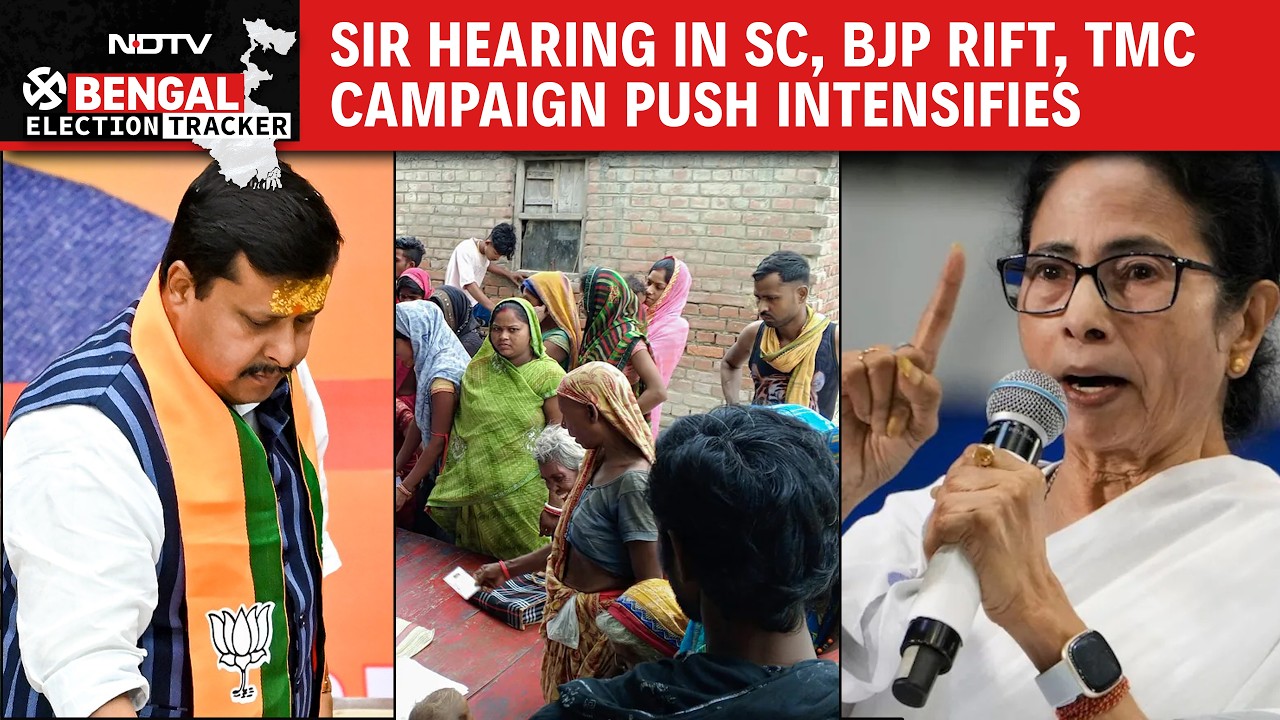
 Anger over West Bengal’s Special Intensive Revision of electoral rolls has pushed the voter-list dispute to the centre of the assembly election campaign, after protests in Malda turned violent and sharpened the clash between the Trinamool Congress and the Bharatiya Janata Party over who is being struck off the rolls and why.
 The flashpoint came in Malda, where residents in several areas blocked National Highway 12 and confronted officials after names were found missing from voter lists. In Kaliachak-II, seven judicial officers assigned to hear objections linked to the revision exercise were surrounded for hours, prompting a late-night rescue operation and drawing intervention from the Supreme Court, which described the episode as a grave law-and-order failure.
That unrest has given both principal rivals fresh political ammunition. The ruling TMC says the revision process has been used to selectively remove legitimate voters, especially in minority-dominated and border districts, and has portrayed the exercise as part of a wider attempt to engineer the electoral field before polling. Chief Minister Mamata Banerjee has called the Malda violence a conspiracy and urged people not to take the law into their own hands, while arguing that the row over deletions fits a broader BJP strategy to destabilise the state politically.
The BJP, by contrast, has defended the exercise as a necessary clean-up of the electoral rolls, saying the objective is to detect bogus entries and remove infiltrators or ineligible names. That argument has found support among party leaders who say stricter scrutiny is long overdue in districts where citizenship, migration and documentation have shaped political debate for years. The revision has therefore become more than an administrative exercise; it now sits at the intersection of identity, border politics, franchise rights and the credibility of the election machinery.
What has made the issue particularly combustible is the scale involved. Election-related reporting in the state indicates that supplementary lists have been under preparation after a vast number of entries were placed under adjudication, while the Supreme Court was told that tens of lakhs of claims were being processed by judicial officers under a compressed schedule. One report said 47.3 lakh claims had already been decided and that around 60 lakh were to be resolved by April 7, underscoring the extraordinary administrative burden and the number of households touched by the exercise.
Malda has become the emblem of that anxiety because the dispute there moved from paperwork to the street. Reports from English Bazar, Ratua, Sujapur, Mothabari and adjoining areas describe road blockades, barricades, clashes with police and accusations from residents that they were not given a fair chance to defend their names before deletion. In some pockets, political workers and local residents alleged that large sections of minority voters were being disproportionately hit. The administration, on the other hand, has treated the attack on judicial personnel as an intolerable assault on the election process itself.
The institutional response has been swift. The Supreme Court ordered protection for officials on electoral duty, and the Election Commission sought reports from the state police after the Malda episode. Separate reports said the case had been escalated for deeper investigation and that judicial officers resumed work under Central Armed Police Forces protection from an alternative location after expressing fears about returning to the original site.
Politically, the fallout stretches beyond Malda. Protests have also surfaced in other districts, including parts of North 24 Parganas and Jalpaiguri, suggesting that concern over deletions is not confined to one belt. In the Matua-dominated border region, reports of families once aligned with the BJP shifting towards TMC over voter-list grievances show how the revision could influence turnout, loyalties and local campaign messaging. That matters because assembly elections in West Bengal are often decided by narrow, intensely fought contests in socially fragmented constituencies.