
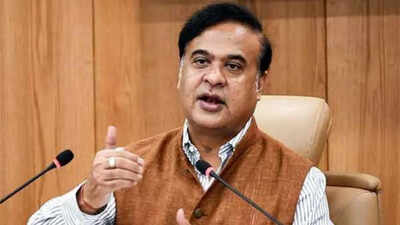
 A fresh political clash has broken out in Assam days before voting in the state assembly election, after Congress leader Pawan Khera alleged that Chief Minister Himanta Biswa Sarma’s wife, Riniki Bhuyan Sharma, holds multiple foreign passports and has not fully disclosed overseas assets. The accusation was rejected by Sarma as fabricated and politically motivated, with the chief minister saying he and his wife would pursue criminal and civil action. Assam’s 126 seats go to the polls on 9 April, according to the state election schedule published by the Chief Electoral Officer.
 Khera, speaking at a press conference in New Delhi, claimed his party had documents showing that Bhuyan Sharma held three active passports said to be from the United Arab Emirates, Antigua and Barbuda, and Egypt. Reports on the press conference said he also raised questions about alleged overseas business interests and property links, and sought scrutiny of disclosures made in election filings. Economic Times reported that the Congress framed the matter as one involving citizenship law and asset transparency, while Hindustan Times and Times of India carried the substance of Khera’s claims and his demand for further investigation.
Sarma responded first with a public denial and a warning of defamation proceedings, then sharpened his position a day later by saying an FIR had been filed and that fabricated documents used to influence an election could attract serious punishment. Hindustan Times reported him as saying the material cited by Congress contained discrepancies and that one of the passports referred to was fake. Times of India also quoted Sarma arguing that the alleged documents showed technical inconsistencies, including spelling and data mismatches, which he said pointed to manipulation.
The dispute has quickly become more than a personal exchange. It is now part of a wider battle over credibility in one of the country’s most politically charged state contests. Sarma has cast the Congress allegations as a sign of opposition anxiety before polling, while Congress figures have tried to turn the row into a question of legality, disclosure and propriety in public life. Gaurav Gogoi, the Assam Congress president, was reported as calling the matter grave and demanding deeper scrutiny. None of the allegations has been established in court, and no official adjudication on the claims had emerged in the material available at the time of writing.
Election timing has amplified the impact. The Chief Electoral Officer’s published schedule shows nominations closed on 23 March, scrutiny was completed on 24 March, withdrawals ended on 26 March, and polling is set for 9 April, with counting on 4 May. A separate Election Commission press note issued on 4 April said 1,955 candidates were in the fray across Assam, Kerala and Puducherry for the contests being held on 9 April, underlining how close Assam is to the formal voting stage.
That proximity to polling helps explain why the fight has escalated so fast. Personal and family-centred allegations have long been a feature of high-stakes campaigns in India, but they carry added risk when tied to documents, affidavits and supposed foreign links. For the ruling BJP, the immediate task is to prevent the issue from shifting attention away from its message on governance and electoral momentum. For Congress, the calculation appears to be that questions around transparency and foreign assets could cut through where broader anti-incumbency arguments have struggled.
There is also a legal and political distinction that may matter in the days ahead: making an allegation during a campaign is not the same as proving misconduct. Khera said his party had cross-checked the information before going public, but Sarma has countered that the material was false and intended to mislead voters. If the promised defamation and related legal proceedings move quickly, the contest could shift from political theatre to a more document-driven confrontation over authenticity, disclosure rules and the use of campaign accusations close to polling day.