
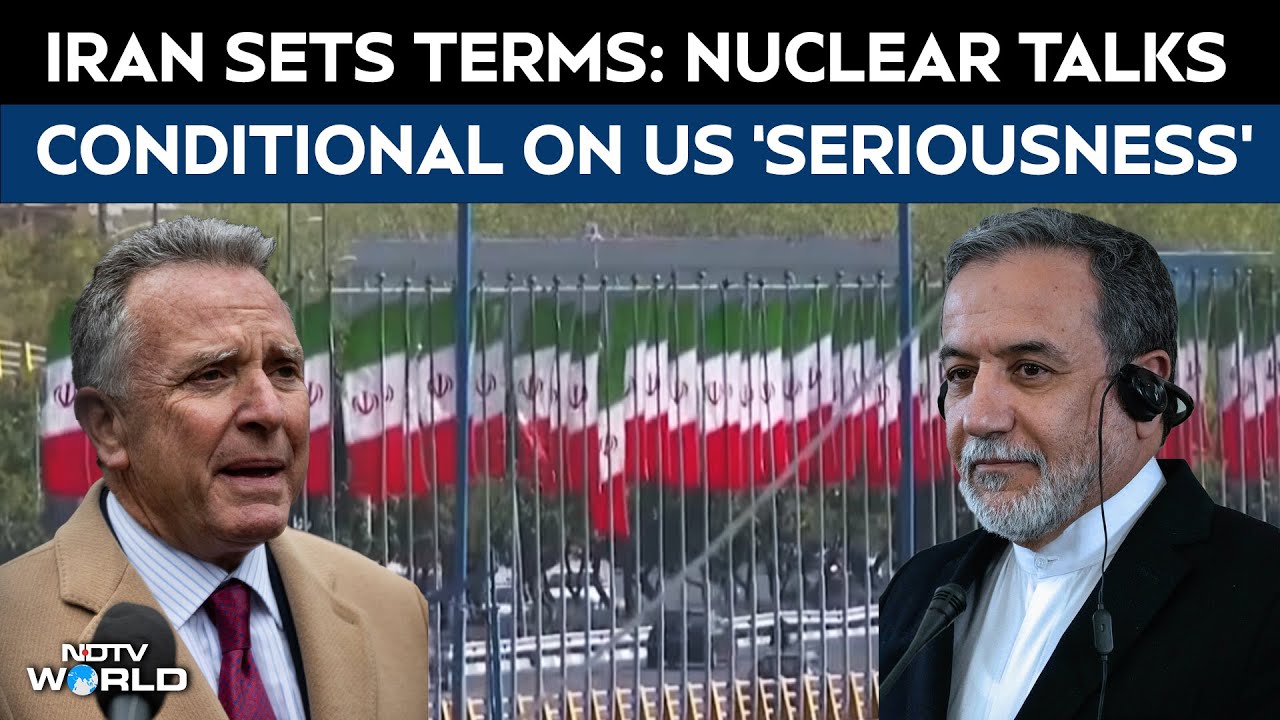
 Iran has hardened its position ahead of talks with the United States, saying no negotiations will begin unless two conditions are met first: a ceasefire that covers Lebanon and the release of Iranian financial assets blocked abroad. The stance, laid out by Parliament Speaker Mohammad-Bagher Ghalibaf on Friday and carried into the opening of the Islamabad diplomacy on Saturday, has added fresh uncertainty to what were already low-expectation contacts between the two sides.
 Ghalibaf said the measures were not new demands but part of what Tehran regards as prior understandings. That formulation matters because it shifts Iran’s argument from bargaining to alleged non-compliance, allowing it to say the obstacle lies with implementation rather than with a refusal to engage. Washington has pushed back on the Lebanese element in particular, with Reuters reporting that the United States denies Lebanon was part of the ceasefire arrangement now under strain.
The dispute goes to the heart of the fragile diplomacy now under way in Pakistan. Senior American officials, led by Vice President JD Vance, arrived in Islamabad for the highest-level official US-Iran negotiations in years, while Iran sent a delegation headed by Ghalibaf and including Foreign Minister Abbas Araqchi. The talks are intended to test whether a temporary halt in open conflict can be turned into a broader framework covering security, shipping through the Strait of Hormuz, sanctions and Iran’s nuclear programme.
Iran’s insistence on linking Lebanon to the process reflects both strategy and ideology. Tehran has long treated pressure on Hezbollah and pressure on Iran as connected tracks in the same regional contest. By making a Lebanon ceasefire a precondition, it is signalling that negotiations cannot be separated from the wider network of allied forces and fronts that define its deterrence posture. European officials have also warned that continued Israeli strikes in Lebanon risk undermining the truce atmosphere. EU foreign policy chief Kaja Kallas said this week that any US-Iran ceasefire should extend to Lebanon, underscoring that Tehran is not alone in seeing the fronts as interconnected, even if Washington rejects that interpretation.
The second condition, the release of blocked Iranian assets, adds an economic and symbolic test. Reports in the US press and other outlets point to frozen Iranian funds, including roughly $6 billion in oil revenue held in Qatar since a 2023 prisoner-swap arrangement and then immobilised after the Hamas attacks in October that year. Tehran views access to those funds as a measure of American seriousness. For Washington, unfreezing money before substantive negotiations would be politically difficult, especially after weeks of conflict and amid a hard line from President Donald Trump and his team.
That leaves both parties entering the room with sharply different definitions of what the room is for. Iran appears to be treating the encounter less as the start of a negotiation than as a checkpoint for commitments it says were already sketched out. The United States, by contrast, is seeking movement on immediate strategic concerns, above all the reopening of the Strait of Hormuz, where disruption has rattled oil markets and sharpened fears over global supply chains. Reuters said the waterway and sanctions relief remain among the main sticking points, alongside disputes over enrichment and the scope of any ceasefire.
Pakistan’s role as host has given the effort a diplomatic stage but not much shelter from mistrust. Prime Minister Shehbaz Sharif has described the moment as a make-or-break chance for peace, while Islamabad has imposed tight security around the venue. Yet the symbolism of face-to-face contact is colliding with public recrimination. Vance warned Tehran against acting in bad faith, and Ghalibaf has already argued that ceasefire terms were breached before talks could properly begin.
Chronology is central to understanding the current impasse. Over the past week, Iranian officials moved from questioning whether talks were reasonable at all after Israeli strikes in Lebanon to restating a narrower set of prerequisites for engagement. By Saturday, delegations from both sides were in Islamabad, but the argument had shifted from whether they would meet to whether the session counted as a negotiation in any meaningful sense. That distinction may shape the next phase of the crisis: a formal opening exists, but each side is still trying to define the price of entry.