
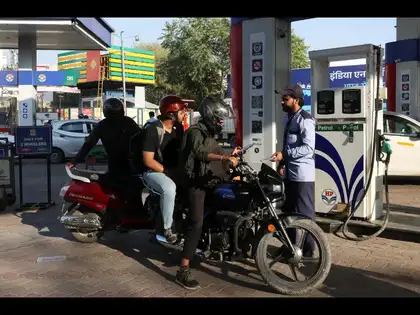
 Safe passage through the Strait of Hormuz moved to the centre of India’s diplomatic and energy agenda on Wednesday, with external affairs minister S. Jaishankar telling a Japan-led emergency forum that attacks on merchant shipping were unacceptable and that maritime commerce must remain unimpeded. His intervention came as the disruption around Hormuz continued to strain oil flows, unsettle freight markets and sharpen concern over the vulnerability of major Asian importers. ][1])
Jaishankar took part in the Asia Zero-Emission Community, or AZEC Plus, online summit on energy resilience convened by Japanese Prime Minister Sanae Takaichi on April 15. Japan’s prime minister’s office said the meeting was held to address energy resilience, underscoring how the Hormuz crisis has widened from a shipping problem into a broader strategic question involving fuel security, supply chains and industrial stability across Asia. India used the forum to signal that the issue is not only about oil cargoes but also about the rules governing commercial navigation.
New Delhi’s concern is rooted in hard exposure. About half of the country’s crude oil and LPG supplies pass through the Strait of Hormuz, while the Middle East accounted for about 55% of India’s crude imports as of January, according to Reuters reporting based on analyst assessments and official data. That leaves India more vulnerable than many of its Asian peers if the disruption drags on, especially because its storage cushion is thinner than China’s and because Gulf routes remain central to both energy imports and outward trade.
The strain is already visible in the trade numbers. India’s merchandise trade deficit narrowed in March, but officials said exports to the Middle East dropped by $3.5 billion as the Iran conflict disrupted shipping routes, raised insurance costs and delayed cargo movement around the Gulf. Imports of crude and related products also fell sharply year on year. While stronger shipments to the United States softened the blow, the data showed that India’s wider trade performance is being pulled in opposite directions by demand recovery in one market and supply disruption in another.
For policymakers, the Hormuz crisis is forcing two conversations at once. The first is immediate: how to keep cargo moving, secure tankers, and prevent a freight and insurance spiral from feeding into domestic inflation. The second is structural: whether India can continue relying so heavily on a corridor that has become a recurring flashpoint in every major Gulf confrontation. Reuters reported in March that India held enough crude and fuel to last roughly 74 days, though refining sources suggested commercially usable inventories may cover a much shorter span. That gap between headline reserves and operational flexibility matters when refiners must respond to sudden interruptions and volatile spot prices.
Oil markets have not calmed. Reuters reported on Thursday that Brent crude was still trading near $95 a barrel, with analysts saying around 13 million barrels per day of oil flow had been disrupted after accounting for diversions and the limited number of vessels that have managed to pass. The Strait of Hormuz normally carries about a fifth of global oil and liquefied natural gas flows, so even partial obstruction has consequences well beyond Asia. The longer free navigation remains uncertain, the more likely it is that energy consumers will face higher costs, tighter physical supply and erratic pricing signals.
Despite the danger, some cargoes have continued to move. Reuters tracking of tanker movements showed several India-bound vessels exiting the Gulf in March and April, including crude deliveries for Indian Oil, Reliance Industries and Hindustan Petroleum, as well as LPG cargoes heading to multiple ports. That traffic suggests the route is impaired rather than fully sealed. But the same reporting also underlines how passage has become conditional, politically fraught and dependent on changing security calculations, which is precisely why New Delhi is pressing the principle of unimpeded transit in public diplomatic language.
India’s position also carries a wider political signal. By raising the issue at a Japan-led energy resilience gathering rather than framing it solely as a bilateral matter with Tehran or Washington, New Delhi is placing maritime safety within a larger coalition-based discussion on Asian supply chains. That suits India’s interests. It avoids being seen as aligned with any one camp in the conflict while reinforcing its long-standing argument that commercial sea lanes are a collective concern. It also matches Japan’s own anxiety over imported energy and industrial continuity, giving the two countries a common platform even though their supply profiles differ.