
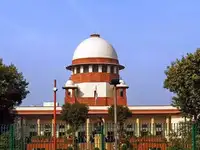
 New Delhi, April 2: The Supreme Court has imposed costs of Rs 25,000 on the Centre for pursuing what it described as unnecessary litigation in a service matter involving a Central Industrial Security Force constable, while upholding a Punjab and Haryana High Court ruling that had set aside his dismissal and granted him partial back wages. A bench of Justices B V Nagarathna and Ujjal Bhuyan dismissed the Union government’s special leave petition in Union of India v. Sukhwinder Singh, signalling a tougher judicial view on routine official appeals that add to case backlogs.
 The bench’s order came with pointed remarks on the government’s role in swelling court dockets. During the hearing, Justice Nagarathna questioned why the Union had chosen to challenge concurrent relief granted by the high court, observing that the state often complains of pendency while remaining the biggest litigant. The court said it failed to understand why the Union had assailed the division bench order and dismissed the petition with costs, while also refusing to interfere with the relief already granted to the constable.
At the centre of the dispute was the dismissal of CISF constable Sukhwinder Singh after around a decade of service. Departmental authorities had acted against him on two counts: unauthorised absence for 11 days in November 2009, and alleged misconduct linked to the elopement of the daughter of another CISF constable, who later married Singh’s younger brother at an Arya Samaj Mandir in Raipur. The Union argued that the high court had erred in upsetting the disciplinary punishment.
The factual background, however, weighed heavily against the government’s case. The 2019 judgment of the Punjab and Haryana High Court recorded that Singh was on medical leave during the period in question, though he was not found in the barracks during an inspection. On the second allegation, the high court noted that the woman concerned was an adult, had married of her own volition and stated during the disciplinary proceedings that she had no grievance. Justice Arun Monga, who allowed the writ petition, held that the punishment orders could not withstand judicial scrutiny, describing removal from service as excessively harsh and legally unsustainable on the material before the authorities.
That ruling directed Singh’s reinstatement with continuity of service and consequential benefits, while limiting the monetary relief to 25 per cent of the pay due for the period he remained out of service. The high court therefore did not offer an unrestricted financial award; instead, it balanced reinstatement with only partial back wages. Reports of the Supreme Court hearing show that the division bench of the high court later upheld the single-judge decision, finding no illegality or perversity in the reasoning, which left the Centre challenging concurrent findings when it moved the apex court.
Before the Supreme Court, the Centre sought at least to trim the monetary relief, invoking the principle of “no work, no pay” and arguing that the matter had remained pending for years. The bench was not persuaded. It declined to disturb the grant of back wages and treated the appeal itself as avoidable. Live Law and other legal coverage of the proceedings indicate that the court condoned delay in filing but still dismissed the petition, ultimately deciding that costs should follow because the litigation ought not to have reached the top court in the first place.
The significance of the ruling goes beyond one service dispute. It reflects the court’s continuing unease over mechanical appeals filed by government departments, especially in service-law cases where proportionality has already been examined by a high court. Justice Nagarathna’s oral remarks suggested that law officers and departments should develop an internal filter before escalating such matters. That message is institutionally important because the judiciary has repeatedly flagged government litigation as a major contributor to pendency, and Wednesday’s order gives that criticism concrete form through financial costs, however modest the amount may be.