
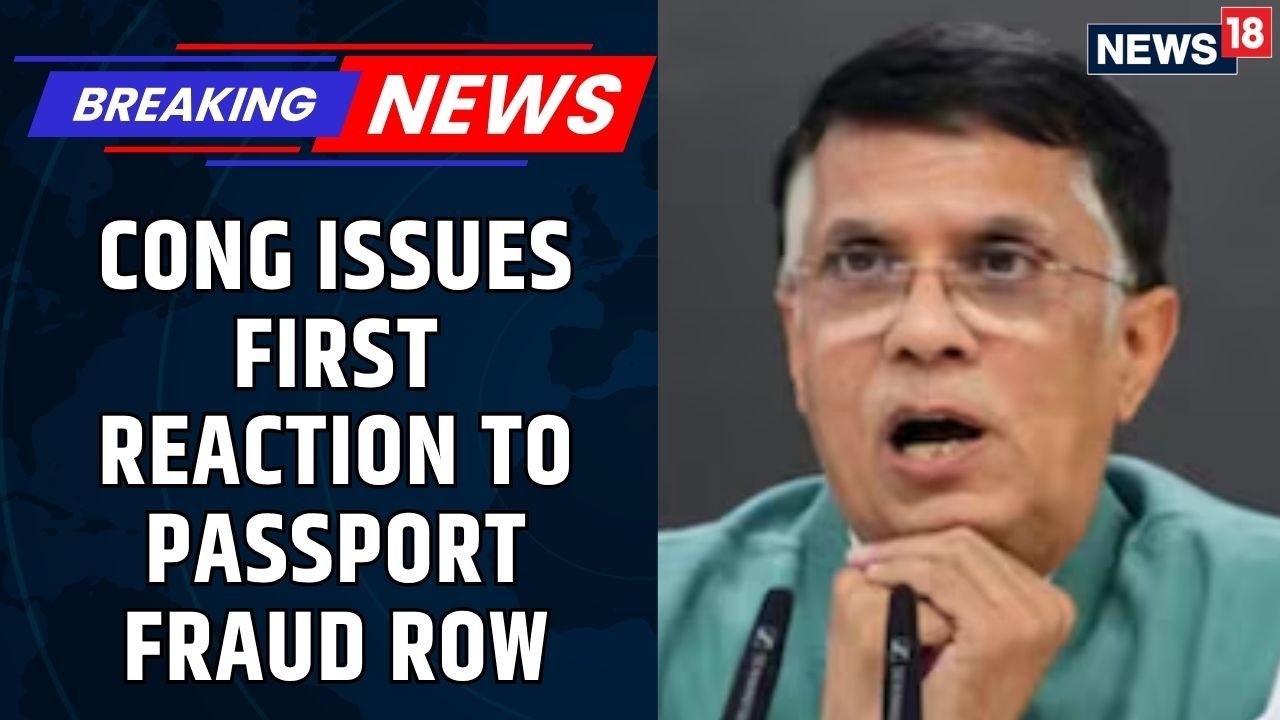
 Congress has come under sharp pressure in Assam after allegations by its media and publicity chief Pawan Khera that Chief Minister Himanta Biswa Sarma’s wife, Riniki Bhuyan Sarma, held three passports, including documents said to be from the United Arab Emirates, Antigua and Barbuda, and Egypt, triggered legal action and a public rebuttal from the Union government. By Tuesday, the dispute had moved from a political briefing room to the police and diplomatic arena, with Assam Police searching Khera’s Delhi residence after an FIR lodged by Riniki Bhuyan Sarma and Minister of State for External Affairs Pabitra Margherita declaring the documents cited by Congress to be “fake and fabricated”.
 The row began after Khera, speaking for Congress on April 5, alleged that the chief minister’s wife possessed multiple foreign passports and had links to undisclosed overseas assets. Himanta Biswa Sarma rejected the charge within hours, calling it defamatory and politically motivated, while warning of civil and criminal action. Riniki Bhuyan Sarma followed with her own rejection, saying the material circulated against her was false and that she would let the law take its course. The matter escalated on April 7 when police action followed the complaint, pushing the issue from campaign rhetoric into a formal criminal investigation.
Margherita’s intervention gave the rebuttal a wider institutional dimension. Speaking in Jorhat, the external affairs minister said diplomatic channels and an investigation had established that the passport documents displayed by Congress were not genuine. That statement was politically important because the original allegation rested on the claim that an Indian citizen could not legally hold multiple foreign passports without grave legal consequences. By publicly dismissing the documents, the minister deprived Congress of the claim that it was merely asking unanswered questions and shifted the focus to the authenticity of the material used in the press conference.
The legal case has also broadened the stakes. Reporting on the FIR indicates that the complaint invokes charges including defamation, forgery and criminal conspiracy under the Bharatiya Nyaya Sanhita. That makes the dispute more than a familiar election-season exchange of allegations. Congress has responded by calling the police action a witch-hunt, but the search at Khera’s residence showed that the state government was prepared to pursue the matter aggressively and publicly. For the ruling BJP in Assam, that helps turn an opposition attack into a counter-narrative about falsification, political recklessness and the misuse of personal allegations against family members.
Politically, the timing is significant. Assam’s electoral environment has already been highly charged, and the passport controversy landed in the middle of campaigning, where personal credibility and nationalist framing can weigh heavily on public opinion. Congress appeared to be trying to press Sarma on questions of transparency and foreign-linked assets, but the speed of the backlash has left it defending both the substance of its allegations and the provenance of the documents it relied on. Instead of putting the chief minister on the defensive, the party now faces questions about whether it overreached at a sensitive moment.
Sarma has sought to widen the argument beyond a simple denial. He has portrayed the episode as part of a disinformation campaign, at one stage alleging that manipulated material had been circulated to malign his family. His supporters have amplified that line, while Congress figures have tried to keep attention on the broader issue of whether public disclosures by senior political families are sufficiently transparent. That leaves the controversy in a familiar but combustible space in Indian politics: one side arguing fabrication and defamation, the other insisting that scrutiny of those in power is legitimate and necessary.
There is also a wider lesson in how quickly campaign controversies now migrate across media ecosystems. A claim aired at a press conference can be reproduced, contested and reframed within hours across television, digital platforms and party networks, long before documentary evidence is conclusively tested in court or by investigators. In this case, the intervention by the external affairs minister gave the government side a stronger institutional shield, while the FIR and police search raised the personal and political costs for Congress leaders involved in making the allegation.