
 Saurabh Mukherjea of Marcellus Investments has framed the crisis in stark terms, arguing that Beijing could use the turmoil to deepen alignment with Tehran and gain decisive influence over a passage through which much of the world’s oil moves. That interpretation is forward-looking rather than verified fact, but it lands at a moment when China already holds a powerful economic lever: Reuters reported last month that China buys more than 80% of Iran’s shipped oil, giving Beijing a central place in any discussion of Tehran’s wartime resilience and post-crisis bargaining power.
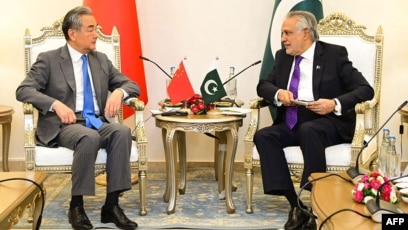
 Diplomatically, China has positioned itself as a backer of de-escalation rather than an overt participant in any coercive maritime arrangement. Foreign Minister Wang Yi has called for a ceasefire, supported efforts to protect shipping safety and coordinated with Russia at the United Nations over the escalating conflict. Beijing also opposed language in a Bahraini draft at the Security Council that could have opened the door to a force-based reopening of the strait, underscoring a preference for negotiated access rather than a Western-led military push.
That posture matters because the contest over Hormuz is increasingly about who shapes the terms of reopening, not simply who can threaten closure. Reuters reported on April 6 that a ceasefire proposal had been circulated to Washington and Tehran, with reopening the strait embedded in the diplomatic framework. Yet Iran had not committed, and President Donald Trump was simultaneously escalating pressure with public warnings of heavier retaliation if the waterway stayed shut. The gap between those positions has turned the strait into both a military flashpoint and a bargaining instrument.
On the water, the pattern has become more selective than absolute. Iran has allowed some vessels carrying essential goods to reach its ports and has permitted passage in certain cases involving states viewed as neutral. Reuters reported that a Petronas-chartered tanker loaded with Iraqi crude had passed through Hormuz after diplomatic contacts, illustrating that Tehran is using access as a calibrated tool rather than enforcing a blanket freeze. That selective passage raises the possibility that countries with workable channels to Tehran, including China, may enjoy greater room to protect their energy interests than U. S.-aligned buyers.
The economic fallout is already global. Brent crude was trading near $110 a barrel and U. S. benchmark prices above $111 in Monday trading, after sharp weekly gains driven by supply fears. The Bank of Japan has warned of downside risks to regional growth, while South Korea has been exploring alternative suppliers and shipping routes because of its heavy dependence on Gulf crude. Reuters has also reported a record jump in U. S. fuel exports in March as Asia and Europe sought to replace disrupted Middle East supplies.
Gulf states are treating navigational security as a core condition of any settlement. Anwar Gargash said on Monday that guaranteed use of Hormuz must be part of any U. S.-Iran deal and warned against allowing the passage to become a bargaining chip. France, by contrast, has argued that forcing the strait open militarily is unrealistic, a view that reflects wider concern that escalation could deepen the crisis without restoring stable trade. Those differences leave more diplomatic space for powers such as China to present themselves as necessary intermediaries.