
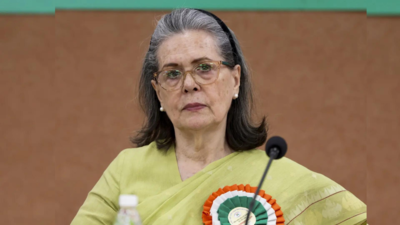
 Congress Parliamentary Party chairperson Sonia Gandhi has challenged the Centre over what she described as an “unsettling silence” on the escalating conflict involving Iran, the United States and Israel, raising pointed questions about Prime Minister Narendra Modi’s diplomatic positioning amid heightened regional tensions.
Addressing party colleagues and speaking in the context of mounting hostilities in West Asia, the Rajya Sabha member questioned the timing of the Prime Minister’s outreach to Israel following joint US-Israeli military action against targets in Iran. She also criticised what she termed the government’s lack of clarity over reports surrounding the killing of Iran’s Supreme Leader, Ayatollah Ali Khamenei, as speculation and counter-claims swirl in international media without official confirmation from Tehran.
Gandhi said India has historically maintained a carefully calibrated relationship with Iran, Israel and the Arab world, balancing energy security, diaspora interests and strategic ties. “Moments of grave geopolitical upheaval demand transparency and consistency in foreign policy,” she said, arguing that Parliament and the public deserve to know how the government intends to safeguard national interests amid deepening instability in the Gulf.
Her remarks come at a time when West Asia faces a volatile security environment. US and Israeli forces have targeted what they describe as military and nuclear-linked infrastructure inside Iran, prompting fears of retaliation that could widen the conflict. Tehran has warned of consequences, while regional actors including Saudi Arabia, the United Arab Emirates and Qatar have called for restraint to prevent further escalation.
There has been no official confirmation from Iranian authorities regarding the death of Ayatollah Khamenei, who has led the Islamic Republic since 1989. Iranian state media have dismissed certain foreign reports as misinformation. The absence of verified information has fuelled political debate abroad, including in India, where opposition leaders are pressing the government for a formal statement.
The Ministry of External Affairs has reiterated calls for de-escalation and dialogue, emphasising the need to protect maritime routes and civilian lives. Officials have underlined that India’s immediate priorities include the safety of its nationals in the region and the uninterrupted flow of energy supplies, as Iran remains a key player in global oil markets despite sanctions.
Energy analysts note that any sustained disruption to Iranian exports or shipping lanes such as the Strait of Hormuz could have significant implications for crude prices. India imports a substantial portion of its oil requirements, and price volatility has direct consequences for inflation and fiscal stability. Government data show that the country has diversified suppliers over the past decade, increasing purchases from the United States and other producers, yet exposure to Gulf instability persists.
Gandhi’s intervention also reflects broader opposition criticism that the government has tilted too far towards Israel at the expense of traditional non-aligned principles. Since establishing full diplomatic relations with Israel in 1992, successive governments have expanded cooperation in defence, agriculture and technology. Bilateral ties accelerated after Prime Minister Modi’s landmark visit to Israel in 2017, the first by a serving Indian Prime Minister.
At the same time, New Delhi has maintained civilisational and economic links with Iran, including involvement in the development of the Chabahar port, seen as a strategic gateway to Afghanistan and Central Asia. Sanctions and geopolitical shifts have complicated that engagement. Opposition leaders argue that a balanced approach is essential to protect long-term interests.
Political analysts suggest Gandhi’s comments are designed to frame foreign policy as an electoral issue ahead of key parliamentary sessions. By highlighting the government’s response to the Iran conflict, the Congress party is seeking to question decision-making at the highest level and to position itself as a defender of institutional consultation.
The government, for its part, has avoided direct commentary on unverified reports concerning Iran’s leadership, citing the need for caution. Officials have stressed that sensitive international developments require measured responses rather than public speculation.
Security experts warn that the evolving situation could affect millions of expatriates across the Gulf, including a large community of workers whose remittances form a significant component of household incomes in several states. Contingency planning for evacuation or assistance remains a standing priority for the authorities, drawing on past experience during crises in Iraq, Libya and Yemen.