
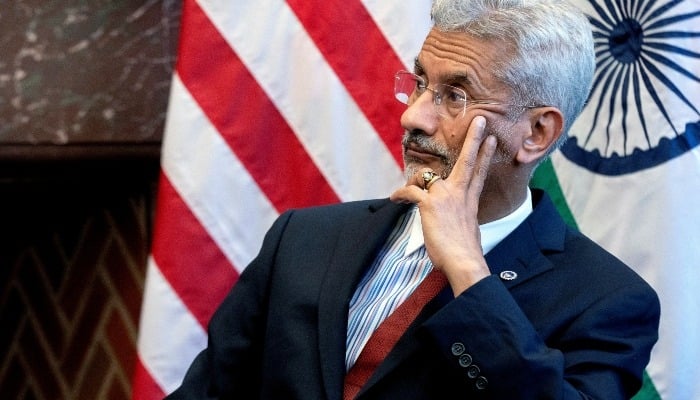
 External Affairs Minister Dr S Jaishankar delivered a sharp response to Pakistan’s attempt to position itself as a mediator in the escalating conflict involving the United States, Israel and Iran, signalling New Delhi’s firm rejection of Islamabad’s role in regional diplomacy.
Speaking during an all-party meeting, Jaishankar is understood to have criticised Pakistan in unusually blunt terms, describing it as a “broker” nation and questioning its credibility in any peace initiative. The remarks, conveyed to political leaders across party lines, underscored the government’s view that Pakistan lacks the standing to act as an intermediary in a conflict of such geopolitical complexity.
The development comes as tensions across West Asia continue to intensify, with the United States and Israel aligned against Iran amid heightened military activity and strategic posturing. Against this backdrop, Pakistan’s overtures to act as a mediator have drawn scrutiny from multiple quarters, including within India’s political establishment.
Officials familiar with the discussions indicated that Jaishankar emphasised Pakistan’s historical record and its perceived alignment with certain regional actors, arguing that such factors undermine its neutrality. The minister is said to have highlighted that mediation efforts require trust, consistency and a demonstrable commitment to stability—qualities he suggested Pakistan has struggled to establish in the international arena.
Political leaders present at the meeting were briefed on the broader diplomatic situation, including India’s assessment of the evolving conflict and its potential implications for regional security, energy markets and global trade routes. The government reiterated its focus on safeguarding national interests while maintaining engagement with key international partners.
Jaishankar’s remarks reflect a continuation of India’s longstanding position on Pakistan’s role in regional affairs. Over the years, New Delhi has consistently raised concerns about Islamabad’s involvement in cross-border tensions and its credibility in international diplomacy. The latest comments indicate that this stance remains firmly in place even as the geopolitical landscape undergoes rapid shifts.
The minister’s intervention also aligns with India’s broader foreign policy approach, which prioritises strategic autonomy and calibrated engagement. By distancing itself from Pakistan’s mediation bid, New Delhi appears to be signalling its preference for established diplomatic channels and multilateral frameworks rather than ad hoc initiatives led by actors with contested reputations.
Analysts note that Pakistan’s attempt to insert itself into the West Asian conflict may be driven by a desire to enhance its diplomatic profile and assert relevance on the global stage. However, such efforts face significant challenges, particularly given the complex alliances and deep-seated mistrust that define the region’s geopolitics.
India, meanwhile, has maintained a cautious approach to the unfolding situation, calling for de-escalation and dialogue while avoiding overt alignment with any single party. This balancing act reflects the country’s diverse strategic interests, including its energy dependence on the region, its economic ties with multiple stakeholders and its large diaspora across West Asia.
During the all-party meeting, Jaishankar is believed to have outlined the government’s contingency planning, including measures to ensure the safety of citizens abroad and to mitigate potential disruptions to energy supplies. The briefing provided political leaders with a comprehensive overview of the situation, reinforcing the importance of a unified national stance in times of international uncertainty.
The use of strong language in reference to Pakistan marks a notable moment in India’s diplomatic discourse, particularly in the context of a sensitive global conflict. While New Delhi has often been critical of Islamabad, such direct characterisation in a formal political setting underscores the depth of its scepticism regarding Pakistan’s intentions and capabilities.
Observers point out that mediation in conflicts of this scale typically involves actors with established diplomatic capital and the confidence of all parties involved. Countries such as Oman, Qatar and Switzerland have historically played such roles due to their perceived neutrality and consistent engagement. Pakistan’s bid, by contrast, appears to lack similar backing, raising questions about its feasibility.