
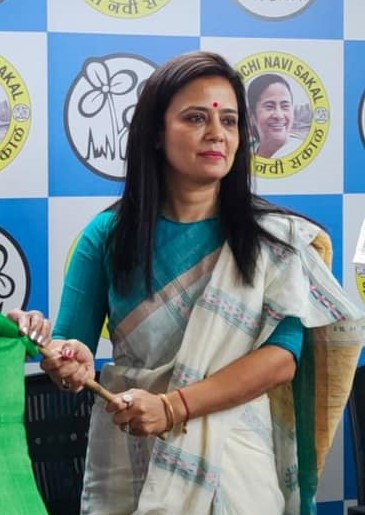
 Mamata Banerjee appears on course to return to power in West Bengal for a fourth straight term, with the latest VoteVibe Vote Tracker projection putting the Trinamool Congress well above the halfway mark in the 294-member assembly, though with a noticeably reduced cushion compared with its 2021 performance. The survey, released by CNN-News18 and carried by multiple outlets on March 30, projected 174 to 184 seats for the ruling party, against the majority mark of 148.
 That forecast suggests Banerjee would still secure a clear mandate, but with a more assertive opposition bench than the one she has faced for much of the current term. The same projection gave the Bharatiya Janata Party 108 to 118 seats, while the Congress and the Left were seen together struggling to move beyond a token presence of up to four seats. An earlier VoteVibe projection published on March 23 had placed the TMC higher, at 184 to 194 seats, and the BJP at 98 to 108, indicating a tighter race over the past week of campaigning.
West Bengal is due to vote in two phases, on April 23 and April 29, with counting scheduled for May 4. The Election Commission announced the schedule on March 15, and the model code came into force immediately after that announcement. The compressed calendar has sharpened attention on every movement in voter sentiment, particularly because Bengal remains one of the few large states where the BJP has built a substantial opposition platform without yet converting that into power.
For Banerjee, the headline number is positive but not uncomplicated. In the 2021 assembly election, the TMC won 213 seats, while the BJP took 77 and emerged as the principal opposition force. If the latest projection holds, the TMC would remain dominant but lose a meaningful chunk of its legislative strength, while the BJP would post another advance in seat terms even if it still falls short of government. That is the central political message of the latest survey: continuity at the top, but with a narrower margin and a more competitive bipolar contest.
The poll’s voter-preference data also reinforces Banerjee’s personal advantage. She led the preferred chief minister measure with 46.4% support in the March 30 tracker, ahead of Suvendu Adhikari on 34.9%, while Adhir Ranjan Chowdhury and Mohammed Salim remained far behind. A week earlier, the same polling series had shown Banerjee at 48.5% and Adhikari at 33.4%, which points to some softening but still leaves her clearly in front on the leadership question. In a state election that often turns as much on personality and organisation as on ideology, that gap remains important.
The issues driving the campaign help explain both Banerjee’s resilience and the BJP’s improved position. In the latest tracker, lack of jobs and development was cited by 35.1% of respondents as the top issue, followed by law and order and women’s safety at 18.5%, and the Special Intensive Revision of electoral rolls at 17%. The earlier March 23 survey had also put unemployment first, with law and order, women’s safety, price rise and corruption featuring prominently. That mix benefits neither side completely: the TMC can still rely on welfare, local networks and Banerjee’s personal brand, but the BJP has room to grow where anti-incumbency and governance concerns have hardened.
The campaign atmosphere has become more combative as polling nears. BJP leaders have approached the Election Commission seeking action against Banerjee over her campaign remarks, while the TMC has accused the poll machinery of enabling irregular voter additions through Form 6 applications. Parallel disputes over voter-list revisions, appeals processes and the transfer of election-related officials have deepened mistrust between the main rivals and raised the political temperature further. The Election Commission has meanwhile warned that intimidation outside polling stations could be treated as booth-capturing and could trigger a re-poll after inquiry.
Regional patterns in the projection suggest why both camps are still campaigning with urgency. The March 30 survey pointed to especially close contests in Medinipur, Presidency and Malda, with the BJP competitive enough in parts of the state to prevent the election from becoming a one-sided affair. Social coalitions also remain sharply split: the survey showed strong TMC support among Muslim voters, while the BJP retained an edge among several Hindu and SC/ST segments. Those alignments have been a defining feature of Bengal politics since 2021 and appear intact, even as the balance inside them shifts at the margins.