
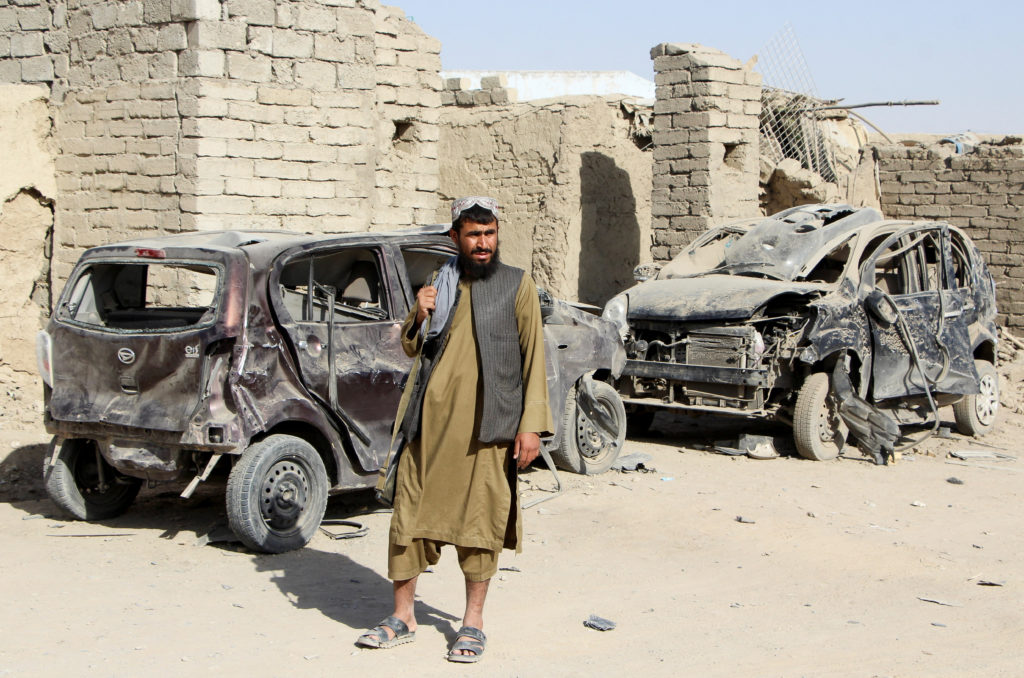
 Footage said to show strikes on Pakistani targets has surfaced online as hostilities between Afghanistan and Pakistan sharpen into one of their most serious confrontations in years. The video, circulated on X by PTI and attributed to Afghanistan’s Taliban-led Defence Ministry, is described by Kabul as evidence of retaliatory military action following cross-border exchanges.
The clip, which appears to show flashes of explosions and tracer fire at night, could not be independently verified. Afghan defence officials have claimed it depicts strikes carried out in response to what they describe as Pakistani incursions and air operations along the frontier. Pakistan’s military has not confirmed the authenticity of the footage and has maintained that its actions target militant infrastructure posing a threat to its security.
Tensions between Kabul and Islamabad have intensified over the past months, driven largely by Pakistan’s accusations that militant groups operating from Afghan territory have carried out attacks inside Pakistan. Islamabad has repeatedly named Tehreek-e-Taliban Pakistan as a principal threat and has pressed Afghanistan’s Taliban administration to curb its activities. Kabul denies harbouring the group and has countered that instability along the border stems from unilateral measures and violations of Afghan sovereignty.
The disputed video has added a volatile information dimension to an already combustible situation. Analysts say the circulation of battlefield imagery, particularly when unverifiable, risks inflaming nationalist sentiment on both sides. Social media has played a growing role in shaping public perception of security incidents across South Asia, often amplifying official claims before independent confirmation is available.
Afghanistan’s Defence Ministry, controlled by the Taliban administration that took power in August 2021, has framed its alleged strikes as defensive. In statements carried by Afghan media outlets, officials have accused Pakistan of launching air raids in eastern provinces such as Khost and Paktika, areas close to the porous Durand Line that demarcates the border. Pakistan has acknowledged operations against militant targets but rejects assertions that it is deliberately striking civilian areas.
The Durand Line remains a sensitive issue. Kabul has historically disputed the boundary’s legitimacy, and successive Afghan governments have resisted formal recognition. Cross-border shelling, drone surveillance and air strikes have periodically strained ties, but the scale and tone of the current exchanges suggest a sharper deterioration. Diplomatic contacts between the two sides have continued intermittently, though rhetoric has hardened.
Regional security specialists note that both governments face domestic pressures. Pakistan’s leadership is contending with a spike in militant violence, particularly in Khyber Pakhtunkhwa and Balochistan, and has argued that sanctuaries across the border undermine its counter-terrorism efforts. Afghanistan’s Taliban administration, seeking international legitimacy and economic stability, has resisted appearing subservient to external demands while grappling with economic isolation and humanitarian challenges.
The alleged strike footage emerged at a time when border communities report heightened military activity. Residents on both sides have described hearing aircraft overhead and artillery fire during night-time hours. Humanitarian organisations warn that civilian displacement could increase if exchanges persist, adding to the strain in regions already coping with poverty and limited infrastructure.
Security observers caution that the absence of transparent, jointly verified investigations into cross-border incidents complicates efforts to de-escalate. Each side has relied heavily on official communiqués and state-aligned media to shape narratives. The Taliban administration’s media apparatus has grown more assertive, issuing video statements and battlefield imagery aimed at projecting military capability and resolve.
Pakistan’s military establishment, for its part, has emphasised that any action taken is directed at non-state actors and is consistent with its right to self-defence. Officials have pointed to a pattern of attacks on security personnel and civilians that they attribute to militants operating from Afghan soil. Kabul has responded that security within Afghanistan’s borders is an internal matter and that external strikes risk undermining regional stability.
The emergence of video evidence, even if contested, marks a shift in how such confrontations are communicated. Rather than relying solely on diplomatic channels or traditional press briefings, authorities are engaging in a public contest of narratives. Experts warn that this dynamic can narrow the space for compromise, as leaders may feel compelled to match rhetoric with visible action.
International actors have expressed concern over the deteriorating relationship. Neighbouring states and multilateral organisations have urged restraint, mindful that instability along the Afghanistan-Pakistan frontier has implications for trade routes, refugee flows and broader counter-terrorism efforts. The region remains strategically significant, linking Central and South Asia through key transit corridors.