
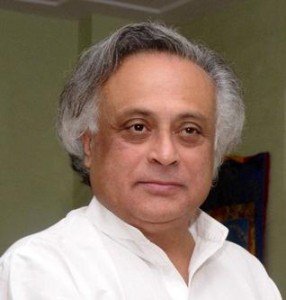
 The Supreme Court delivered a sharp admonition to Congress leader and Rajya Sabha MP Jairam Ramesh on Thursday, refusing to entertain his writ petition challenging an Office Memorandum issued by the Central government to implement judicial directives on ex-post facto environmental clearances. A bench led by Chief Justice of India Surya Kant, with Justice Joymalya Bagchi, questioned why Ramesh had approached the court under Article 32 of the Constitution to contest a notification that sought to give effect to a prior Supreme Court ruling, warning that such petitions could attract exemplary costs if pursued for publicity rather than legitimate legal grievance. The counsel for Ramesh subsequently withdrew the petition with the bench granting liberty to pursue remedies available under the law.
 The legal confrontation centres on the practice of granting retrospective environmental clearances to industrial and infrastructure projects that commenced operations without prior approval under the Environment Impact Assessment notification of 2006. These ex-post facto clearances had been catalysed by successive notifications from the Ministry of Environment, Forest and Climate Change in 2017 and 2021, which critics argued diluted statutory safeguards and undermined environmental jurisprudence. In May 2025, a two-judge bench of the Supreme Court, in a case initiated by environmental litigant Vanashakti, invalidated those measures and held that retrospective approvals were alien to established environmental principles, reinforcing the procedural imperative of obtaining clearance before project commencement.
That landmark ruling faced challenges from industry bodies and stakeholders, including the Confederation of Real Estate Developers of India, which argued that voiding retrospective clearances threatened ongoing projects and would trigger economic fallout. A three-judge bench of the apex court, in November 2025, reviewed the May judgment and by a 2:1 majority restored the validity of the 2017 and 2021 notifications, allowing ex-post facto clearances to be granted under stipulated conditions. The majority opinion stressed the potential loss of value in public infrastructure projects with estimated investments nearing tens of thousands of crore rupees if the earlier verdict were to stand unaltered, while a strong dissent cautioned that such clearances were inimical to environmental protection.
Ramesh’s petition filed this week took aim at the continuation of post-facto environmental clearances, contending that such approvals were unlawful, detrimental to public health, and inconsistent with principles of governance that mandate prior environmental scrutiny. His counsel argued that the cause of action accrued only after the judgments and the subsequent Office Memorandum issued in January to operationalise the court’s review judgment. But the Supreme Court bench was unconvinced that a writ petition was the appropriate mechanism to revisit or second-guess a judgment of the court, emphasising that challenges to judicial decisions must proceed through recognised review or curative processes rather than fresh writs under Article 32.
“Why did you not file a review? In a writ… how can you seek review of a judgment and if you do then be ready to face exemplary costs,” Chief Justice Kant remarked during the hearing, also questioning whether the petition had been filed for media publicity rather than bona fide legal reasons. The pointed exchange underscored the court’s insistence on procedural propriety and judicial economy in litigation that touches upon settled legal questions and administrative actions taken pursuant to judicial orders.
The court’s reluctance to entertain the petition reinforces its expectation that litigants must adhere to prescribed legal pathways when seeking to challenge or reinterpret existing judgments. Legal experts noted that a writ petition under Article 32, which confers original jurisdiction on the Supreme Court for enforcement of fundamental rights, is narrowly confined to specific contexts and is not a substitute for review mechanisms provided for under the Supreme Court Rules. This demarcation between writ and review functions forms a crucial part of the judiciary’s procedural architecture, ensuring that the finality and stability of its decisions are preserved.
Observers following the case highlighted the broader implications for environmental governance in India. The tug-of-war between environmental safeguards and developmental pressures has played out in multiple forums, with courts often at the fulcrum of balancing ecological imperatives against economic considerations. The 2025 judgments on ex-post facto environmental clearances were emblematic of this tension, amplifying debates over statutory interpretation, legislative intent, and the judiciary’s role in shaping environmental policy. Critics of retrospective clearances have argued that permitting post-construction approvals weakens deterrence against unlawful commencement of projects, whereas proponents of flexibility frame retrospective approvals as pragmatic tools to mitigate disruption to substantial public and private investments.