
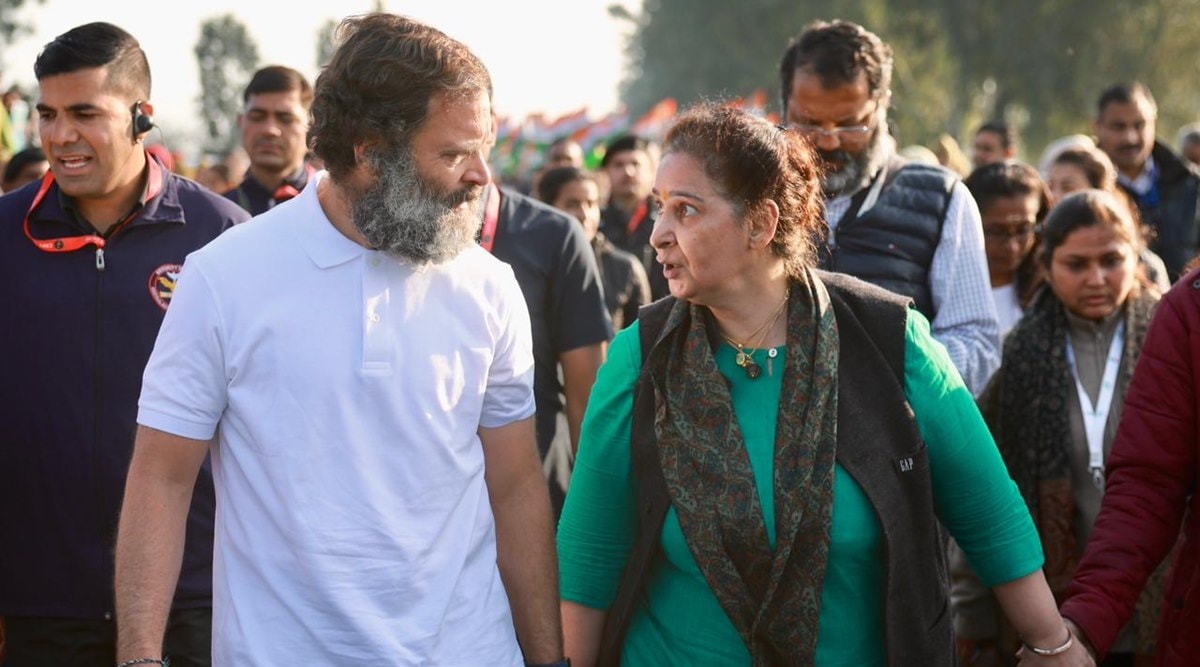
 Navjot Kaur Sidhu has launched a sharp attack on Rahul Gandhi, accusing the Leader of the Opposition in the Lok Sabha of being out of touch with ground realities and presiding over a Punjab unit marred by corruption, days after announcing her exit from the Congress.
Speaking to reporters in Coimbatore, the former MLA said there was a wide gulf between what Gandhi says publicly and what happens within the party organisation. “There is a difference between words and action,” she told journalists, adding that leaders at the top appeared insulated from the concerns of grassroots workers. She alleged that the Punjab Congress was riddled with factionalism and malpractice, and predicted the party would face defeat in the state assembly elections due next year if it failed to address internal weaknesses.
Sidhu, who represented Amritsar East in the Punjab Assembly between 2017 and 2022, had been associated with the Congress during a turbulent period marked by infighting and leadership changes. Her husband, Navjot Singh Sidhu, a former state Congress chief and cricketer-turned-politician, has also been a central figure in the party’s Punjab politics, often at odds with rival factions.
Her remarks come at a time when the Congress is attempting to consolidate its position nationally after the 2024 general election, in which it increased its seat tally but remained in opposition. Gandhi, who serves as Leader of the Opposition in the Lok Sabha, has sought to project the party as a cohesive alternative to the ruling Bharatiya Janata Party. His nationwide outreach campaigns over the past two years have been aimed at reconnecting with voters across regions, including Punjab.
Sidhu’s criticism underscores the lingering strains within the Punjab unit, which lost power in 2022 to the Aam Aadmi Party. Since then, the Congress has struggled to present a united front in the state. Senior leaders have periodically aired grievances over ticket distribution, leadership style and strategy, reflecting deeper organisational fissures.
In Coimbatore, Sidhu alleged that corruption and patronage networks had taken root in Punjab Congress circles, eroding public trust. While she did not provide specific instances, she said ordinary workers were disillusioned and that the leadership had failed to enforce accountability. “People are watching,” she remarked, suggesting that voters would punish the party at the ballot box if reforms were not undertaken.
The Congress has not issued a detailed response to her statements, though party figures have previously dismissed similar allegations from dissidents as politically motivated. Leaders close to Gandhi argue that the party has instituted internal elections and consultative mechanisms to strengthen transparency and collective decision-making.
Political analysts note that public criticism from former office-bearers can complicate the Congress’s efforts to rebuild in states where it has ceded ground. Punjab, once considered a bastion, has witnessed shifting loyalties and the rise of regional and national competitors. The party’s vote share decline in 2022 was attributed to anti-incumbency sentiment, leadership instability and the appeal of governance promises made by rivals.
Sidhu’s decision to address the media in Tamil Nadu has also drawn attention. Coimbatore, a commercial hub in the south, has increasingly become a venue for political outreach by leaders seeking to expand their visibility beyond home states. Observers say her remarks there may signal an attempt to position herself within a broader political narrative rather than confining her critique to Punjab alone.
Her political trajectory has been closely watched. A medical professional by training, Sidhu entered electoral politics in the 2010s and aligned with the Congress during a period of churn in Punjab. The state’s politics over the past decade have been shaped by coalition realignments, high-profile resignations and debates over governance, law and order, and agrarian distress.
For Gandhi, the episode highlights the delicate balance he faces in managing regional aspirations while articulating a national strategy. Since assuming the formal role of Leader of the Opposition, he has emphasised institutional accountability, economic equity and social justice as core themes. At the same time, critics within and outside the party have questioned whether the central leadership is sufficiently responsive to state-level concerns.