
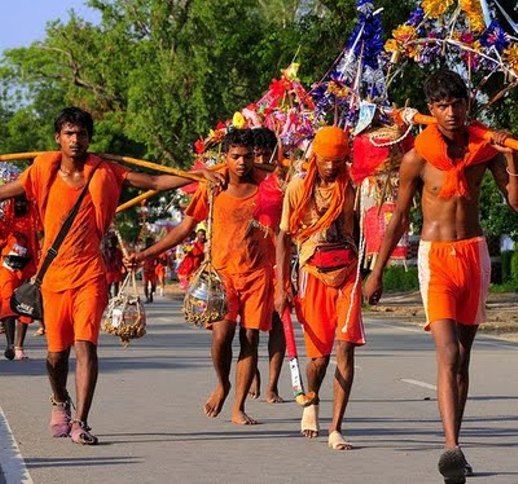
 A young man was beaten by a group of Kanwariyas at a petrol station in Bijnor district of Uttar Pradesh after he discouraged them from lighting incense sticks close to fuel dispensers, police and eyewitnesses said. The attack on Sunny Chaudhary, son of the petrol pump operator, underscored rising tensions around ritual practices and safety concerns at sensitive public locations, prompting local authorities to launch a detailed probe of the viral footage circulating online.
 The incident occurred on 10 February when devotees participating in the annual Kanwar Yatra had stopped at a busy petrol station in the Nagina area of Bijnor. As part of their worship, some among the group began placing Kanwars and lighting agarbattis, or incense sticks, near the fuel pumps, employees at the site told reporters. Mr Chaudhary intervened, warning that open flames and combustible objects posed a serious fire hazard at a fuel retail outlet. Police sources confirmed his objection quickly escalated into a verbal confrontation.
Video footage from the scene shows a cluster of men surrounding Mr Chaudhary and striking him while he attempts to shield himself. One of the assailants can be heard making an incorrect claim about the victim’s religious identity in what police officials described as an attempt to communalise the incident, a narrative that officers have dismissed as unfounded.
Senior local police officer Anjani Kumar said that officers at the scene intervened to rescue the injured man, who sustained serious injuries before being taken to a hospital for treatment. Mr Kumar reiterated that there was no act of desecration of the Kanwar and that allegations of communal provocation were misleading. He added that the group of pilgrims was persuaded to continue their journey after the confrontation.
Police in Bijnor have seized on the viral social media clips to identify participants in the assault and are reviewing witness statements and footage to support legal action under relevant provisions of the criminal code, including those addressing assault and unlawful assembly. Local law-and-order officials acknowledged the sensitivity of such disputes at religious gatherings but emphasised that safety protocols must be upheld at locations where open flames and flammable materials coexist.
Residents and business owners in the vicinity expressed concern about a perceived erosion of civility when ritual practices intersect with commercial or public safety concerns. “We have clear safety guidelines at petrol stations,” said one local petrol pump operator who asked not to be named. “If anyone lights an open flame near the fuel dispensers, it puts lives at risk.” They noted that such disputes, when amplified online, can fuel misunderstandings about intentions on both sides.
Civil liberty advocates said the episode highlighted broader challenges in balancing freedom of religious expression with public safety obligations. “People undertaking pilgrimage rites must be aware of their surroundings and the rules governing those spaces,” said a representative of a local rights group. “At the same time, no one should be subject to violence for expressing legitimate safety concerns.”