
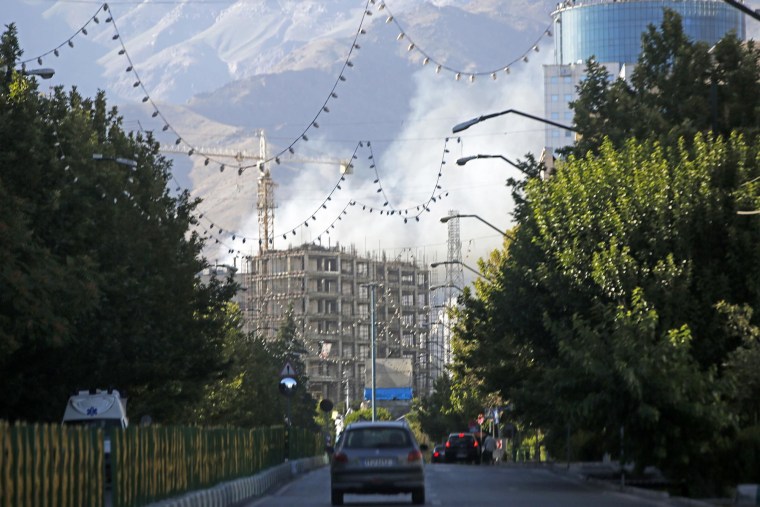
 Explosions shook Tehran early on Saturday as Israel launched what it described as a pre-emptive military operation, widening a confrontation that threatens to engulf the region and drawing reported participation from the United States, according to the Associated Press, which cited an official familiar with the matter.
Blasts were reported across several districts of the capital shortly after dawn, with plumes of smoke visible over parts of the city. Iranian state media acknowledged explosions but offered limited detail on the scale of the damage or potential casualties. Israeli officials said the strikes targeted military infrastructure linked to Iran’s strategic capabilities, asserting that intelligence indicated preparations for hostile action.
Washington’s role added a further layer of gravity to the escalation. An official quoted by AP said US forces were involved in the operation, though the precise nature of that involvement was not immediately clear. The Pentagon and the White House did not issue detailed public statements in the immediate aftermath, and Iranian authorities have yet to confirm the extent of foreign participation.
Markets across the Middle East reacted swiftly, with oil prices climbing on concerns that a broader conflict could disrupt supply routes through the Strait of Hormuz. Regional airlines diverted or cancelled flights, and several neighbouring governments urged restraint while reviewing the security of their diplomatic missions.
Israel’s leadership framed the strikes as a defensive necessity. Officials argued that intelligence assessments pointed to imminent threats tied to Iran’s missile and drone programmes, as well as its network of allied militias across the region. Tehran has long denied seeking to provoke direct confrontation, insisting its military posture is defensive.
Saturday’s events mark a sharp intensification in hostilities that have simmered for years through covert operations, cyber activity and proxy engagements. Open exchanges between the two countries have historically been limited, with most confrontations occurring beyond their borders. Direct strikes on Tehran represent a dramatic departure from that pattern.
Iran’s armed forces vowed retaliation. A senior military commander, speaking on state television, described the attack as an act of aggression and said the response would be “decisive and proportionate”. Iranian air defence systems were reported to have been activated, and authorities said investigations were under way to determine the full impact of the strikes.
Diplomatic efforts that had sought to contain tensions appear increasingly fragile. Talks aimed at curbing Iran’s nuclear programme have faced repeated setbacks, and Western governments have expressed concern over Tehran’s enrichment activities. Israel has consistently argued that diplomatic channels have failed to halt Iran’s advances, maintaining that it reserves the right to act unilaterally.
The United States has sought to balance its longstanding security commitment to Israel with efforts to prevent a regional war. American forces remain deployed across the Gulf and eastern Mediterranean, and US officials have frequently warned of the risks posed by Iran’s regional posture. Participation in direct strikes on Iranian territory, if confirmed in detail, would signal a significant shift in operational involvement.
Regional actors responded cautiously. Gulf states called for de-escalation, mindful of the vulnerability of energy infrastructure and shipping lanes. Turkey and Egypt urged restraint, while European leaders pressed both sides to avoid further action that could destabilise an already volatile environment shaped by conflicts in Gaza, Lebanon and Syria.
Security analysts say the scale and targets of the operation will determine the trajectory of the confrontation. Limited strikes aimed at specific facilities could be followed by calibrated responses, whereas wider damage or civilian casualties could trigger broader retaliation. Iran’s network of allied groups across Iraq, Lebanon and Yemen presents additional flashpoints.
Tehran’s domestic climate also factors into the equation. Authorities have faced economic strain from sanctions and internal discontent over living standards. A forceful response may be seen as essential to project strength, yet it carries the risk of drawing the country into a prolonged conflict.