
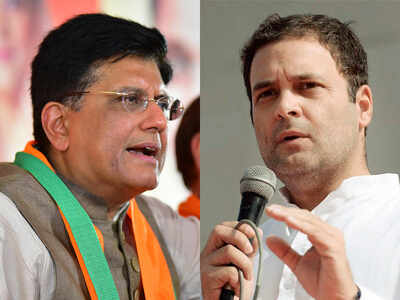
 Commerce and Industry Minister Piyush Goyal on Tuesday mounted a pointed defence of the India–United States trade agreement, accusing opposition leader Rahul Gandhi of sowing doubt about an accord the government says will unlock gains for exporters, manufacturers and consumers. The remarks sharpened a political divide around trade policy at a moment when New Delhi is seeking to frame deeper economic ties with Washington as central to growth and supply-chain resilience.
Goyal said criticism that questions the intent or outcomes of the agreement risks undermining confidence among businesses preparing to invest and expand. He argued that the pact reflects months of negotiations aimed at improving market access, easing non-tariff barriers and creating predictable rules for services, digital trade and advanced manufacturing. According to the minister, the agreement aligns with the government’s strategy to integrate domestic firms into global value chains while protecting sensitive sectors through calibrated safeguards.
The response came after Gandhi challenged the terms and transparency of the deal, warning that concessions could weaken domestic producers and compromise policy autonomy. Leaders from the Indian National Congress have questioned whether tariff adjustments and regulatory commitments tilt the playing field toward US firms, particularly in agriculture, pharmaceuticals and digital services. They have also pressed for greater parliamentary scrutiny of negotiating texts.
Government officials counter that the agreement is structured to be reciprocal and time-bound, with review clauses designed to adjust to market conditions. They point to provisions that aim to cut logistics costs, recognise standards, and facilitate mobility for professionals—areas long flagged by industry bodies as impediments to competitiveness. Officials also emphasise that public procurement, food security and data governance retain policy space, addressing concerns raised by farmer groups and start-ups.
From a commercial perspective, the pact is positioned to build on a trade relationship that has expanded across goods and services, defence and technology. Manufacturers in electronics, automotive components and clean energy expect smoother customs procedures and clearer rules of origin to reduce friction. Services firms anticipate gains from commitments on professional services and mutual recognition that could accelerate project timelines. For small and medium-sized enterprises, the government says streamlined compliance and digital trade facilitation may lower entry barriers.
The political debate unfolds against a backdrop of global trade recalibration, with countries re-routing supply chains and negotiating narrower, sector-specific deals. Supporters of the agreement argue that closer alignment with the United States offers access to capital, technology and a large consumer market at a time when export demand is uneven elsewhere. Critics counter that the benefits could be unevenly distributed and that adjustment costs for vulnerable sectors require clearer mitigation plans.
Economists tracking the negotiations note that outcomes will hinge on implementation—how swiftly customs reforms are executed, whether regulatory agencies coordinate effectively, and how dispute-resolution mechanisms perform. They also flag that investment responses depend on policy certainty at home, including tax stability and labour reforms, as much as on market access abroad. Industry groups have urged the government to publish sector-wise impact assessments and timelines to help firms plan.