
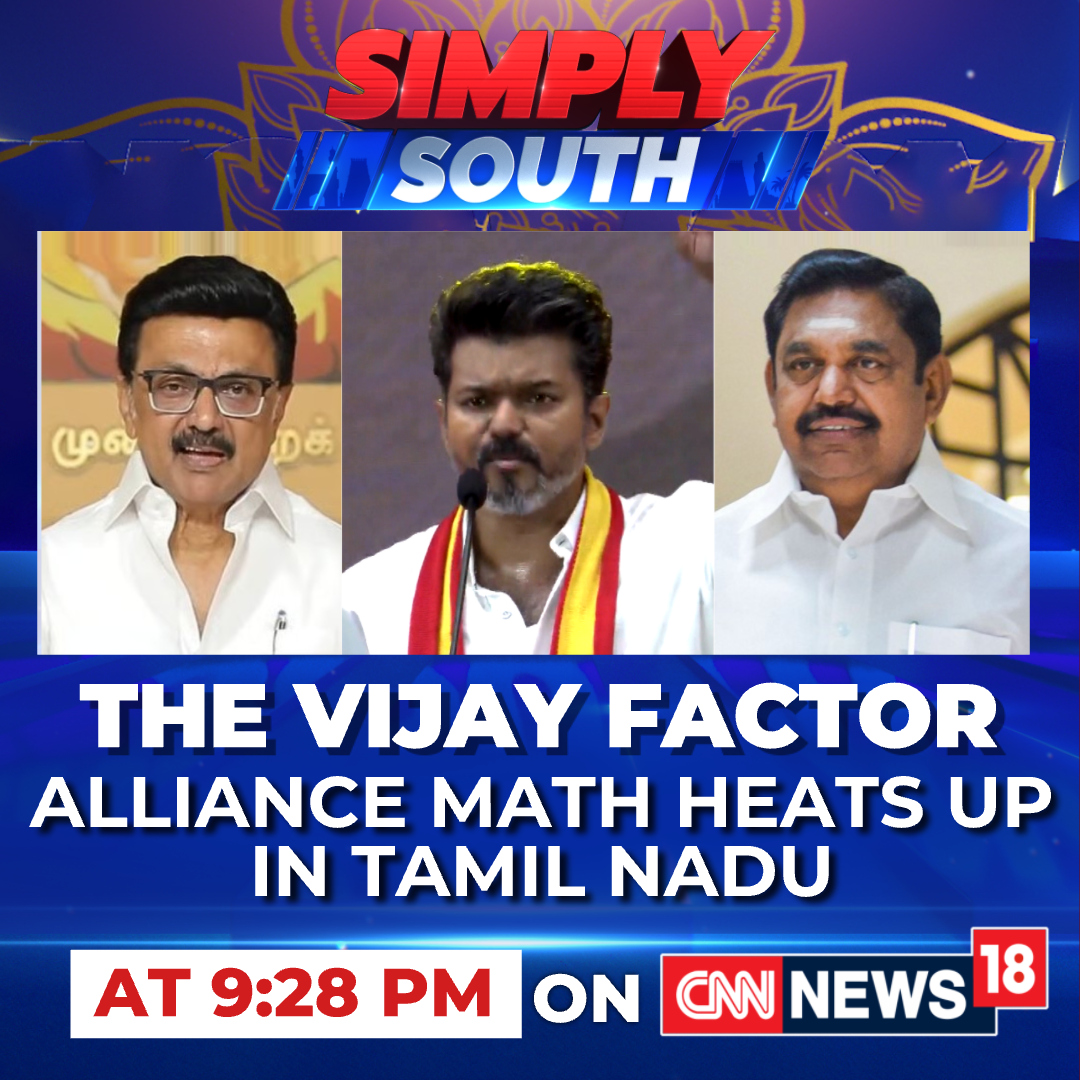
 Actor-turned-politician Vijay has moved to the centre of opposition strategy in Tamil Nadu, with political assessments suggesting his messaging is aligning with a broader attempt to consolidate anti-DMK sentiment ahead of the next Assembly election. Senior figures across the opposition spectrum are weighing how his growing appeal among younger voters and sections of the urban middle class could alter long-established electoral equations in the state.
Internal discussions within the Bharatiya Janata Party indicate that party leaders see convergence between Vijay’s public positioning and a wider narrative challenging the governance record of the ruling Dravida Munnetra Kazhagam. While no formal understanding has been announced, the overlap in themes has fuelled speculation about tactical coordination or at least parallel mobilisation aimed at preventing vote fragmentation among DMK opponents.
Vijay emerges as opposition pivot has become a phrase increasingly heard in political circles as his speeches and organisational moves draw sustained attention. Vijay formally entered politics through the launch of his party, Tamilaga Vettri Kazhagam, in 2024, framing his intervention as an alternative to entrenched Dravidian politics while emphasising social justice, anti-corruption measures and youth empowerment. Since then, his carefully choreographed public appearances and restrained rhetoric have been viewed as an effort to broaden his appeal beyond his established fan base.
According to party insiders, former state BJP president K Annamalai has conveyed internally that defeating the DMK would require consolidation of all anti-DMK votes and that any splintering would work to the ruling party’s advantage. This assessment reflects lessons drawn from previous Assembly contests, where divided opposition campaigns allowed the DMK-led alliance to secure a comfortable majority despite shifts in vote share among rival blocs.
The BJP’s organisational footprint in Tamil Nadu has expanded over the past few years, but its vote base remains limited when compared with the two dominant Dravidian parties. Analysts say this reality has pushed the party to look beyond conventional alliances and consider how influential newcomers such as Vijay could help attract undecided voters or those disenchanted with traditional political formations.
Vijay’s own strategy appears calibrated to avoid early commitments. Public statements from his party have stressed independence and issue-based politics, while refraining from overt attacks on potential allies. This has allowed him to criticise the DMK government on matters such as employment, price pressures and alleged administrative lapses without closing the door on future alignments. Political observers note that such ambiguity keeps multiple options open as the electoral landscape evolves.
Within the DMK, leaders have sought to downplay Vijay’s impact, portraying his political foray as untested and reliant on celebrity appeal rather than grassroots strength. Party strategists argue that the DMK’s organisational depth, welfare delivery mechanisms and alliance arithmetic remain decisive advantages. At the same time, the ruling party has intensified outreach programmes and sharpened its messaging, signalling that it is not ignoring the changing dynamics.
The opposition’s challenge lies in translating shared criticism of the DMK into a coherent electoral front. Tamil Nadu’s history shows that personality-driven movements can disrupt established patterns but often struggle to sustain momentum without robust cadre structures. Vijay’s party has begun building district-level committees and enrolling members, though it remains a work in progress compared with the extensive networks of the DMK and AIADMK.
Another layer of complexity comes from voter demographics. Younger voters, many of whom engage with politics through social media, have responded to Vijay’s emphasis on transparency and participatory governance. Rural and older voters, however, tend to prioritise welfare schemes and local representation, areas where established parties maintain an edge. Whether Vijay can bridge this divide will be central to his political viability.