
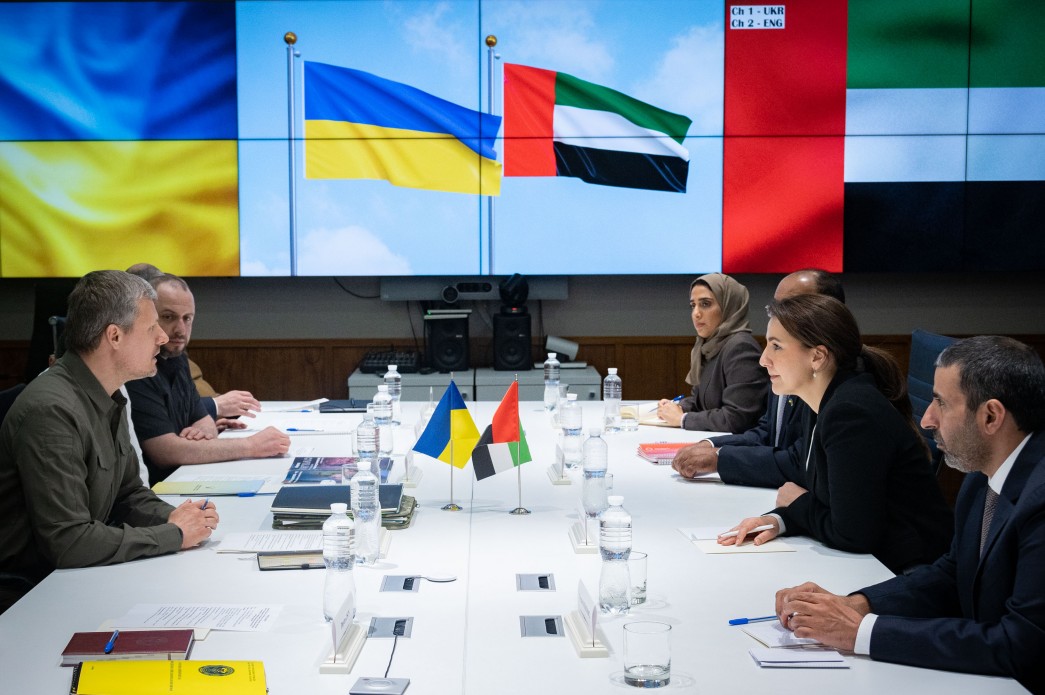
 Diplomatic momentum around the Russia-Ukraine war has shifted towards the Gulf as officials prepare for a new round of talks in the United Arab Emirates, signalling a renewed attempt to test pathways towards de-escalation as the conflict moves through its fourth year of full-scale fighting.
Ukrainian President Volodymyr Zelenskyy said the UAE would host trilateral discussions involving representatives from Ukraine, the United States and Russia, placing Abu Dhabi once again at the centre of high-stakes diplomacy linked to the war. The announcement underscores Washington’s expanding role in coordinating diplomatic efforts, even as battlefield dynamics remain volatile and political positions hardened.
The talks are expected to focus initially on limited confidence-building measures rather than a comprehensive settlement. Officials familiar with preparatory discussions say priority issues include prisoner exchanges, the protection of civilian infrastructure and the safety of shipping lanes, particularly in the Black Sea. These topics have previously produced narrow agreements even when broader negotiations stalled, making them a pragmatic entry point for renewed engagement.
The UAE’s role as host reflects its growing profile as a neutral convener in international disputes. Over the past two years, it has facilitated exchanges of prisoners between Kyiv and Moscow and served as an intermediary on humanitarian issues. Its ability to maintain working relationships with both sides, while also sustaining close strategic ties with Washington, has given it diplomatic leverage few others possess in the current geopolitical climate.
Washington’s participation signals an effort to reassert diplomatic leadership after months dominated by military aid debates and shifting domestic political priorities. US officials have framed the talks as exploratory rather than decisive, emphasising that any durable peace would require Russia to engage seriously with international norms and Ukraine’s sovereignty. Still, the willingness to sit at the same table is being viewed by analysts as a modest but meaningful development.
Kyiv enters the discussions under sustained pressure on multiple fronts. The war has placed heavy strain on the economy, energy infrastructure and manpower, while uncertainty over the pace and scale of Western military support has sharpened the urgency of diplomatic channels. Zelenskyy has repeatedly argued that negotiations must be anchored in Ukraine’s territorial integrity, a position that remains non-negotiable for his administration.
Moscow, for its part, has sent mixed signals. Public statements from Russian officials continue to emphasise security guarantees and territorial realities shaped by the conflict, language that Kyiv and its allies reject. Yet Russia’s agreement to participate in UAE-hosted talks suggests an interest in keeping diplomatic options open, particularly on issues that affect sanctions pressure, trade routes and relations with non-Western partners.
The United States sees the talks as part of a broader strategy to manage escalation risks while sustaining support for Ukraine. Senior officials have stressed that diplomacy does not equate to concession, but rather complements military and economic measures. The challenge lies in balancing dialogue with deterrence, especially as the conflict’s duration reshapes political calculations in Europe and beyond.
Regional and international observers are watching closely, not least because the talks reflect a wider trend of mediation efforts moving beyond traditional European venues. Countries in the Gulf, Asia and the Global South have sought greater involvement, arguing that the war’s economic fallout, from energy prices to food security, gives them a stake in outcomes. The UAE’s hosting role aligns with this shift, positioning it as a bridge between competing blocs.
Experts caution against overstating expectations. Previous negotiation tracks have faltered amid mutual distrust and incompatible demands. The absence of a formal ceasefire framework or agreed negotiating principles means progress is likely to be incremental at best. Still, even limited agreements can have tangible humanitarian impact and keep communication channels from closing entirely.