
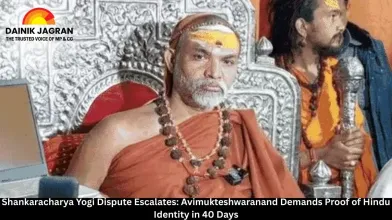
 Swami Avimukteshwaranand Saraswati, the Shankaracharya of Jyotir Math, has renewed demands for a nationwide prohibition on beef consumption and urged that the cow be accorded the status of “Rajya Mata”, framing the appeal as a civilisational imperative following a controversy linked to the Magh Mela congregation in Prayagraj.
The cleric’s remarks came after tensions flared over reports and allegations of meat consumption in areas associated with the religious gathering, one of the largest periodic assemblies of Hindu devotees. Speaking to followers and media representatives, Swami Avimukteshwaranand said the issue went beyond a single event and reflected what he described as a deeper erosion of cultural values tied to the cow’s place in Hindu tradition.
He argued that existing legal frameworks across states were fragmented and inconsistent, allowing practices that offend religious sensibilities to persist. A uniform prohibition, he said, would remove ambiguity and prevent recurring disputes that surface around major religious events. The Shankaracharya also reiterated his long-standing position that the cow should be recognised symbolically as “Rajya Mata”, or Mother of the State, to underscore its spiritual and cultural significance.
The Magh Mela, organised periodically on the banks of the Ganges in Prayagraj, draws millions of pilgrims, ascetics and tourists. Local administrations typically impose temporary restrictions on alcohol and meat sales in designated zones during the festival period to maintain its religious character. The latest controversy emerged after claims circulated on social media and in local political circles that such restrictions were violated, prompting protests by religious groups.
Officials overseeing the event have said enforcement teams were deployed and that any violations would be examined under existing municipal and state laws. No official confirmation of widespread breaches has been made public, but the allegations were sufficient to reignite a broader national debate on dietary practices, religious sentiment and state authority.
Swami Avimukteshwaranand’s intervention is significant because of his position within the Dashanami monastic order and his influence among conservative Hindu organisations. Since assuming the Jyotir Math seat in 2022, he has frequently spoken on issues ranging from temple management to agricultural practices linked to cattle rearing. His advocacy for cow protection aligns with positions taken by several religious bodies and pressure groups over decades.
Supporters of a comprehensive beef ban argue that the cow occupies a unique place in Hindu belief systems and rural economies, providing milk, manure and draught power. They contend that stronger protections would support farmers and preserve cultural heritage. Critics, however, warn that calls for a nationwide ban overlook India’s plural dietary traditions and risk marginalising communities for whom beef consumption is customary or economically important.
Legal scholars note that cattle slaughter laws fall largely within the domain of state legislatures, leading to a patchwork of regulations that range from near-total bans to limited restrictions. Any move towards a uniform national policy would require careful constitutional navigation and political consensus, particularly given past court rulings that have upheld states’ rights to regulate the matter differently.
The demand to declare the cow as “Rajya Mata” is largely symbolic but carries political resonance. Similar resolutions or declarations have been proposed in the past by religious leaders and allied organisations, often gaining traction during periods of heightened cultural debate. While such a статус would not automatically alter existing laws, it could influence policy discourse and administrative priorities.