
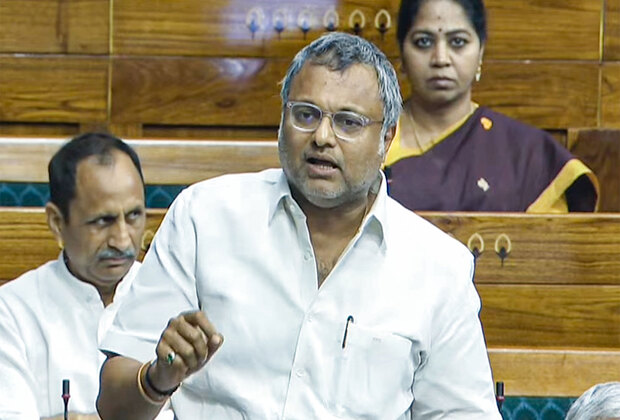
 Congress MP Karti Chidambaram has criticised the Union government over the announcement of the Padma Awards 2026, alleging that the selection of awardees reflects electoral considerations rather than an objective assessment of merit. His remarks, posted on social media on Monday, have added a political edge to what is typically projected as a non-partisan recognition of distinguished public service.
Chidambaram claimed that the awards process has been made “simpler” by focusing on individuals from states heading into elections, arguing that this approach aligns recognition with political timing. Drawing a contrast with the government’s advocacy of the “One Nation, One Election” proposal, he suggested that synchronised polls would complicate such calculations. “If there was One Nation One Election, it would be so complicated for the Government to choose Padma Award recipients! Now it’s so much simpler, just choose persons from poll-bound states,” he wrote.
The comments came shortly after the government unveiled the list of Padma Award recipients for 2026, covering the Padma Vibhushan, Padma Bhushan and Padma Shri categories. The awards, among the country’s highest civilian honours, are conferred annually on individuals across fields including art, literature, public affairs, science, social work and sports. Official statements accompanying the announcement emphasised diversity of backgrounds and contributions, with several recipients cited for decades-long service in their respective domains.
Chidambaram’s critique rests on the contention that a noticeable number of awardees hail from states scheduled to face Assembly elections later this year or early next year. While he did not single out specific recipients, his remarks echo a broader opposition narrative that government decisions are increasingly calibrated to electoral cycles. Leaders from the ruling coalition have rejected such allegations in the past, maintaining that the Padma selection process involves multi-layered scrutiny and recommendations from various quarters, including the public.
The Padma Awards are decided by a committee constituted by the Prime Minister, with the Cabinet Secretary as its convener. Recommendations are solicited from state governments, Union ministries and members of the public through an online nomination system. The government has repeatedly asserted that political affiliation or regional considerations do not determine outcomes, pointing to awardees drawn from varied professions and ideological backgrounds.
Chidambaram’s invocation of the “One Nation, One Election” debate links two issues that have separately generated intense political discussion. The proposal to hold simultaneous elections to the Lok Sabha and state Assemblies has been pitched by the government as a measure to reduce costs and administrative disruption. Opposition parties, including the Congress, have raised constitutional, federal and democratic concerns, arguing that staggered elections allow voters to express differentiated choices at the national and state levels.
By suggesting that synchronised elections would complicate the selection of Padma awardees, Chidambaram sought to underline what he sees as an unintended consequence of aligning governance decisions too closely with electoral timetables. His argument implies that the current system allows the executive greater flexibility to time announcements in ways that maximise political visibility.
Political reactions to the remarks have been mixed. Some opposition figures have endorsed the call for greater transparency in the awards process, urging the government to publish clearer criteria and deliberative notes. Others have cautioned against politicising civilian honours, noting that past governments too have faced similar accusations when prominent names coincided with electoral phases.