
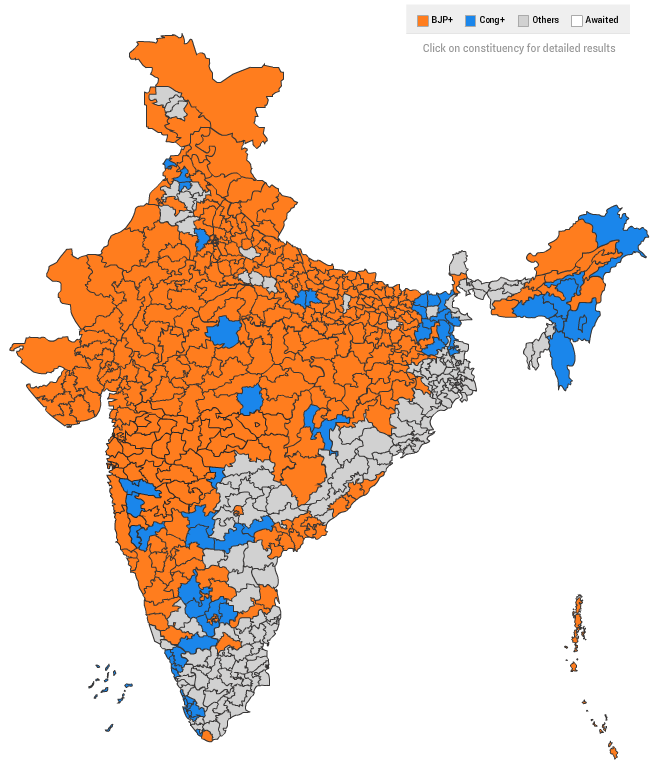
 The Bharatiya Janata Party is preparing to open the new year with a twin-track plan aimed at consolidating its organisational base while stepping up political outreach in a cluster of electorally significant regions, according to people familiar with the discussions within the party. The approach is designed to sharpen booth-level preparedness and widen the party’s appeal in states where it has struggled to translate national momentum into sustained local gains.
Senior party functionaries say the first element of the strategy focuses on strengthening the organisational structure across states, with an emphasis on reviving inactive local units, improving coordination between district and state leaderships, and investing in training programmes for grassroots workers. Internal assessments have highlighted uneven performance at the booth level, particularly in areas where the party lacks long-standing social networks, prompting a renewed push to professionalise cadre management and data-driven voter outreach.
Running parallel to this effort will be an extensive public engagement programme in West Bengal, Tamil Nadu, Kerala and Assam, along with the Union Territory of Puducherry. These regions are at different stages of their political cycles, but party planners view them collectively as critical to broadening the party’s footprint beyond its traditional strongholds. The outreach initiative is expected to combine mass contact programmes, targeted interactions with community leaders, and issue-based campaigns tailored to regional priorities.
West Bengal remains a central focus following successive electoral contests in which the party emerged as the principal opposition but fell short of power. Leaders involved in planning say the emphasis there will be on sustaining visibility between elections, countering perceptions of organisational drift, and deepening engagement with groups that responded positively to the party’s messaging in previous campaigns. The aim is to convert episodic electoral support into a stable support base anchored in local leadership.
In the southern states of Tamil Nadu and Kerala, the party faces a more complex challenge. Both states have entrenched political cultures shaped by regional parties and strong ideological traditions, leaving limited space for expansion without sustained groundwork. Party insiders indicate that the outreach programme will place greater stress on social and economic issues such as employment, welfare delivery and infrastructure, while also seeking to project state-level leadership more prominently. Building alliances with local influencers and professional groups is seen as a way to supplement the party’s relatively thin organisational presence.
Assam presents a different set of priorities, given that the party already leads the government there. The focus is expected to be on reinforcing governance credentials, managing alliance dynamics, and ensuring that organisational discipline is maintained across districts. Outreach activities in the state are likely to blend feedback-driven engagements with efforts to consolidate support among communities that have backed the party’s agenda in earlier elections.
Puducherry, where the party plays a role within a coalition framework, is also on the list for intensified engagement. Strategists see the Union Territory as a testing ground for refined campaign techniques that combine local issues with broader national narratives, particularly in smaller electorates where targeted messaging can have an outsized impact.
The organisational overhaul is expected to involve reshuffles at various levels, with an emphasis on accountability and performance metrics. Party leaders familiar with internal deliberations say that data analytics and feedback mechanisms will be used more systematically to track worker activity and voter sentiment. Training modules are also being updated to equip cadres with skills for door-to-door engagement, digital communication and issue-based advocacy.