
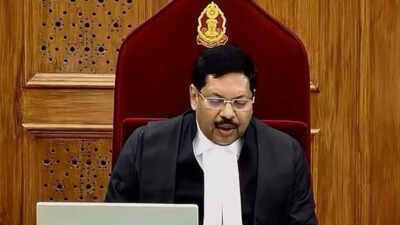
The assurance came as a bench led by Surya Kant, along with Justices Joymalya Bagchi and Vipul M Pancholi, took up the question of listing urgent cases. The bench clarified that the Supreme Court registry would first scrutinise requests claiming urgency and place only those matters meeting the threshold before the court during the vacation.
The court signals flexibility during holiday recess reflects a broader attempt to balance the institutional need for recess with the constitutional obligation to ensure access to justice. The Supreme Court traditionally observes winter holidays, during which a limited number of vacation benches are constituted to handle pressing cases involving liberty, elections, constitutional deadlines, or matters with irreversible consequences if delayed. The Chief Justice’s remark suggests that, should the situation warrant, even the first day of the recess would not be insulated from judicial work.
During the proceedings, the bench emphasised that the mere assertion of urgency by litigants would not suffice. Court officials would be tasked with verifying whether a case involved circumstances such as imminent loss of liberty, enforcement of fundamental rights, or time-bound statutory obligations. Only after such scrutiny would matters be listed for hearing. This approach aims to prevent misuse of the “urgent” label while ensuring that genuine emergencies are not left unattended.
Legal observers note that the Supreme Court has, over the past few years, adopted a more calibrated system for handling urgent matters during vacation periods. Registries have been instructed to apply objective criteria, and senior judges have repeatedly cautioned against turning vacation benches into parallel regular courts. At the same time, there has been recognition that delays in certain categories of cases can render eventual relief meaningless, particularly in criminal, environmental, and electoral disputes.
The Chief Justice’s statement also carries administrative significance. December 22 marks the formal beginning of the winter break, a time when court staff, lawyers, and judges typically adjust to a reduced schedule. By signalling availability on that very day, the head of the judiciary appears to be sending a message both internally and externally that institutional convenience cannot override pressing constitutional or legal imperatives.
Members of the bar have responded with mixed views. Some senior advocates welcomed the indication, arguing that urgent matters often arise unexpectedly and that the court’s willingness to sit enhances public confidence. Others cautioned that clarity would be needed on what qualifies as “urgent” to avoid confusion and last-minute filings aimed at securing priority hearings. The bench’s emphasis on registry verification was seen as a safeguard against such practices.
The Supreme Court’s vacation practice has long been a subject of debate, particularly in the context of mounting pendency. While holidays are defended as essential for judicial recuperation and preparation, critics argue that frequent recesses contribute to delays. In response, the court has increasingly relied on technology, staggered rosters, and flexible scheduling to ensure continuity. The present indication fits within that evolving framework rather than signalling any formal change to the vacation calendar.
Administratively, the registry’s role becomes central under this model. Court officials must assess urgency applications swiftly and fairly, often under time pressure. Past directions from the top court have stressed accountability and transparency in this process, given that registry decisions directly affect access to judges during recess periods. The bench’s remarks reinforce that responsibility while placing the ultimate willingness to sit with the judges themselves.